

By: Chioma Madonna Ndukwu
The Way We Live: The Day We Started Parenting Our Parents
“I think we need to start thinking differently about how Papa lives alone,” Chisom said, her voice careful, like she was testing whether the sentence would offend the room.
Her younger brother did not respond immediately. He was staring at their father instead, as if waiting for him to object.
But Mr. Nwosu only adjusted himself in his chair and said, “I am still here. I am not finished.”
It was not the first time he had said something like that. But this time, it landed differently. Not because he was wrong, but because everyone else in the room had already begun noticing things he was still trying to deny.
For more than four decades, Mr. Nwosu had been the centre of every decision in the family. School fees, land disputes, medical decisions, even marriage introductions all passed through him. He was the person people called when life became complicated.
Now, his children had gathered in his sitting room in Enugu not to consult him, but to inform him of a decision they had already begun to agree on.
That he should no longer live alone. He listened without interrupting. His wife sat beside him, her hands folded tightly, watching the floor more than anyone’s face.
What had been building quietly for months was now sitting in the open. The missed doses of medication that had started becoming frequent. The moments he repeated questions he had already been answered.
The way he insisted he had already eaten when the pot in the kitchen told a different story. None of it was dramatic on its own. But together, they were forming a pattern the family could no longer ignore.
In many homes, this is how the shift begins. Not with a single crisis, but with repeated corrections that slowly turn into decisions.
Across cities like Lagos, Port Harcourt, London, and Toronto, adult children are finding themselves in conversations they were never prepared for. Conversations about supervision, medication, safety, and independence.
Aging is often told as a story of weakness, when in reality it is also a story of adjustment, identity, and dignity on both sides.
In Port Harcourt, a banker now calls her mother twice a day, not out of routine, but out of necessity. One missed call sometimes means missed medication.
In Lagos, a man rearranged his job schedule after his father’s health began to require regular monitoring.
In the diaspora, children attend medical consultations remotely, translating prescriptions and decisions across time zones and systems that feel unfamiliar to their parents.
This story is not only something I write about; it is something I have lived. I resigned from my job to care for my sick mother until she passed on. It is a memory that still sits heavily with me. Sometimes I still feel I could have done more for her, especially as her favourite child.

The roles are shifting quietly, but permanently. Mr. Nwosu’s children were now part of that same reality.
“I am not asking to take away your life,” Chisom finally said again, softer this time. “We just cannot pretend everything is the same anymore.”
Her father exhaled slowly, as if the sentence had landed somewhere between acceptance and resistance.
“I took care of everyone in this family,” he replied. “Now you are telling me I cannot take care of myself.” There was no anger in his voice. Only something closer to disbelief.
That is the moment many families struggle with most. Not the illness itself. But the identity shift that comes with it.
The South African leader Nelson Mandela once reflected, “It always seems impossible until it is done.”
For many families, stepping into caregiving feels exactly like that. Impossible at first, until it becomes necessary, and then unavoidable.
Over time, resistance begins to soften, not because everything becomes easy, but because life demands adaptation.
Children start learning routines they never studied. Medication schedules, hospital appointments, warning signs that used to mean nothing now carry weight.
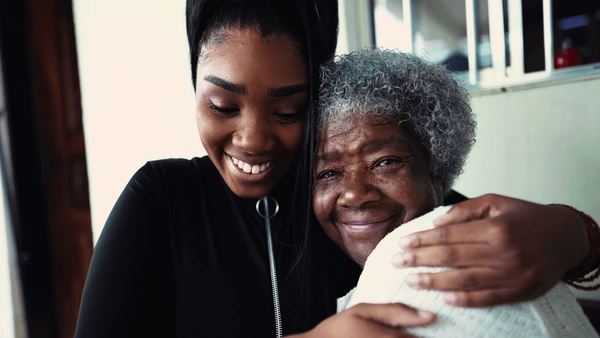
Parents begin adjusting too, sometimes reluctantly, sometimes with quiet acceptance, as independence begins to share space with dependence.
In Mr. Nwosu’s case, the family did not end the conversation with agreement. They ended it with understanding that something had already changed, whether they were ready or not.
Later that evening, Chisom would sit alone and realise something she had not said out loud during the discussion.
She was no longer only a daughter in the way she used to be. She had become part of how her parents would now be cared for.
And that responsibility did not feel like authority. It felt like time moving in a direction nobody could reverse.
Moral:
Families rarely notice the exact moment roles begin to change. It does not arrive with a declaration, but through repeated small adjustments that eventually become a new reality.
Aging is not only about decline. It is about transition, where those who once led begin to lean, and those who were once led begin to support. The lesson is not to resist that shift, but to prepare for it with dignity, patience, and honesty.
Because in every family, there comes a time when love is no longer expressed by being cared for, but by learning how to care for those who once cared for us.
Comment Hook: At what point did you realise your parent was no longer only your guide, but also someone quietly depending on your guidance?