

By: Chioma Madonna Ndukwu
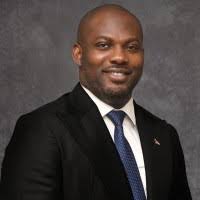
What If More Nigerians Were Like Alex Onyia?

Sometimes, patriotism does not wear a suit or stand behind a government podium. Sometimes, it quietly buys an airline ticket, secures a visa, pays a competition fee, and tells a child, “Go and show the world what you can do.”
That is the kind of patriotism Alex Onyia represents.
Some people complain about Nigeria’s education challenges. Some write about them. Others choose to build solutions.
Alex Onyia belongs to the third group.
At a time when conversations about the future of Nigerian education are often dominated by what is missing, Onyia has chosen to focus on what is possible.
Through technology, advocacy, and direct investment in young people, he has spent years proving that Nigeria’s greatest resource is not buried beneath the ground; it is sitting in classrooms across the country waiting for opportunity.
An entrepreneur, software developer, education advocate, and the Chief Executive Officer of Educare, Alex Onyia has built his career around one simple belief: talented children do not only need encouragement; they need platforms that allow their abilities to shine.
A graduate of Agricultural and Bio-resources Engineering from the University of Nigeria, Nsukka, Onyia’s journey from engineering into software development and education technology reflects his ability to combine different fields in search of solutions.
His transition from engineering to technology shows a mind that has always been focused on solving problems, regardless of the discipline.
Educare, the K-12 education technology platform he leads, has developed digital solutions that support schools, students, and parents, helping to improve learning experiences across Africa.
But beyond technology, Onyia’s work has increasingly focused on discovering and nurturing young talents, especially in Science, Technology, Engineering, and Mathematics, popularly known as STEM.
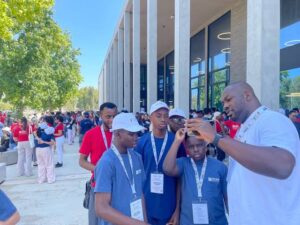
STEM represents four key areas of learning: Science, Technology, Engineering, and Mathematics. Around the world, these fields are regarded as important drivers of innovation, problem-solving, and economic growth.
Countries that invest heavily in STEM education often produce the scientists, engineers, inventors, and technology leaders who shape the future.
For Onyia, STEM is not just an academic competition. It is a way of showing Nigerian children that their ideas and abilities can compete anywhere in the world. His recent achievement brought this belief into the spotlight.
After organising the Southeast Mathematics Olympiad, a competition that attracted more than 11,500 participants, Onyia sponsored three exceptional Nigerian students: Chimdiebube Onwubiko, Don Anele Munachimso, and Onyedikachi Egejurum, to represent Nigeria at the International STEM Olympiad in Rome, Italy.
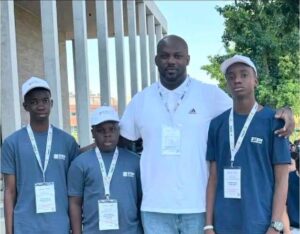
He personally covered their registration, travel, accommodation, visas, and other expenses, ensuring that financial limitations would not prevent these young minds from competing globally.
The outcome was remarkable. Against participants from more than 150 countries, Nigeria’s representatives returned home with four gold medals.
Don Anele Munachimso won two gold medals, including the world title in Science. Chimdiebube Onwubiko won gold in Mathematics, while 11-year-old Onyedikachi Egejurum emerged the world’s best in the Primary Mathematics category.
But for Onyia, the medals represented more than victory. They represented possibility.

Chimdiebube Onwubiko who won two gold medals and Anele Munachimso

Don Anele Munachimso won gold in Science

Onyedikachi Egejurum won gold in Mathematics in the world primary category
A secondary school teacher in Enugu, Mr. Amadi Paul, praised Onyia’s approach, while speaking to Oma, from Orbits News, describing his contribution as a reminder that individuals can make meaningful changes without waiting for government intervention.
“Alex Onyia’s achievement deserves recognition,” Mr. Amadi said. “What makes him different is that he did not only talk about the problems facing education; he took action. He saw potential in these children and gave them the opportunity to show the world what they can do.”
That mindset appears to define Onyia’s journey. He has consistently argued that Nigeria must move beyond producing graduates who only seek employment and begin developing young people who can create solutions.
His philosophy reflects the words of the late United Nations Secretary-General, Kofi Annan, who said, “Knowledge is power. Information is liberating. Education is the premise of progress.”
Closer home, renowned Nigerian author Chinua Achebe reminded us that, “One of the truest tests of integrity is its blunt refusal to be compromised.”
In many ways, investing in education when it is easier to look away is also an act of integrity.
It also connects with a familiar African wisdom: “If you want to go fast, go alone. If you want to go far, go together.”
Onyia’s work shows that national progress requires collaboration between government, private citizens, educators, and communities.
The bigger question from his story is not only about Alex Onyia. It is about the responsibility of every Nigerian who has the capacity to contribute.
Not everyone can build an education technology company or sponsor students to an international competition.
But many can mentor a child, support a school, encourage young talent, donate learning materials, or create opportunities for others.
Nations are not transformed by government alone. They are transformed when citizens decide that the future is worth investing in.
Alex Onyia’s story is a reminder that leadership is not only found in political offices. Sometimes, it is found in classrooms, technology companies, and in the quiet decisions of people who choose to give others a chance.
He has shown what is possible when compassion meets action. The medals from Rome belong to three brilliant students, but the message belongs to every Nigerian, because the future we keep waiting for may arrive faster if more of us choose to build it.
So perhaps the question is worth asking:
What if more Nigerians were like Alex Onyia?