



VIDEO: The Georgia Creek Where the Igbo Chose Freedom Over Slavery
A river can carry many things, like water, memory and, sometimes, the courage of people who refused to surrender.

At Dunbar Creek on St. Simons Island, Georgia, the tide still rises and falls as it did in 1803. The marshes are quiet, the water moves gently, but under that calm lies one of the most remarkable stories of resistance in the history of slavery.
The place is called “IGBO LANDING.”
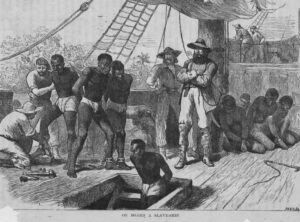
In May 1803, about seventy-five Igbo captives, taken from what is now southeastern Nigeria and forced across the Atlantic, arrived in Georgia with their freedom already stolen. They had survived the horrors of the Middle Passage only to face a lifetime of bondage on American plantations.
They never accepted that fate. Historical records show that the captives rebelled while being transported by boat to St. Simons Island. Before reaching the plantations, they seized the vessel and made a choice that has echoed across generations.

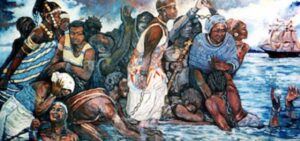
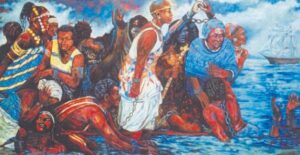
Many walked into the waters of Dunbar Creek as hiistory records the revolt. Oral tradition remembers something even greater, a people who chose freedom over slavery.
That single act turned an ordinary creek into one of the most enduring symbols of resistance in African history and the African diaspora.
More than two centuries later, one question still divides historians: How many died?
Some historical accounts say thirteen bodies were recovered from the creek. Others indicate that several captives were recaptured alive, while many were never accounted for.
During separate online interviews with Orbits News, researchers acknowledged that the exact figures remain uncertain.
While some maintained that about seventy-five captives were involved, others noted that the surviving records from 1803 leave room for differing interpretations about those who drowned, those who were recaptured and those who disappeared into the marshes.
Despite the conflicting numbers, there was agreement on one point: Igbo Landing remains one of the most significant acts of collective resistance against slavery in American history.
Among the Gullah Geechee people, whose ancestors preserved the memory of the event, another story survived.
They say the captives sang as they walked toward the water. The exact words have never been recorded, but one line has endured through generations:
“The water brought us here; the water will take us home.”
Whether understood as history, faith or cultural memory, those words have become a lasting symbol of a people determined that slavery would never own their spirits.
The Igbo have long believed that courage reveals itself when life offers no easy path.
As the proverb says, “A na-amata dike n’oge nsogbu” (a true hero is known in times of great difficulty.)
Another says, “Onye kwe, Chi ya ekwe” (when a person stands with conviction, their spirit stands with them.)
Perhaps no moment captures the meaning of those proverbs better than Igbo Landing.
Nigerian literary icon Chinua Achebe once observed, “Until the lions have their own historians, the history of the hunt will always glorify the hunter.”
For generations, the voices of enslaved Africans were buried beneath plantation records and slave traders’ accounts. Yet the story of Igbo Landing survived because descendants refused to let memory disappear.
Civil rights leader Martin Luther King Jr. also reminded the world that “Freedom is never voluntarily given by the oppressor; it must be demanded by the oppressed.”
Long before those words were spoken, the captives at Igbo Landing had already lived them. History is not the only thing people talk about at the creek.
According to Orbits News, a grey-haired white staff member working nearby recalled reports that have circulated for years. He said people around the site have spoken of seeing unexplained moving objects over the creek at night and of chairs inside a nearby building being found moved by morning despite no obvious explanation.

Such accounts remain part of local folklore and cannot be independently verified. Yet they continue to surround a place where documented history and community memory have lived side by side for more than two centuries.
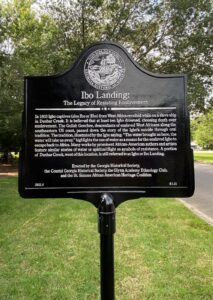
In 2022, Georgia officially recognised Igbo Landing with a historical marker, honouring both the documented 1803 rebellion and the Gullah Geechee oral tradition that preserved its legacy when written history almost forgot it.
History remembers kings, presidents and generals because they changed nations. Igbo Landing remembers ordinary men and women because they changed the meaning of freedom. They arrived in chains.
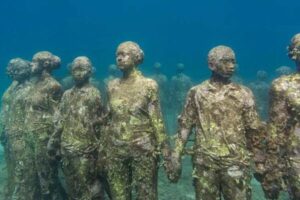
They left behind a story no tide has ever been able to wash away. The river did not erase them. It remembered them.
Watch the video below:
























https://shorturl.fm/Pv26f
https://shorturl.fm/kPQiC