


By: Chioma Madonna Ndukwu
Before You Try Urine Therapy Read This

There was no hospital room. No laboratory. No doctor’s prescription.
Just advice.
“Drink it.”
“Wash your face with it.”
“Put it in your eye.”
For generations, human urine has been promoted in many communities as an all-purpose remedy. Some believe it clears stubborn acne. Others insist it relieves toothache, improves fertility, heals wounds, treats eye infections or even breaks what they describe as spiritual barriers to progress.
The conviction is often unwavering because the recommendations come from trusted places; parents, neighbours, friends and elders.
Once a remedy is wrapped in tradition, questioning it can feel almost like questioning those who handed it down. Yet medicine tells a remarkably different story.
To understand how deeply this belief still runs, Orbit News reporter, Oma, spoke with residents in Port Harcourt. The responses revealed a practice that refuses to disappear.
One respondent said washing the face with urine had made the skin smoother over time.
Another insisted urine removes what many Nigerians describe as “spiritual covering”, an invisible force believed to prevent favour, opportunities or meaningful relationships.
Neither person saw the practice as unusual. To them, it was simply knowledge inherited from others.
But every belief has another side. For Khulna, not her real name, the memory still hurts. The Imo State indigene said she developed what Nigerians commonly call “Apollo” while breastfeeding her child several years ago.
Her eye became red, painful and irritated. Rather than seek immediate medical treatment, she said people around her encouraged her to apply her own urine.
“They told me it would heal the eye,” she recalled.
She followed the advice. According to her, the condition deteriorated. Today, she has permanently lost vision in that eye.
Doctors cannot conclude from her personal account alone that urine caused the blindness. Eye infections can become severe for several reasons, including delayed treatment, aggressive infections or underlying eye disease.
But ophthalmologists are unanimous on one point: urine is not a recognised treatment for conjunctivitis or any other eye infection, and applying it to an already inflamed eye can expose delicate tissues to further harm while delaying effective care.
Her experience is a sobering reminder that health advice shared with good intentions is not always medically sound.
The belief in urine therapy extends far beyond Nigeria. Known in some circles as urotherapy, the practice has existed for centuries in different parts of Asia, Africa, Europe and South America.
Supporters attribute almost miraculous healing powers to it, claiming it can cure conditions ranging from skin diseases to diabetes, infertility and even cancer.
Those claims have repeatedly been examined by scientists. So far, the evidence has not supported them.
The World Health Organization’s Eastern Mediterranean Regional Office (WHO EMRO) reviewed available evidence on urine therapy in cancer patients and found no clinical proof that it treats the disease.

The organisation warned against replacing proven medical care with remedies that have not demonstrated safety or effectiveness.
In the United States, Dr. Donald Hensrud, a preventive medicine specialist at the Mayo Clinic, has explained that urine is produced after the kidneys filter excess water and waste products from the blood.
The kidneys perform this function precisely because the body no longer needs those substances. Reintroducing them by drinking urine has not been shown to improve health.
The internet has also fuelled a new generation of urine therapy advocates, often claiming that because urine contains urea, it must possess healing powers. That argument leaves out an important fact.
Yes, urea is widely used in modern medicine. Dermatologists prescribe creams containing purified urea to treat extremely dry, cracked and thickened skin.
But those products are manufactured under strict pharmaceutical standards, using purified ingredients at carefully controlled concentrations. Human urine is something entirely different.
Besides water, it contains salts, creatinine, metabolic waste products and may also contain microorganisms. That is why dermatologists do not recommend replacing medically approved skincare products with urine.
Canadian-American physician Dr. Jen Gunter, known internationally for challenging health misinformation, has repeatedly cautioned against confusing the presence of urea in urine with the purified urea used in medicine. They are not interchangeable.
Perhaps nowhere is the danger more obvious than in eye care.
In Nigeria, consultant ophthalmologist Dr. Festus Oshoba has warned that applying urine to infected eyes can worsen the condition and, in severe cases, contribute to blindness.
He advises patients experiencing symptoms of conjunctivitis to seek prompt medical attention rather than experimenting with unverified remedies.
Another eye specialist, Dr. Zainab Akinbode, has similarly expressed concern over patients who resort to urine, breast milk and other traditional substances before visiting the hospital. By the time some eventually seek professional care, preventable complications have already developed.
The warning is supported by medical literature documenting cases in which traditional eye remedies, including urine, were associated with devastating eye injuries and irreversible vision loss.
Yet despite these warnings, the practice persists. Part of the explanation lies in the extraordinary power of personal testimony.
Someone says, “It worked for me.” Another repeats the story.
Soon, a single experience becomes accepted wisdom. Health experts say this is precisely why scientific research exists.
A person’s skin may improve naturally after a few days. A mild illness may resolve without treatment. Pain sometimes subsides on its own.
When that happens shortly after someone uses a traditional remedy, it is easy to assume the remedy deserves the credit.
Science demands a higher standard. Before any treatment is accepted, researchers ask difficult questions:
Does it work better than no treatment?
Does it work consistently?
Can the results be repeated by independent researchers?
Is it safe?
Urine therapy has consistently failed to meet those standards. Ironically, urine has enormous value in modern medicine. Not as medicine. But as evidence.
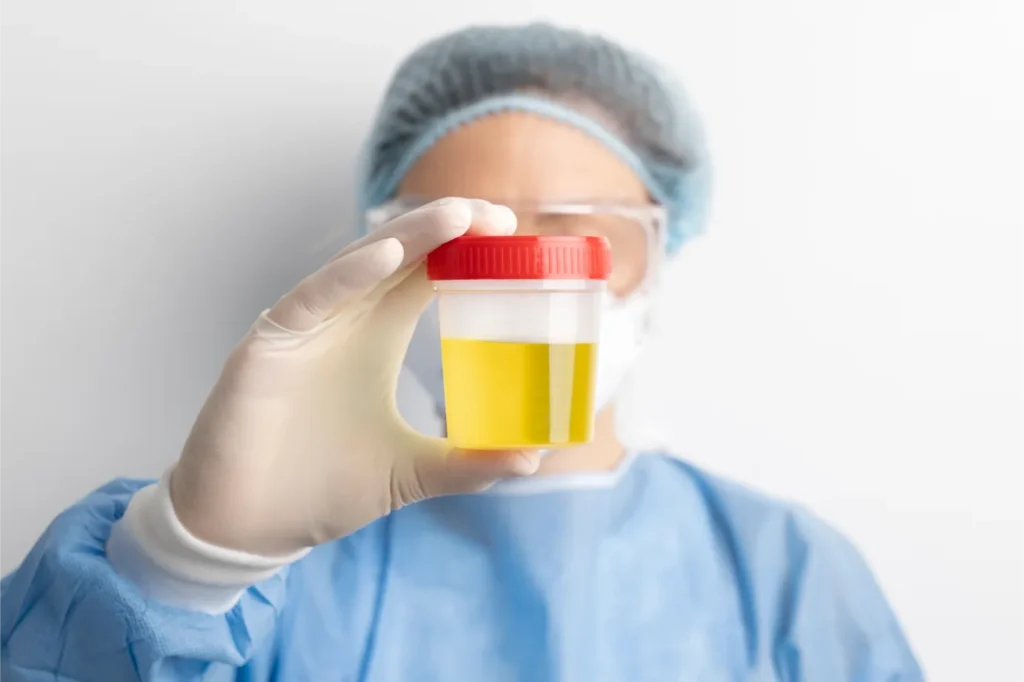
Every day, hospitals analyse urine to diagnose pregnancy, diabetes, kidney disease, urinary tract infections and several other medical conditions.
Researchers have also isolated specialised stem cells from urine for laboratory studies exploring regenerative medicine.
Those scientific advances have sometimes been misunderstood as proof that urine itself possesses healing powers. They do not.
Extracting specialised cells in a controlled laboratory bears no resemblance to drinking urine or applying it to the body.

I also encountered this belief firsthand. During a prolonged battle with severe toothache, well-meaning people repeatedly suggested gargling urine to relieve the pain. The recommendation was ignored.
Instead, professional dental care was sought. Examination revealed that the tooth required extraction. Once the procedure was performed, the pain disappeared.
The experience reinforced a simple truth: a remedy cannot solve a problem whose cause has never been properly diagnosed.
Medicine has transformed countless lives because it does not rely on rumours, assumptions or inherited beliefs.
It relies on evidence.
Health myths rarely survive because people are foolish.
They survive because they are told by people we trust.
A grandmother shares what helped her decades ago.
A neighbour recommends what another neighbour once tried.
A friend speaks with absolute certainty because someone else once recovered after following the same advice. The intention is often kindness. But kindness alone cannot make a treatment effective.
As healthcare becomes more accessible and scientific knowledge reaches more communities, long-held beliefs deserve the same question every new medicine must answer: Where is the evidence?
For urine therapy, decades of scientific research have produced a remarkably consistent response.
There is no reliable evidence that drinking urine or applying it to the eyes, mouth, skin or wounds cures disease. There is, however, growing evidence that relying on such practices can delay proper treatment and, in some cases, contribute to avoidable harm.

HEALTH FACT:
Personal experiences are not scientific proof
A person may feel better after using a remedy, but medical research requires repeated studies to confirm whether a treatment truly works and is safe.
Tradition has preserved many priceless gifts, from food and language to music and culture. Medicine asks us to preserve something else. The courage to let evidence, not folklore, decide what truly heals.
EDITOR’S NOTE
At Orbit News, accuracy and public interest remain central to our journalism. This report combines firsthand interviews, personal testimonies and evidence from recognised medical institutions and healthcare professionals.
While personal experiences provide valuable insight into widely held beliefs, they should not be interpreted as scientific proof. Medical advice in this report is drawn from evidence-based sources to promote informed health decisions.

























https://shorturl.fm/fpsFv