



Scholarship Scam: The Warning Signs Students Keep Missing
The message can look like a dream come true, when a student searching for money to study abroad receives an email announcing a scholarship that promises tuition support, accommodation or even travel expenses.
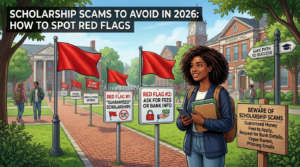
The sender uses the name of a university or organisation. The message carries an official-looking logo and a link to an application portal.
Then comes the request for money.
It may be described as a registration, processing, verification or administrative fee.
That small request can be the first sign that the scholarship is not what it appears to be.
Scholarship scams thrive on students’ need for financial assistance. Fraudsters create convincing websites, social media pages and emails designed to make fake opportunities look genuine.
The danger is not limited to losing money. Students can also hand over passports, identification documents, bank details and other personal information to criminals.
Knowing what to check before applying can help expose a fake offer.
You did not apply, but you were selected
One of the clearest warning signs is being told that you have won a scholarship you do not remember applying for.
The United States Federal Trade Commission warns about offers that tell people they have been selected for scholarships or grants they never entered.
A genuine scholarship normally has eligibility requirements and an application or nomination process.
So, before celebrating an unexpected award, find out how you supposedly qualified for it.
If the explanation is unclear, do not rush to provide your details.
The first question is about money
A request for payment should immediately raise questions.
The FTC advises students not to pay to apply for scholarships or financial aid. It also warns against people who demand money before releasing supposed awards.
The amount does not make the offer safer.
A scammer may request a relatively small sum because a student is more likely to pay it without asking further questions.
The situation becomes even more suspicious when payment is described as the final step needed to “unlock” an award that has supposedly already been won.
Check the website yourself

A professional website is not proof that a scholarship is genuine.
Scammers can copy logos, colours, photographs and the names of real institutions.
Instead of clicking the link sent in an email or social media message, search for the university or scholarship programme independently.
Go to the organisation’s official website and look for the scholarship there.
Pay close attention to the web address. A fraudulent site may use a name that resembles the genuine one but contains a slight spelling change or an unfamiliar domain.
The details should also match. Check the eligibility requirements, deadline, contact information and application procedure.
Be careful with “guaranteed” awards
Scholarships have different selection processes, but genuine programmes usually have clear eligibility conditions.
A message promising that you are guaranteed thousands of dollars without any serious assessment deserves caution.
So does an offer that promises admission or funding simply because you paid a fee.
The warning becomes stronger when the sender says everyone who applies will receive money.
Do not allow urgency to make the decision
Another common tactic is pressure.
A student may be told that the scholarship will disappear within a few hours unless payment is made immediately.
That urgency is useful to a scammer because it leaves little time for verification.
Real scholarship deadlines can be checked independently on the programme’s official website.
For instance, legitimate programmes such as Chevening publish their application requirements and deadlines openly rather than relying on private messages to pressure applicants into paying.
A deadline is one thing. Being told to transfer money immediately or lose an award you never applied for is another.
Your passport can be worth more to a scammer than your money
Fake scholarship portals may ask applicants to upload passports, national identity documents, bank information and academic records.
Some of those documents may eventually be required by a legitimate institution, but students should first establish that the organisation is genuine and that the information is needed at that stage.
A passport contains valuable personal information.
Giving it to an unknown website can create problems long after the fake scholarship disappears.
Students should also avoid sharing account passwords with anyone claiming to need them to process an application or secure financial aid.
Look closely at how they want to be paid
The payment method can provide another warning.
Requests for cryptocurrency, gift cards, cash transfers or wire transfers should be treated with caution, particularly when the sender insists that the payment must be made immediately.
These methods can be difficult to reverse once money has been transferred.
If a supposed scholarship provider asks for money before releasing an award, stop and verify the programme through an independent source.
Search before you submit
A few minutes of research can expose a questionable offer.
Search the scholarship name alongside terms such as “scam”, “fraud” or “complaint”. Look for reports from universities, government agencies and established organisations.
Third-party scholarship websites can also help students discover opportunities, but the final check should be made on the scholarship provider’s official website.
Programmes such as Chevening and Fulbright publish their own application information through official channels.
That information should take priority over a link forwarded through WhatsApp, Facebook, Instagram or an unsolicited email.
Already paid? Act quickly
If you have sent money to someone you now suspect is a scammer, do not wait.
Contact your bank or payment provider immediately and explain what happened. Ask whether the transaction can be stopped or reversed.
If you supplied a password, change it and monitor the affected account.
If you uploaded sensitive documents, keep a record of what you submitted, where you submitted it and when.
You should also report the suspected scam to the relevant platform or authorities.
The earlier a victim reports a fraudulent transaction, the more opportunity there may be to prevent further loss.
The offer may look perfect. Check it anyway.
A scholarship can change a student’s future, which is why fake scholarship offers can be so effective.
The safest response to an attractive offer is not excitement or fear, it is verification.
Find the programme independently. Check the website. Confirm the requirements. Question unexpected payment requests and think twice before surrendering sensitive documents.

The few minutes spent checking an offer could prevent the loss of money, identity documents and the opportunity the student was hoping to secure in the first place.























Leave a comment