



By: Chioma Madonna Ndukwu
The Way We Live: You Remembered the Tithe. Did You Remember the Salary?
“Have you sent the tithe?”
“Yes, I sent it this morning.”
“That’s good. What about the money you owe your staff?”
“Ah, their own will come. Let me settle this one first.”
It is an ordinary conversation, but it raises an uncomfortable question about the way we practise our faith and handle our responsibilities.

Every Friday, Mr Daniel made sure his tithe was sent before the weekend began. He considered it a sacred commitment, something he did not want to miss, regardless of how busy the week had been.
His employees knew the routine. The money would leave his account, a confirmation message would arrive, and everyone would move on with their day.
But one employee had been waiting for his salary. She had reminded him earlier in the week. Her rent was approaching, her transport expenses were piling up, and she had family responsibilities to meet. Still, the payment remained outstanding.
When money eventually came in, Daniel insisted that the tithe should be paid first. Whatever remained could serve as the employee’s salary, with the balance promised for the following week.
He probably considered the arrangement temporary. To the employee, however, it was another reminder that her financial needs could wait.
This is where a conversation about religious giving becomes a conversation about responsibility.
There is nothing inherently wrong with giving tithes. For many Christians, it is an expression of gratitude, obedience and commitment to God. People should be free to practise their faith without being mocked or condemned.
However, religious commitment should not become a reason to overlook obligations to other people.
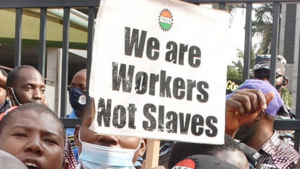
A worker’s salary is not a donation. It is not an offering that an employer can postpone whenever another financial commitment becomes urgent. It is payment for time, effort, skill and service already rendered.
The person who manages your business, teaches your children, cleans your office, drives your vehicle or prepares your accounts is not working for applause. That person also has bills, family responsibilities and personal ambitions.
Sometimes, we forget that the people helping us build our dreams have dreams of their own.
And let us be honest: some employers pay salaries as though they are giving out birthday presents. The worker completes thirty days of labour, but collecting the money becomes another full-time assignment.
Abeg, who send the employee to start begging for what has already been earned?
Imagine a landlord calling his tenant.
“Good morning. I hope you are ready with the rent.”
“Sir, please, I am expecting payment from work.”
“That’s fine. When should I expect it?”
“Hopefully, next week.”
“Okay. But remember, my landlord is also expecting his own.”
At that point, everybody is waiting for somebody, and nobody wants to hear the word patience again.
It may sound funny, but financial responsibilities do not suspend themselves because someone else’s business is experiencing difficulties.
An employer may be struggling to keep a business afloat. That difficulty deserves consideration. But workers cannot be expected to carry the organisation’s financial burden indefinitely.
This is why communication matters. If business is slow, explain the situation. If payment must be delayed, discuss it honestly and agree on a realistic date. Do not leave workers guessing while expecting their commitment to remain unlimited.
There is a difference between a genuine financial difficulty and a repeated pattern of treating employees’ earnings as the most flexible item in the budget.

And this conversation is not restricted to Nigeria. In London, a small business owner may struggle with rising operating costs while trying to meet payroll.
In Toronto, a restaurant worker may depend on an agreed payment date to cover rent. In Lagos, a young professional may be trying to balance work, family and personal expenses.
The locations differ, but the basic expectation remains the same: people should be treated fairly for the work they do.
The problem becomes more complicated when religious language enters the discussion. Sometimes, people speak passionately about sowing seeds, honouring God and keeping covenants, yet become uncomfortable when asked to honour their commitments to employees.
But the Bible does not encourage that separation. James 5:4 warns against withholding wages from workers. The passage describes the cries of unpaid labourers as reaching the ears of the Lord Almighty.
In Matthew 23:23, Jesus speaks about justice, mercy and faithfulness, warning against religious observance that neglects these weightier matters.
These passages remind us that faith cannot be measured only by what leaves our bank accounts for religious purposes. It must also be reflected in how we treat people.
Imagine attending church every Sunday, giving generously and participating in every programme, while the person who worked throughout the week is still asking when their salary will arrive. What message does that send?
A pastor should not have to encourage an employer to neglect workers in order to receive a tithe. Equally, employees should not have to compete with religious contributions for money they have already earned.
Consider another conversation between two friends after a church service.
“Brother, I saw you giving your offering today. God bless you.”

“Amen, my brother. We must give cheerfully.”
“Of course. By the way, have you paid the people who worked for you last month?”
“Ah, that’s another matter.”
“Another matter? My brother, take it easy. You cannot be generous at the altar and develop amnesia at the payroll desk!”
The two friends laugh, but the question remains.
And let us be fair: not every delayed salary is evidence of wickedness. Businesses experience difficult periods, payments from clients can be delayed, and employers sometimes face circumstances beyond their control.
But honesty, communication and a genuine effort to fulfil obligations should remain part of the arrangement.
The people who work for us are not machines that run on appreciation. They need food, shelter, transport, healthcare and the ability to plan their lives. A thank-you message cannot replace an overdue payment.
There is also a lesson for employees. Professional commitment should not mean accepting every burden without discussion.
If your employer expects you to meet certain responsibilities, the expectations should be matched with clear agreements. A healthy working relationship requires consideration from both sides.
You cannot keep watering the garden outside while allowing the flowers inside your own compound to wither. In the same way, generosity should not flourish in one direction while fairness is left thirsty in another.
Perhaps the most important question is not whether a person should pay tithes. It is whether we are remembering our responsibilities to people while fulfilling our religious convictions.
Faith should be a lamp that helps us recognise our responsibilities, not a curtain we draw across them.
Personal Thoughts:
I believe one of the clearest expressions of our values is how we treat people who depend on us to do what is right. It is easy to make a public display of generosity, but fairness is often tested in private, especially when someone is waiting for what we owe them.
One Thing Worth Remembering:
Do not become so committed to giving what you consider God’s portion that you forget to pay what belongs to another person.
Let’s Talk:
Can someone genuinely claim to honour God while repeatedly delaying the wages of people who work for them? Where should religious giving stand when an employer has outstanding salaries?
A Short Prayer:
Lord, teach us to practise our faith with honesty, fairness and compassion. Give employers wisdom to fulfil their responsibilities and employees the courage to speak up respectfully. May our generosity never make us neglect the people who depend on us. Amen.


























Leave a comment