


By: Chioma Madonna Ndukwu
The Way We Live: Bulgaria Elects Its First Female President. The Woman Question Remains.
Somewhere in Bulgaria, a little girl may have watched Iliana Iotova’s presidential victory and wondered whether the world had finally expanded its imagination.
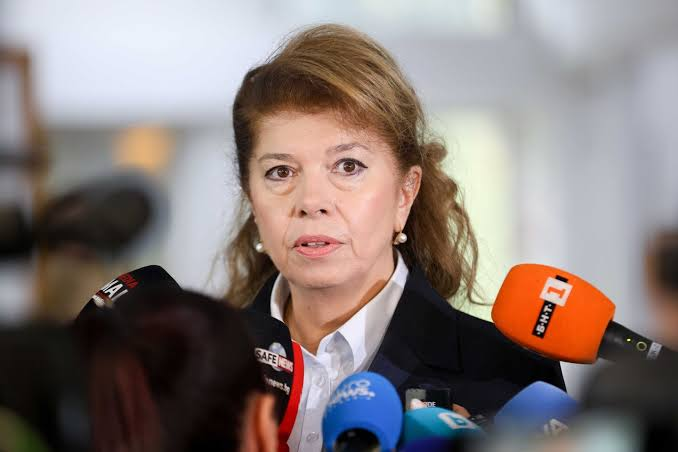
On November 1, Bulgarian voters elected Iotova as their first elected female president, with official results showing she secured 57.6 per cent of the votes.
Her victory has opened another chapter in a political history where women have participated for generations but rarely occupied the highest presidential office.
Imagine a little girl asking her mother, “Mummy, can I become president when I grow up?”
Her mother replies, “Of course, my daughter.”
“But what if they say presidents are supposed to be men?”
“Then remind them that the constitution does not wear trousers.”
Perhaps the mother deserves an award for that response, but beneath the humour lies a question societies have avoided for generations.
Why must a woman’s ambition sometimes come with an explanation, an apology or an assurance that she will not make anybody uncomfortable?
A man announces his presidential ambition, and people discuss his qualifications. A woman does likewise, and somebody remembers to ask about her marriage and children.
Apparently, ambition becomes more complicated when it comes with lipstick, a handbag and occasionally a wedding ring.
Some societies hand women a ladder, then spend their time questioning why they are climbing so high.
Liberia’s Ellen Johnson Sirleaf challenged that thinking when she became Africa’s first elected female head of state in 2006.
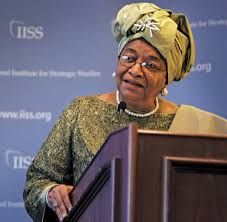
Ellen Johnson Sirleaf, Africa’s first elected female head of state.
Her journey demonstrated that the absence of female predecessors should never become a permanent instruction for women to abandon their aspirations.
During her 2011 Harvard commencement address, Sirleaf declared, “I was never deterred from running for president just because there had never been any other female elected as a head of state in Africa.”
That statement carries a message beyond politics: yesterday’s limitations should not become tomorrow’s inheritance.
Namibia also made history in 2025 when Netumbo Nandi-Ndaitwah became its first female president, adding another name to Africa’s growing list of women leaders.
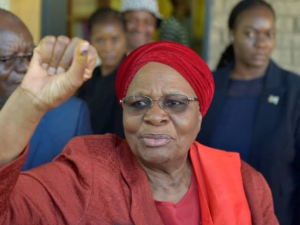 Netumbo Nandi-Ndaitwah, Namibia’s first female president.
Interestingly, she insisted that her election was based on merit, saying, “I was not elected because I am a woman, but on merit.”
Her position introduces an important distinction. Women deserve opportunities, but competence, integrity and accountability must remain central to leadership.
Across the Atlantic, the late American Supreme Court Justice Ruth Bader Ginsburg offered another perspective on women’s participation in decision-making.
“Women belong in all places where decisions are being made. It shouldn’t be that women are the exception,” she once observed.
Those words speak directly to the significance of Iotova’s election and the barriers that still confront women across different societies.
In Nigeria, women occupy influential positions across education, business, medicine, law and technology, often while navigating expectations absent from their official job descriptions.
Consider the female executive who finishes a demanding board meeting, returns home and discovers that everybody has been waiting for her to decide dinner.
Her professional responsibilities have ended, but her domestic department remains permanently open, without annual leave or additional allowances.
Meanwhile, the man who cannot locate his own socks may confidently explain how women should organise their lives.
Some women clock out of the office only to resume another shift at home, where the workload has no closing time.
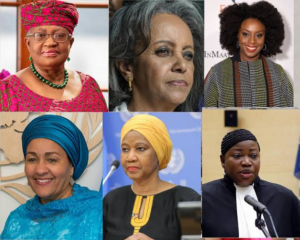
Nigerian economist Ngozi Okonjo-Iweala has broken international barriers, becoming the first woman and African to lead the World Trade Organisation.
Speaking about leadership, she offered this advice: “If you have a sense of purpose that drives you, then aim high and become a leader and make the room as you go.”
That is an important message for young African women who sometimes encounter discouragement before they even begin pursuing their ambitions.
Nigerian author Chimamanda Ngozi Adichie also addressed society’s expectations in her celebrated presentation, We Should All Be Feminists.
“We teach girls to shrink themselves, to make themselves smaller,” she observed, describing how society discourages women from becoming excessively ambitious.
Society sometimes gives women wings but spends generations teaching them to fly close to the ground.
A woman can lead thousands of employees at work, yet be told that expressing an opinion at home means she is becoming difficult.
She can earn more than her husband, but somebody may still expect her to pretend otherwise during family gatherings.
Imagine receiving a salary alert and immediately checking whether your husband is looking at your phone. Must financial success become a family secret?
For some people, a successful woman is welcome until her achievements begin casting shadows over their insecurities.
However, this conversation should not become a competition between men and women. Men also face restrictive expectations, particularly the pressure to become unquestioned providers.
Adichie acknowledges this problem too, arguing that society does boys a disservice by trapping them inside narrow definitions of masculinity.
A healthy society should raise children to recognise ability, responsibility and character rather than assign lifelong duties according to gender.
There is also a responsibility women owe one another. A woman who has climbed a difficult mountain should not pull the ladder away from another woman waiting below.
The woman who has reached the top should remember the younger woman still struggling to enter the room.
The woman who has found her voice should not ridicule another who is still learning to speak confidently.
And the woman who has succeeded should understand that another woman’s success does not reduce her own.
Iotova’s election deserves attention beyond Bulgaria because it invites societies to reconsider the invisible boundaries surrounding women’s ambitions.
However, occupying a presidential office does not automatically make someone a good leader. Competence, integrity, accountability and sound judgment remain essential.
The real achievement is building societies where women can compete fairly, lead responsibly and receive the same scrutiny and respect afforded their male counterparts.
Perhaps the greatest victory will come when a little girl can look at a presidential palace without wondering whether its doors were built for someone like her.
But women’s contributions are not measured only by presidential offices, boardrooms and international recognition.
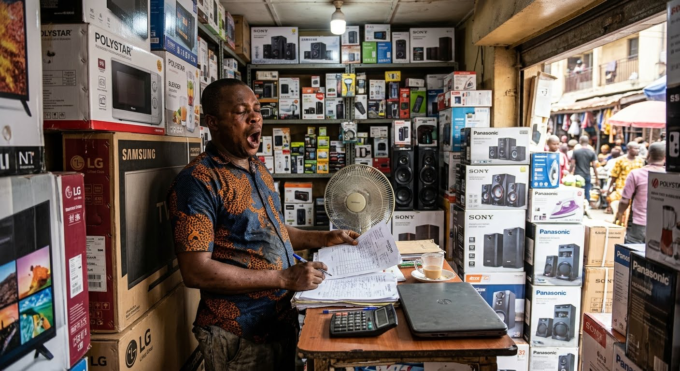
There is the market woman, the small-business owner, the seamstress, the farmer and the mother managing her home.
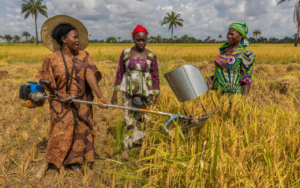
These women are also building lives, supporting families and contributing to society. Their work deserves recognition, even when it attracts no applause.
Personal Thought:
A woman’s ambition is not an insult to anybody’s masculinity. Her education, earnings, confidence and leadership do not make another person less valuable.
Every woman’s contribution matters, regardless of its size or visibility.
One Thing Worth Remembering:
Big achievements deserve applause. Small contributions deserve respect too.
Let’s Talk:
What everyday contributions of women do you think society takes for granted?















Leave a comment