


By Chioma Madonna Ndukwu
The WayWe Live:Is Our Education a Scam or Is the Curriculum Failing Us?
What Nigerian Schools Teach and What the Real World Demands

“Draw an amoeba.”
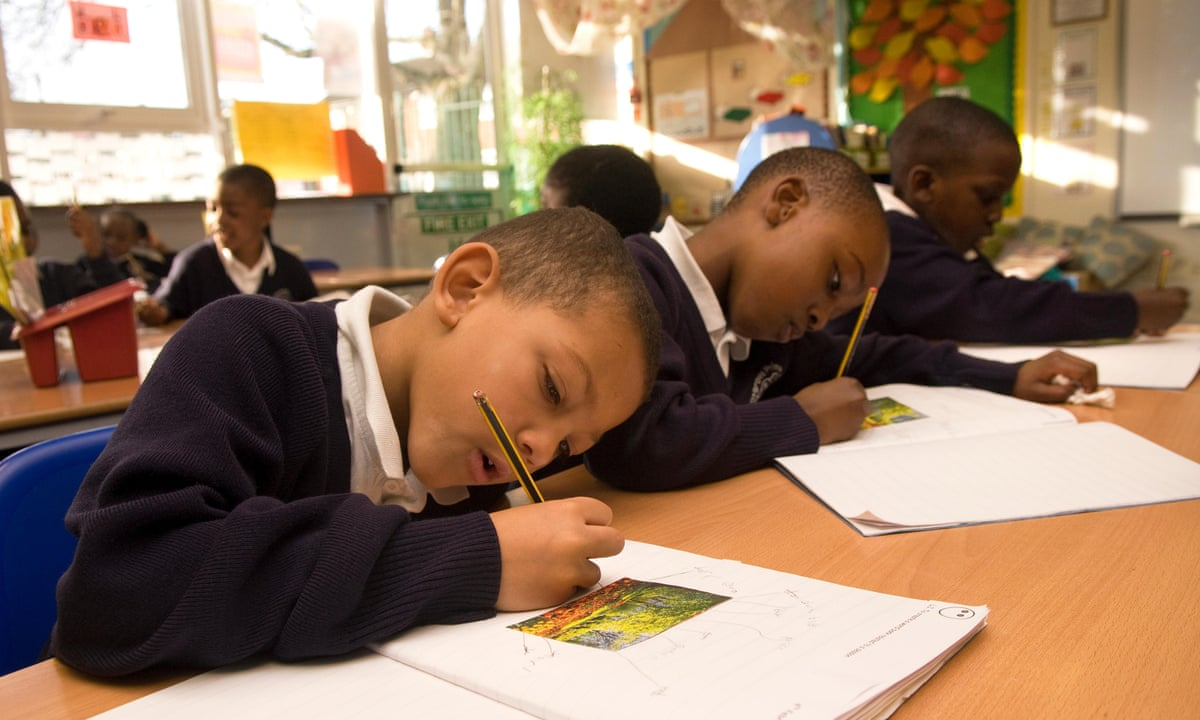
Our biology teacher had barely finished speaking when exercise books opened across the classroom. Pencils moved, rulers appeared, and somebody began drawing something resembling a fried egg.
“Is that an amoeba or a boiled egg?” the teacher asked, studying the page.
The classroom burst into laughter. Its unfortunate artist stared at his drawing, then looked up at our teacher with the confidence of someone who had decided that surrender was not an option.
“Ma, it is still a living thing,” he replied.
That answer nearly finished us. Even the teacher struggled to hide her smile, but she soon picked up her chalk and returned us to the business of labelling our diagrams.
“Laugh all you want,” she warned. “When this question comes out in your examination, I do not want anybody writing about boiled eggs.”
Years later, that classroom memory raises a question larger than a badly drawn diagram. How much of what we learnt helped us understand life beyond school?
At a reunion, two former classmates might find themselves laughing over those old lessons, remembering the teachers whose instructions once determined the fate of their afternoons.
“Tell me something,” one asks. “Can you still draw an amoeba?”
“Of course. I can draw one with my eyes closed.”
“Wonderful! Draw it on my birthday cake. Let us see whether the bakery will accept it as payment.”
His friend laughs. “You are wicked. After all those years, that is what you want to do with my education?”
“What else should I do with it? I have not seen an amoeba since we left school, but I remember how seriously we took that drawing.”
“Leave me alone,” the first replies. “At least I passed biology. What did you score?”
“An excellent grade. But since you have brought up education, answer me honestly. Did school teach you how to manage money?”
The laughter slows.
“Manage money? My friend, I am still looking for the money to manage.”
They laugh again, this time with a little more truth hiding inside the joke. Nobody should conclude that biology is useless, but memorising diagrams without exploring their relevance leaves knowledge stranded on paper.
Our parents sent us to school believing education would widen our choices. Some sold goods, borrowed money or worked longer hours to pay fees, carrying their hopes through every school term.
For many families, a certificate represented a better future. Yet adulthood arrived with questions examinations had barely prepared us to answer: negotiating salaries, understanding loans, recognising dangerous contracts and turning promising ideas into viable businesses.
“I had excellent grades,” a young graduate tells a friend. “I thought finding a job would be easier once I finished university.”
“What happened when you started applying?” his friend asks.
“I got invitations for interviews, but the questions surprised me. One interviewer asked what I could offer the company. I told him I was hardworking.”
His friend nods. “That is a good quality. What else did you tell him?”
“Nothing. I thought my results would speak for me.”
“And what did the interviewer say?”
“He told me everybody claimed to be hardworking. I came home wondering what four years of university had prepared me to say.”
His friend considers this. “Maybe your results opened the door, but you still needed to show them what you could do.”
The graduate sighs. “That is what worries me. We spent years preparing answers for examinations, but nobody taught us how to explain our abilities.”
This is where the curriculum deserves scrutiny. Schools cannot create jobs alone, and unemployment has economic causes, but education should equip young people to contribute beyond waiting for vacancies.
Is Nigeria teaching us to pass or preparing us to live? Are we learning the wrong things? What are Nigerian schools really teaching us? These questions deserve honest answers.
They do not demand that every lesson produce immediate income. Literature can deepen empathy, history can explain society, and science can nurture curiosity. Education suffers when knowledge becomes memorisation.
The question extends beyond Nigeria. Germany’s vocational education system combines classroom learning with workplace training, giving many students structured opportunities to develop practical skills before entering employment.
Across the world, schools and employers are reconsidering what young people need as technology reshapes work. The World Economic Forum’s Future of Jobs Report 2025 highlights analytical thinking, resilience and technological literacy.
Facts remain valuable, but facts alone cannot carry graduates through every unfamiliar challenge. Without practice, yesterday’s lessons can become a map that ends just before the difficult road.
Consider a Nigerian nurse hoping to practise abroad. Depending on the destination, the nurse may face credential checks, licensing examinations or supervised practice before receiving permission to work.
Such requirements do not prove Nigerian training is worthless. Countries have different professional standards, and protecting patients requires competence. Still, the experience reminds us that theory must meet practical preparation.
A textbook can explain how the body works; a nurse must also recognise danger and make sound decisions when a patient needs help. Training must connect knowledge with practice.
Nelson Mandela said, “Education is the most powerful weapon which you can use to change the world.” That promise deserves classrooms where students learn to think, not merely reproduce answers.
Kofi Annan also said, “Education is the premise of progress, in every society, in every family.” His words point towards education that strengthens communities, not just certificates.
Imagine students growing vegetables, calculating costs, studying customers and learning why a small business succeeds or fails. Imagine science lessons where curiosity is welcomed and experiments deepen understanding.
These experiences would not replace biology, mathematics, literature or history. They would give academic knowledge somewhere to go, connecting classroom learning with the choices and problems awaiting students.
Perhaps the real scam is not the curriculum itself, but the belief that passing examinations automatically prepares someone for life. A certificate opens a door; competence helps us enter.
An amoeba deserves its place in biology. Our children also deserve education that helps them understand the living world, earn a living and face difficult questions confidently.
Personal Thoughts:
I believe education should do more than help children pass examinations. It should nurture curiosity, practical ability and independent thinking while preserving the value of academic knowledge.
One Thing Worth Remembering:
A certificate can announce what you have learnt. It cannot, by itself, prove what you can do.
Let’s Talk:
What did school teach you that helps in adult life, and what do you wish your teachers had taught you instead?






















Leave a comment