


By: Chioma Madonna Ndukwu
The Solar Battery Will Not Last Forever. Is Nigeria Ready for What Comes Next?
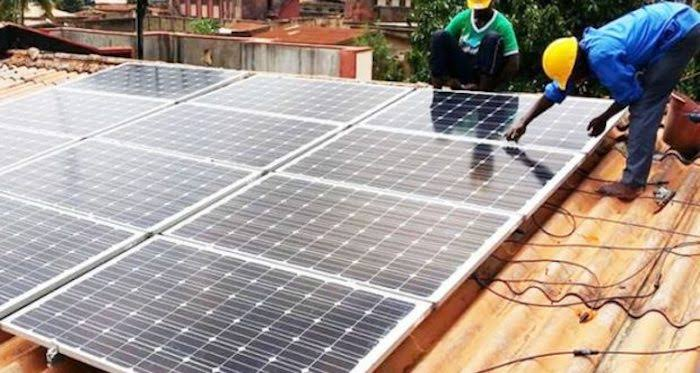
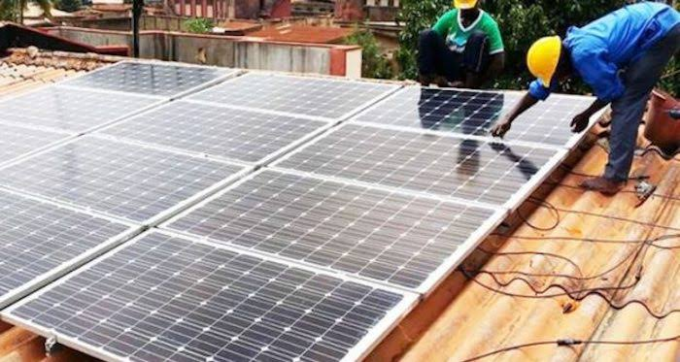
Walk through many Nigerian neighbourhoods today, and one thing is becoming increasingly difficult to miss: solar panels are taking over rooftops.
From expensive residential buildings to modest family homes, shops, offices and supermarkets, Nigerians are gradually embracing solar energy.
For some households, it means sleeping without the familiar noise of generators. For others, it means saving money previously spent on petrol and diesel.
With electricity supply remaining unreliable, solar energy has become more than a convenience. It is gradually becoming a necessity.
However, while Nigerians are understandably excited about having electricity without depending entirely on the national grid, there is an important question receiving considerably less attention.
What happens when the solar battery dies? It is easy to celebrate a new installation. A technician arrives, connects the panels, installs the inverter and battery, and electricity becomes available.
But batteries do not last forever. Depending on their technology, quality, maintenance and usage, they eventually lose their storage capacity and require replacement.
The household buys another battery, but what happens to the old one? Does the installer collect it? Does the manufacturer provide a replacement and take back the exhausted unit? Is there an approved recycling centre nearby?
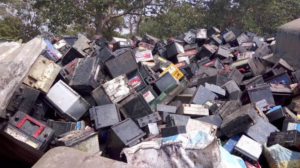
Or does the battery eventually find its way into the hands of informal scrap dealers, roadside collectors or ordinary waste dumps?
These are not questions Nigerians should postpone until discarded batteries begin accumulating in their communities.
Solar batteries contain materials that require careful handling. Lead-acid batteries, for instance, contain lead and sulphuric acid, which can contaminate soil and water when improperly dismantled or discarded.
Lithium-ion batteries present different challenges, including fire risks when damaged, poorly stored or handled without appropriate precautions.
The concern is particularly important because Nigeria already has a history of poorly managed battery waste.
A 2021 scientific study examining an informal used-battery recycling facility in Ibadan found concerning lead contamination in surrounding water and plants.
Researchers discovered that lead concentrations exceeded permissible limits at more than half of the water-sampling locations.
Another study published in 2024 examined informal battery-recycling workers in Northern Nigeria. It found an average blood lead concentration of 40.17 micrograms per decilitre among the workers.
The findings are disturbing because prolonged lead exposure can damage the nervous system, kidneys and other organs. Children are particularly vulnerable.
Although these studies examined battery recycling generally rather than pollution specifically traced to solar batteries, they demonstrate the dangers of poorly managed battery waste.
A 2026 research review focusing specifically on Nigeria’s off-grid solar battery waste also identified significant regulatory and implementation concerns.
Importantly, it found that direct measurements linking pollution specifically to discarded off-grid solar batteries remain unavailable.
This makes proper monitoring even more necessary. We cannot effectively manage a growing waste problem without knowing how much waste is being generated and where it goes.
Nigeria’s environmental challenges, however, extend beyond batteries.
In Lagos, for instance, environmental pollution has become an uncomfortable part of everyday life.
Drive through some neighbourhoods, and you encounter overflowing refuse points, blocked drainage channels, vehicle emissions and generators releasing fumes into residential surroundings.
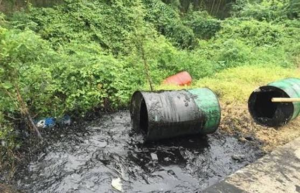
At some mechanic workshops, used engine oil is carelessly discharged onto the ground or into drainage channels. People work around these substances, while traders, pedestrians and children share the same environment.
These activities may appear ordinary to people who encounter them daily, but their consequences are anything but ordinary.
A World Bank report, The Cost of Air Pollution in Lagos, estimated that ambient air pollution contributed to approximately 11,200 premature deaths in Lagos in 2018.
The report also estimated economic losses of $2.1 billion from pollution-related illnesses and premature deaths that year.
The World Health Organisation has described air pollution as “one of the biggest environmental threats to human health, alongside climate change.”
That statement deserves more than a passing mention in a country where environmental protection often receives attention only after serious damage has occurred.
Nigeria’s life expectancy also raises concerns. World Bank figures put life expectancy at approximately 54.6 years in 2024.
This is considerably lower than Canada’s approximately 82 years. Although life expectancy is influenced by healthcare, nutrition, poverty, infectious diseases and several other factors, environmental conditions cannot be ignored.
We hear about people dying in their fifties and sixties, while families struggle with the loss of parents, relatives and breadwinners.
Celebrity deaths sometimes bring the conversation into public attention, but thousands of ordinary Nigerians also die without their stories making national headlines.
We cannot attribute these deaths to environmental pollution without medical evidence. However, we should be asking whether the conditions in which Nigerians live are receiving the attention they deserve.
Interestingly, Nigeria is not without legislation addressing battery pollution.
The Federal Government introduced the National Environmental (Battery Control) Regulations in March 2024.
The regulations cover batteries throughout their life cycles, including collection, transportation, storage, recycling and final disposal.
They also establish an Extended Producer Responsibility framework, placing obligations on manufacturers, importers and distributors to participate in arrangements for collecting and managing used batteries.
In principle, this provides a foundation for preventing exhausted batteries from becoming another environmental burden.
But having regulations and implementing them are two different things.
In October 2024, the Partnership for Responsible Battery and Metal Recycling published an assessment of Nigeria’s used lead-acid battery recycling industry.
Its positive list of facilities considered suitable for environmentally sound management contained just one entry: Green Recycling Ltd.
This did not mean Nigeria had only one battery recycling business. It meant only one facility appeared on that particular list as meeting the required environmental standards.
The finding nevertheless raises questions about the country’s capacity to manage increasing quantities of used batteries.
In November 2025, NESREA shut down several battery-recycling facilities in Ogijo, Ogun State, following environmental concerns.
The incident demonstrated why monitoring and enforcement matter. A recycling facility should not become another source of pollution for the communities surrounding it.
There have also been efforts to improve the situation. In September 2025, All On announced a $1.5 million investment in Hinckley E-Waste Recycling to support battery recycling infrastructure.
However, the establishment of recycling facilities must translate into accessible services and measurable results.
More recently, on October 23, 2026, the Federal Government inaugurated a 16-member inter-agency committee to develop safety standards for lithium-battery solar energy systems.
Its responsibilities include examining installation, maintenance, product certification and end-of-life disposal.
These developments are encouraging, but Nigerians need to see what changes on the ground.
How many approved collection centres are currently operational? Which facilities can safely recycle lead-acid and lithium-ion batteries? How many solar companies are collecting exhausted batteries from their customers?
What happens to the batteries imported into Nigeria when their useful lives end?
NESREA must provide answers and demonstrate how the 2024 regulations are being enforced. Manufacturers, importers and solar installation companies must also accept responsibility beyond the point of sale.
As Maria Sarraf, a World Bank environmental practice manager, asked in the foreword to its Lagos pollution report: “How long can this continue?” It is a question that should concern every Nigerian.
We cannot continue installing solar systems without establishing reliable arrangements for collecting and recycling their batteries. Customers also need clear information about where exhausted batteries can safely be returned.
Solar energy should improve the quality of life, not leave communities struggling with another form of environmental waste.
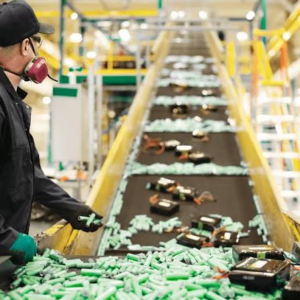
The government must move beyond policy announcements, strengthen inspections, publish approved recycling facilities and make battery collection accessible.
Because when the electricity stops coming from an exhausted battery, the environmental responsibility does not stop with it.
Nigeria has found an alternative to generators. It must now demonstrate that it has a responsible plan for what happens when the batteries powering that alternative are no longer useful.


























Leave a comment