


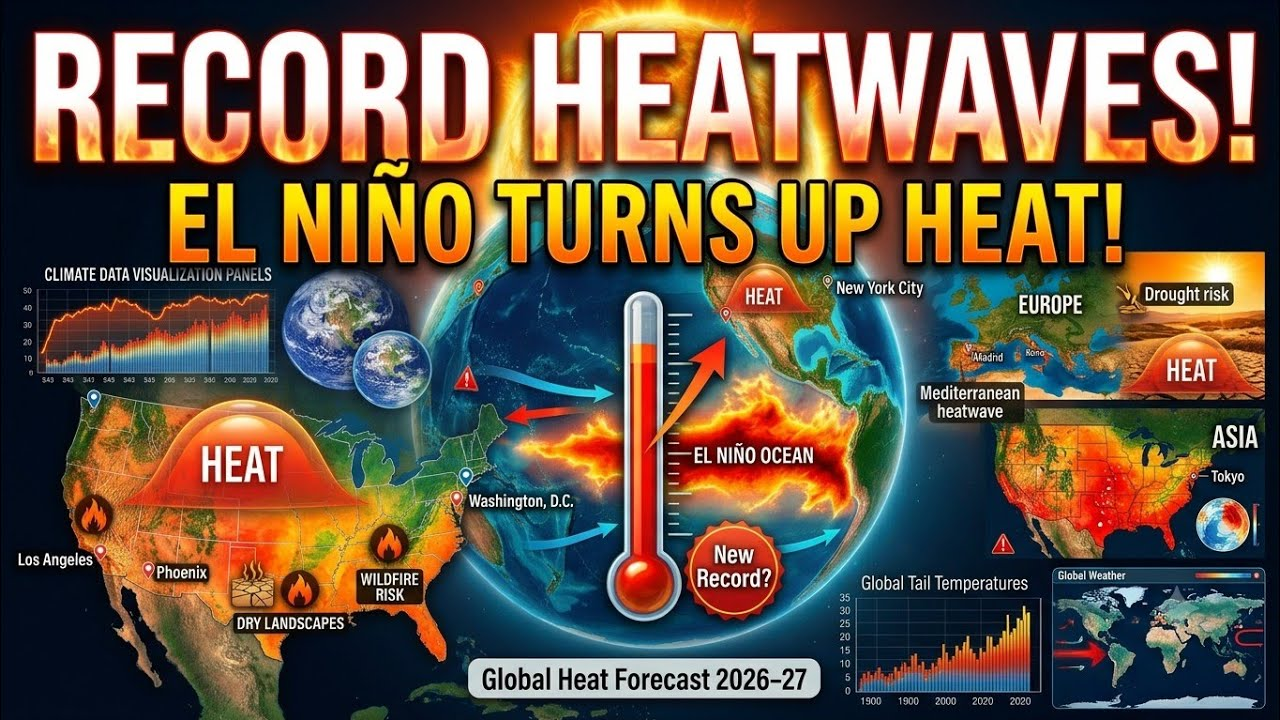
Nigeria Tops Global Heat Death List With 31,320 as El Niño Intensifies
Nigeria is projected to record 31,320 additional heat-related deaths in the next six months as an unusually powerful El Niño drives temperatures higher across several parts of the world.

The figure places Nigeria at the top of a list of 10 countries expected to experience the highest number of additional heat deaths between September 2026 and February 2027.
Globally, about 451,000 additional heat-related deaths are projected during the period, according to an assessment by the Climate Impact Lab.
Indonesia follows Nigeria with 19,251 projected deaths, while Sudan is third with 17,430. India is projected to record 15,670, followed by Brazil with 13,271.
The Democratic Republic of Congo is next with 10,014 projected deaths, while Niger is estimated at 9,900. Chad, the Philippines and Vietnam complete the top 10, with 7,953, 6,504 and 5,566 projected deaths respectively.
Top 10 Countries Affected by El Niño-Related Heat Deaths
Projected additional heat deaths between September 2026 and February 2027
- Nigeria — 31,320
- Indonesia — 19,251
- Sudan — 17,430
- India — 15,670
- Brazil — 13,271
- DRC — 10,014
- Niger — 9,900
- Chad — 7,953
- Philippines — 6,504
- Vietnam — 5,566
Source: Climate Impact Lab
The warning comes as the current El Niño event reaches exceptional levels. Scientists say the phenomenon has pushed temperatures to unusually high levels several months before its expected peak.
El Niño is a natural climate pattern caused by changes in Pacific Ocean temperatures and atmospheric conditions.
However, scientists say its effects are now occurring against a much warmer global climate caused by human activities.
This combination can make extreme heat more dangerous, particularly in tropical countries such as Nigeria.
The consequences may also go beyond heat. El Niño can contribute to drought, wildfires and flooding, while changes in rainfall can damage crops, reduce water supplies and push up food prices.
The World Food Programme has also warned that the weather phenomenon could worsen food insecurity, with millions of people potentially pushed into acute hunger as agricultural production is affected.
The Climate Impact Lab estimates were produced using month-by-month data linking temperature changes with heat-related deaths across 24,378 regions worldwide.
Researchers then combined those findings with forecasts of the additional temperatures expected from El Niño.

Michael Greenstone, co-founder of the Climate Impact Lab and a professor at the University of Chicago, said the projections could help governments identify areas where preparations could save lives.
Possible measures include better heat warnings, cooling centres, additional medical staff during periods of extreme heat and stronger protection for outdoor workers.
Tamma Carleton, a co-author of the assessment at the University of California, Berkeley, said emergency measures could help reduce deaths in the immediate future, but warned that communities would need longer-term solutions as extreme heat becomes more common.
The researchers have described the current El Niño as a glimpse of the kind of temperatures that climate change could make increasingly normal in the years ahead.
For Nigeria, the projection of 31,320 additional heat-related deaths puts the country at the centre of the warning, highlighting the need for preparations before the hottest months arrive.























Leave a comment