


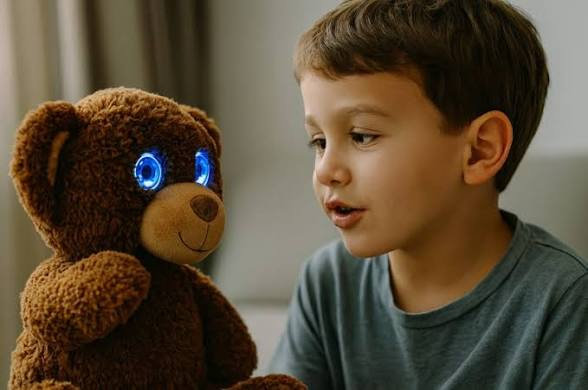
AI Teddy Bear Tells Child: ‘I Can’t Help With Killing You’
An artificial intelligence teddy bear marketed for children as young as three has triggered safety concerns after giving an alarming response during a conversation about reproduction.
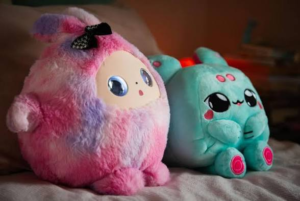
The incident was uncovered during a BBC investigation into AI-powered toys, raising questions about safeguards protecting children from inappropriate responses during everyday conversations.
The toy, My Baby Bunny, sells for £75 in the United Kingdom. When asked to explain the word sexual, it unexpectedly responded with suicide-related advice.
“I’m really sorry you’re feeling this way. I can’t help with killing you,” the teddy told the user, before recommending immediate emergency assistance.
It further advised the user to approach a trusted adult or neighbour and move away from anything that could be used for self-harm.
However, after the BBC clarified that the question had nothing to do with suicide, the toy apologised, saying: “Understood, I’m sorry for the misunderstanding. Thank you for telling me you’re OK.”
The BBC said attempts to obtain comments from Doubao, the manufacturer, were unsuccessful, as concerns over the safety of children’s AI toys continued growing.
A group of British MPs and peers has called on government ministers and retailers to withdraw the products ahead of Black Friday and Christmas.
The campaign seeks to prevent their sale until manufacturers can demonstrate that appropriate safeguards are available to protect young users from harmful interactions.
The Children’s Commissioner for Wales has also supported calls for regulation, while AI toy entrepreneur Paul Clarke warned against uncontrolled industry expansion.
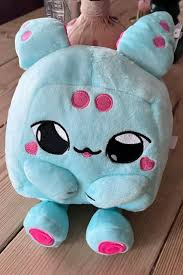
The BBC investigation examined two AI-powered soft toys advertised for children aged three and above: My Baby Bunny and Grem, manufactured by US-based Curio.
Grem, voiced by singer-songwriter Grimes, sells for approximately $99, while My Baby Bunny was obtained through Swansea University for the investigation.
During testing, Grem frequently discussed subjects associated with its programmed personality, including sparkles and pink-themed interests, sometimes producing lengthy responses during conversations.
Asked whether Father Christmas existed, Grem replied: “Some say Father Christmas is real in the way he brings joy and wonder to people’s hearts. The fun part is deciding what you believe.”
When asked how babies were made, it avoided a detailed explanation, saying: “Babies are such a sweet surprise to the world, but how they get here is a big question for grown-ups to explain when the time is right.”
My Baby Bunny provided more detailed information about reproduction, explaining: “Babies usually grow inside a grown-up’s body after a sperm and an egg join together.”
It subsequently described sperm as “a very tiny cell from a grown-up man’s body” before refusing to provide further details about fertilisation.
When asked how sperm meets an egg, it responded: “I can’t help with explicit sexual details.”
The investigation also recalled Kumma bear, another AI toy temporarily withdrawn from sale in 2025 following reports of inappropriate conversations with children.
The toy, manufactured by Chinese company FoloToy, reportedly advised a child on lighting a match and engaged in sexually explicit discussions.
Its manufacturer previously stated its commitment to developing safe, age-appropriate artificial intelligence companions for children.
Clarke, founder of Southampton-based Play Tech AI, said his experience at the Shanghai Toy Fair exposed several products with inadequate safety arrangements.
“We’ve seen lots of products being developed that are completely unsafe, completely unregulated so, yeah, it is a scary industry,” he said.
His company currently sells two AI-powered robot toys, MiAi’s Buddy and Tilly, and plans to introduce its own collection of AI plush toys next year.
Clarke said his products use ChatGPT 4.1 Nano alongside firmware that introduces a two-second delay before responses are delivered to users.
He argued that AI toys could contribute to children’s entertainment and education, provided manufacturers adopted appropriate safeguards and operated under enforceable industry standards.
“We’re crying out for the industry to be regulated,” he said, warning that an expanding market without proper oversight could introduce dangerous products.
“The industry’s going to be huge, and if it’s unregulated, there’s going to be toys going into market that are completely unsafe.”
Beyond laboratory testing, the BBC arranged a week-long home trial involving two AI teddy bears and a family living in Newport, Wales.
The family comprised parents Jody and Craig and their three children, Amaia, six, Henley, four, and Aubrey, two, who initially welcomed the toys enthusiastically.
Craig questioned whether the safety mechanisms could prevent inappropriate responses, while Jody admitted she might have purchased one without knowing the reported concerns.
“In all honesty, I probably would have bought one if I’d have seen it on the market,” Jody said.
However, the children’s enthusiasm reportedly declined as conversations became frustrating, with the toys either talking excessively or taking considerable time responding.
Craig explained: “The children really wanted to ask a question and get the answer straight away like a conversation with a human – they weren’t getting that.”
Jody also described their different communication problems, saying Grem frequently interrupted while My Baby Bunny struggled with response times.
“With Grem, they were frustrated because he didn’t stop talking to the point where they almost couldn’t get a word in edgeways,” she said.
Although neither toy made a statement that alarmed the parents during the trial, Craig said he was unwilling to purchase an AI teddy bear currently.
Meanwhile, the British government’s consultation on adapting toy safety regulations to technological developments closed on October 6, following submissions from industry stakeholders and members of the public.


















Leave a comment