


Iran Puts Trump Behind Bars in Shocking Tehran Art Display
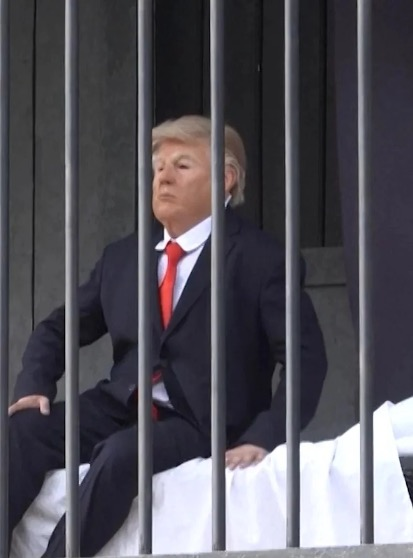
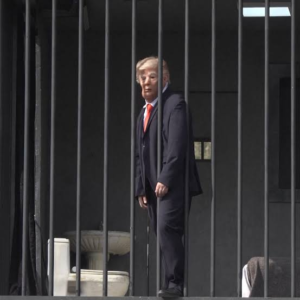
Iran has unveiled a provocative public art installation in Tehran featuring a man impersonating United States President Donald Trump locked inside a cage resembling a prison cell, drawing attention to a deadly American strike on an Iranian wedding.
Positioned above one of the Iranian capital’s busiest squares, the installation shows the impersonator rattling the cage bars, sleeping on a narrow bed and performing Trump’s familiar dance moves to the Village People’s song Y.M.C.A.
Behind the cage, an electronic billboard displays images of the deadly American attack on an Iranian wedding last month, placing the unusual performance against scenes of destruction and loss.
One message displayed on the screen reads, “Failure to see this scene is a crime,” while yellow crime scene tape reinforces the installation’s message about the reported attack.
The display reflects Iran’s growing use of public art and political imagery to communicate its grievances against Washington as tensions between the two countries continue amid the wider conflict involving Israel.
Since the United States and Israel attacked Iran in February, political displays across Tehran have adopted a more confrontational tone, with public spaces increasingly used to criticise American leadership.
Another billboard erected at Tehran’s central Enghelab Square during the summer depicted Trump lying inside a coffin covered in graffiti, presenting another pointed message directed at the American president.
Trump has also used political imagery to ridicule Iran’s leadership, sharing social media posts, some generated with artificial intelligence, that mock the country’s clerical rulers or depict their destruction by American military firepower.
Meanwhile, Iran’s government and its supporters have turned to satire, memes and online videos to criticise Trump and his decision to attack the country.
The latest installation adds to the growing propaganda battle between Tehran and Washington, demonstrating how public art, humour and digital imagery have become tools for expressing political hostility during the conflict.






Leave a comment