


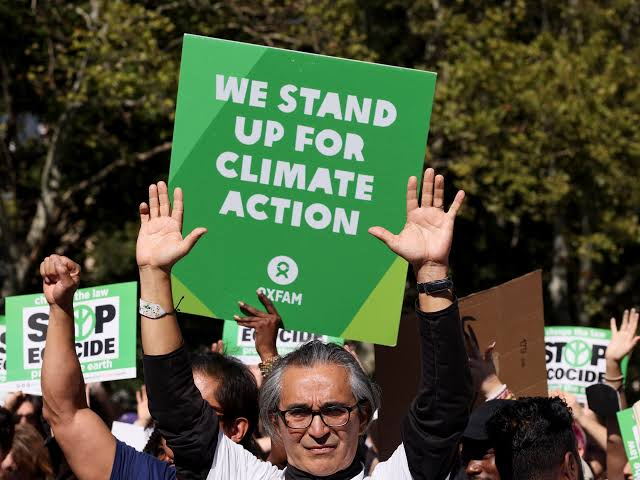
Climate Change: UN Calls for 18% Cut in Global Emissions by 2030
The United Nations has warned that the world must reduce greenhouse gas emissions by 18 per cent by 2030 and 45 per cent by 2045.
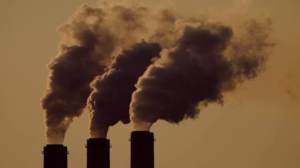
The warning was contained in a new report by the United Nations Environment Programme (UNEP), which found that countries are failing to meet climate targets.
According to the report, the opportunity to prevent global temperatures from exceeding the 1.5°C limit under the Paris Agreement has effectively closed, although decisive action remains possible.
UNEP Executive Director Inger Andersen said governments had failed to act with the urgency required to keep the 1.5°C target within reach, urging continued commitment.
She stressed that countries should not abandon the goal, explaining that it remained possible to limit the duration and extent of temperatures exceeding the threshold.
The report noted that global emissions in 2025 remained broadly unchanged from the previous year, but UNEP warned against interpreting this as evidence that emissions had peaked.
The organisation cited geopolitical uncertainty and continued dependence on fossil fuels as reasons for caution, warning that global emissions could rise again without stronger government action.
UNEP said cutting greenhouse gas emissions by 18 per cent by 2030 and 45 per cent by 2045 could help limit warming to 1.7°C above pre-industrial levels.
Although this outcome would not eliminate climate risks, it could help prevent extreme heatwaves and other climate-related disasters from becoming significantly more severe in many regions worldwide.
The report highlighted the growing gap between governments’ long-term climate promises and the policies required to achieve them, raising concerns about the effectiveness of international commitments.
Under the Paris Agreement, countries were expected to submit stronger emissions-reduction commitments at COP30, held in Brazil in November 2025, but UNEP found that the pledges remained insufficient.
Even if all updated commitments were implemented, global temperatures could rise by 2.6°C above pre-industrial levels, according to the report, exceeding the internationally agreed temperature targets.
The outlook was worse under existing government policies, which UNEP projected could result in warming of approximately 2.8°C, increasing the risks associated with climate change worldwide.
Scientists have warned that prolonged global warming could increase the likelihood of crossing critical climate tipping points, potentially triggering environmental changes that would be difficult or impossible to reverse.
Johan Rockström, director of the Potsdam Institute for Climate Impact Research, said the gap between current commitments and the emissions reductions required remained substantial, demanding stronger international cooperation.
He said global emissions could reach approximately 50 gigatonnes of carbon dioxide equivalent annually by 2035 under existing commitments, compared with less than 35 gigatonnes needed.
Rockström argued that governments already possessed sufficient scientific evidence to guide their decisions, making political leadership and the implementation of effective climate policies the major challenges.
The United States, the world’s second-largest greenhouse gas emitter after China, also featured prominently in concerns over global climate action under President Donald Trump’s administration.
Trump withdrew the United States from the Paris climate agreement and signalled policies that could reverse the country’s long-term decline in greenhouse gas emissions, raising international concerns.
Bill Hare, chief executive of Climate Analytics, urged major fossil fuel producers, including the United States and Saudi Arabia, to accept greater responsibility for reducing global emissions.
He warned that political disagreements and continued fossil fuel dependence were worsening climate risks, even as communities faced extreme heat, wildfires and other damaging environmental consequences.
Mohamed Adow, director of Power Shift Africa, said governments had access to technologies capable of reducing emissions, particularly solar and wind power, but implementation remained inadequate.
He argued that political leadership had not kept pace with renewable energy expansion or the urgent need to reduce dependence on fossil fuels across major economies worldwide.
UNEP identified methane reduction as another measure that could help slow global warming more quickly because methane traps substantially more heat than carbon dioxide over twenty years.
The report also raised concerns about the international process for assessing progress under the Paris Agreement, with the next global stocktake scheduled for 2028.

Despite these setbacks, climate experts maintain that faster emissions reductions remain possible through stronger government policies, renewable energy expansion and reduced fossil fuel consumption to limit warming.






















Leave a comment