


By: Chioma Madonna Ndukwu
The Way We Live: He Built Three Houses, But Never Started the Business

Daniel never complained about working weekends. For almost sixteen years, the Nigerian healthcare assistant had cared for elderly residents in Birmingham, taking extra shifts whenever they were available. His colleagues often joked that he was saving every pound he earned.
They were right.
“I’ll rest later,” he would tell them with a smile. “I’m building something back home.”
During lunch breaks, Daniel sometimes unlocked his phone and showed them photographs his younger brother had just sent from Nigeria.
“The roof is finally on,” he would say one month.
“They’ve finished the painting,” he would announce the next.
His colleagues admired every update.
“You’ll soon be back home enjoying life,” one of them said.
Daniel laughed.
“That’s the plan.”
The years passed more quickly than he realised. When he eventually returned to Nigeria for Christmas, his family welcomed him with music, food and endless embraces.
His mother held his face in both hands.
“You’ve made us proud,” she whispered.
Neighbours arrived throughout the day, eager to congratulate the young man whose hard work overseas had transformed an empty piece of land into one of the finest houses in the neighbourhood.
“You’ve done well, Daniel.”
“Your children will never struggle.”
“This is what success looks like.”
Daniel thanked everyone.
That evening, after the visitors had gone home and the compound had grown quiet, he and his younger brother, Michael, sat outside enjoying the cool air.
Daniel looked around the spacious compound before breaking the silence.
“Do you remember the first thing I wanted to build?”
Michael smiled.
“A food processing company.”
“I wanted farmers to bring their produce here.”
“I remember.”
“I wanted young graduates to find their first jobs here.”
Michael nodded without saying a word.
Daniel looked towards the house glowing beneath the security lights.
“Instead, I built another house.”
For a long moment, neither brother spoke.
The silence between them carried more meaning than any conversation could.


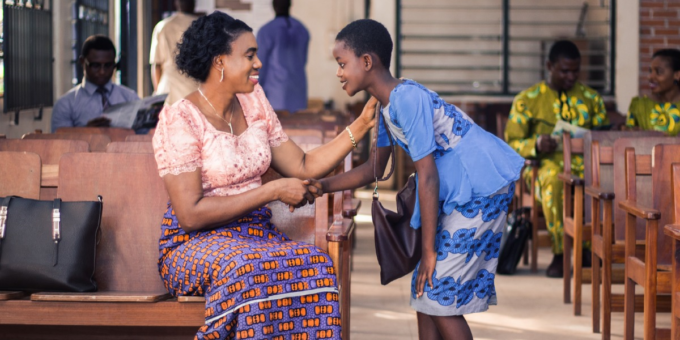
A few weeks later, Daniel met his longtime friend Grace after church in Birmingham.
Grace had spent twelve years in Canada before relocating to the United Kingdom. Like Daniel, she had invested steadily back home.
“So,” she asked as they settled into their seats with coffee, “how many properties now?”
“Three.”
Grace laughed.
“You’ve been busy.”
“And you?”
“Two plots of land.”
She stirred her coffee before asking the question she had been saving.
“What about the business you’ve always talked about?”
Daniel looked through the café window.
“I’ve written the business plan so many times that I almost know every page by heart.”
“So why haven’t you started?”
He smiled sadly.
“I know how to build houses from here.”
Grace waited.
“I still don’t know how to build a business from here.”
She understood immediately.
“I thought I was the only one,” she admitted. “Buying land helps me sleep at night. Starting a company from thousands of kilometres away keeps me awake.”
They both laughed, because they recognised themselves in each other’s fears.
Months later, Daniel attended a business seminar where a management consultant posed a simple question.
“What makes a business survive after the owner leaves the office?”
People offered different answers.
“Hard work.”
“Honest employees.”
“Prayer.”
The consultant smiled.
Then he quoted Peter Drucker.
“What gets measured gets managed.”
He explained that successful businesses do not depend only on finding good people. They depend on creating systems where responsibilities are clear, records are transparent and everyone is accountable
The speaker smiled again before quoting management expert Peter Drucker.
“The best way to predict the future is to create it.”
He explained that lasting businesses are not built on hope alone. They thrive because expectations are clear, records are transparent and accountability is part of the culture, not the mood of the owner.
Daniel filled pages of his notebook.
For years, he had searched for someone he could trust completely.
He had never asked himself how trust could be supported by better systems.
On another continent, Asha was preparing her nephew to join the family manufacturing business in Ahmedabad, India.
She handed him a contract.
He looked surprised.
“Auntie, don’t you trust me?”
She smiled warmly.
“I do.”
“Then why the paperwork?”
“Because clear agreements protect good relationships.”
He signed without another question. The contract wasn’t a sign of suspicion. It was a sign of wisdom.
In Puebla, Mexico, Carlos had just returned after years working in the United States.
He and two childhood friends dreamed of opening a logistics company. Before they bought their first delivery van, they spent weeks discussing how decisions would be made, how money would be recorded and what would happen if one partner decided to leave.
Months later, the business was thriving. People admired their friendship.
Carlos always smiled when he heard that.
“It wasn’t friendship alone that built this company,” he would say. “It was the rules we all agreed to respect.”
Former United Nations Secretary-General Kofi Annan once said, “Good governance is perhaps the single most important factor in eradicating poverty and promoting development.”
Although he was speaking about nations, the principle reaches into homes, businesses and communities. Wherever fairness, accountability and responsibility become part of everyday life, trust finds room to grow.

Investor Warren Buffett expressed a similar truth from another perspective when he observed, “Risk comes from not knowing what you’re doing.”
Many people think the greatest risk is trusting another human being. Sometimes the greater risk is expecting people to succeed without building systems that help them succeed.
Daniel still owns three beautiful houses. Whenever he comes home, neighbours still stop to admire them.
“You’ve done well for yourself,” they tell him.
He thanks them because he knows they mean every word. One afternoon, he stood outside the first house he built and watched a group of young men laughing over a game of draughts beneath a mango tree across the road.
Michael noticed him staring.
“What are you looking at?” he asked.
Daniel pointed quietly.
“Do you see those boys?”
Michael nodded.
“I used to imagine some of them walking into my factory every morning.”
He smiled, but the smile faded almost immediately.
“I imagined uniforms instead of unemployment.”
Neither brother spoke again. They didn’t need to.
Before leaving for the airport, Daniel walked through each of his houses one final time. He switched off the lights, checked the windows and locked every door. Everything was exactly where it should be.
As the car drove away, he looked through the rear window until the buildings disappeared from sight.
“They’re beautiful houses,” the driver said.
Daniel nodded.
“They are.”
After a long pause, he quietly added,
“I just wish one of them had been a business.”
Perhaps the greatest dreams are not always the ones that fail. Sometimes they are the ones we never allow to begin.

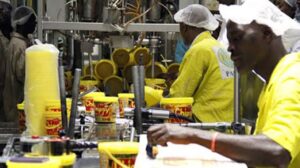
One Thing Worth Remembering:
A house can preserve wealth for one family. A thriving business can create opportunity for many families. The greatest legacy is often not the property we leave behind, but the lives we empower through courage, accountability and vision.
What about you?
If you had the opportunity today, would you build another house or create a business that could change other people’s lives? And what would give you the confidence to trust someone else with that dream? Share your thoughts in the comments.