

By: Chioma Madonna Ndukwu
The Way We Live: One Afternoon, Chike Began to See Home Differently
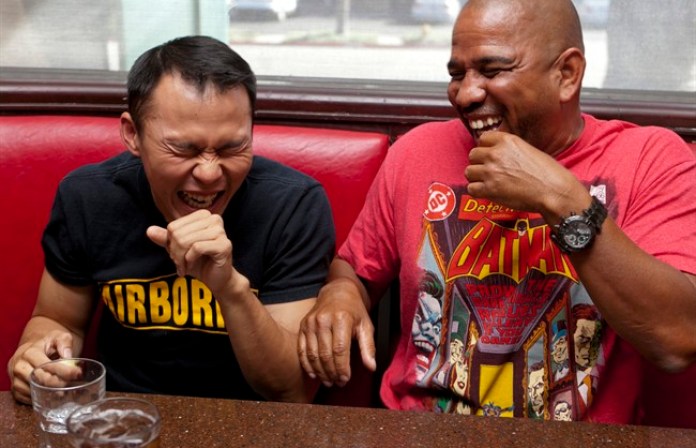
“You introduced yourself twice.”
Chike looked up from his cup of coffee and smiled.
“Twice?”
“Yes.”
Li Wei leaned back in his chair.
“First you said your name was Chike. Then you said John Emmanuel. I was wondering which one tells me who you are.”
Chike laughed.
“My parents gave me all three. Around here, nobody thinks twice about it.”
“I wasn’t questioning your names,” Li Wei replied calmly. “I was wondering which one feels like home when you hear it.”
For a brief moment, Chike did not answer.
The conversation had begun after an international academic conference in Europe. They had exchanged business cards, discovered they were staying in the same hotel and decided to continue talking over coffee before returning to their separate countries.
Neither of them imagined that an ordinary introduction would become an unexpected conversation about identity, memory and the quiet things people lose without noticing.
Li Wei broke the silence.
“May I ask you something else?”
“You’ve already started,” Chike said with a grin.
“What language did your grandparents speak at home?”
“Igbo.”
“And you?”
“I speak English most of the time.”
“By choice?”
“By habit.”
Li Wei nodded thoughtfully.
“Habits have a way of becoming identities.”
Chike smiled.
“You ask difficult questions.”
“I ask the same questions about my own country,” Li Wei replied. “Every generation should.”
Li Wei smiled kindly.
“Neither admiration nor learning from others is a weakness,” he said. “Every civilisation has borrowed from another. The real question is whether we are also building something worthy of being borrowed.”
For the first time that afternoon, Chike stopped thinking of the conversation as casual. It was beginning to feel like a mirror.

Nothing around him appeared different, yet something within him had quietly shifted. He had returned to the same country with a different way of seeing it.
On the journey home, one thought refused to leave him. Every generation inherits something from the one before it, but every generation also leaves something behind for those who come after.
If we spend all our energy celebrating what other people have built without investing the same passion in our own ideas, stories and innovations, what will the next generation proudly inherit from us?
The Kenyan writer Ngũgĩ wa Thiong’o once observed, “Language carries culture, and culture carries… the entire body of values by which we come to perceive ourselves and our place in the world.”
Those words remind us that identity is not preserved by shutting out the rest of the world. It is preserved by knowing who we are while remaining willing to learn from others.
The historian Carter G. Woodson wrote, “If you can control a man’s thinking, you do not have to worry about his actions.”
His words remind us that the stories a people tell, the knowledge they value and the confidence they place in their own abilities can shape the future of an entire society.
Across Africa, Asia, Europe and the America, nations have grown by learning from one another. No country develops in complete isolation.
The greater challenge is ensuring that while we borrow ideas, we also create ideas worth borrowing; while we admire excellence elsewhere, we cultivate excellence at home.
Chike never forgot the conversation in that café. It did not make him love his continent less. It made him want more for it.
He still admired the achievements of other nations, but he also understood that admiration should never replace ambition.
A society discovers its true strength when it learns confidently from the world while contributing confidently to it.

Personal Thoughts:
A people do not lose themselves because they learn from others. They begin to lose themselves when they stop believing they have something worth teaching.
One Thing Worth Remembering:
The strongest cultures are not the ones that reject the world. They are the ones that learn from the world while continuing to build something the world is eager to learn from.
Let’s Talk: If someone from another continent asked what your community has given the world, what story would you proudly tell?
Editor’s Note:
Chike, Li Wei and the conversations in this feature are fictional. The episode is inspired by broader discussions about identity, education, innovation and cultural confidence. It encourages reflection on how societies can learn from others while continuing to value and strengthen their own heritage.