


Elon Musk’s SpaceX Rocket Set to Crash Into the Moon as Scientists Reveal What Comes Next
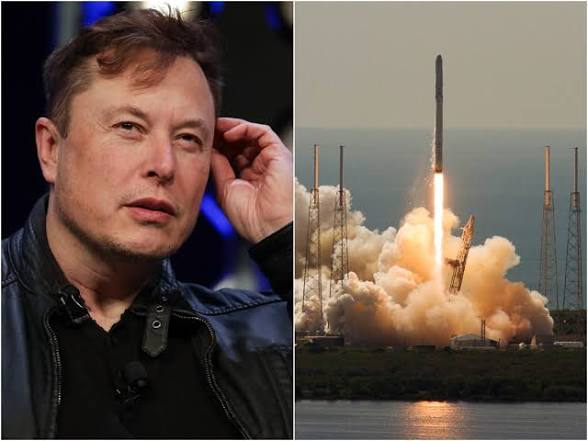
A massive piece of a SpaceX rocket launched by Elon Musk’s aerospace company is expected to collide with the Moon on Wednesday, marking a rare event that has captured the attention of scientists around the world.

The rocket segment, which completed its mission after lifting two lunar landers and scientific equipment into space in January 2025, has spent months drifting aimlessly before being pulled into the Moon’s gravitational path.
Scientists estimate that the nearly 4,900-kilogram object will strike the lunar surface at about 7:35 a.m. at a speed of roughly 5,400 miles per hour.
Although the impact sounds dramatic, experts say there is no danger to people on Earth.
Astronomer and space-tracking expert Bill Gray said the collision is expected to release energy comparable to about three tonnes of TNT and leave behind a crater measuring about 17 metres across.
According to him, the incident is less about destruction and more about the growing challenge of dealing with abandoned spacecraft left floating in space after completing their missions.
Reports indicate the impact will occur on the side of the Moon illuminated by the Sun and facing Earth. SpaceX has yet to issue any public statement on the expected collision.
Will the Moon be affected?
Scientists say the Moon is unlikely to suffer any meaningful damage.
Its surface has endured billions of years of impacts from asteroids, meteoroids and other space objects, leaving it covered with countless craters. Unlike Earth, the Moon has no atmosphere, weather or tectonic activity to erase those marks.
Dr. Ed Bloomer of the Royal Observatory Greenwich said the incoming rocket may appear large, but it is insignificant compared with the size of the Moon.
He explained that while the object is travelling at tremendous speed, the impact will not create any serious consequences for the lunar surface.
Can people watch the collision?
The answer is yes—but only under the right conditions.
Experts believe the impact itself will be difficult to observe because it will occur close to the Moon’s outer edge. Even powerful telescopes may struggle to capture the exact moment of collision.
However, astronomers say observers using sensitive equipment could briefly see a cloud of dust rising from the impact site. A faint flash of light may also appear before disappearing within moments.
Skywatchers in eastern parts of the United States, Canada and much of South America are expected to have the best chance of witnessing the event.
NASA’s Lunar Reconnaissance Orbiter is also expected to examine the crash site after the collision, helping scientists study the newly formed crater.
Why scientists are paying close attention
The rocket stage is another reminder of the growing problem of space junk.
Experts use the term to describe old satellites, discarded rocket parts and other human-made objects that remain in space after completing their missions.
As the number of launches continues to rise each year, scientists say managing space debris is becoming increasingly important to reduce future risks and protect ongoing missions beyond Earth.