

By: Chioma Madonna Ndukwu
The Way We Live: Clara Was Told to Move. She Decided She Had Moved Enough.
Clara had become used to the little humiliations. They were rarely dramatic enough to make the evening news.
Sometimes it was the shop assistant who followed her around the store as though she were planning to steal something. Sometimes it was the stranger who tightened his grip on his bag when she walked past.
Sometimes it was the job interview where the conversation changed the moment the interviewer saw her name and face.
She had learned to swallow those moments.
“Don’t let them get to you,” her mother used to tell her. “You cannot fight every battle.”
Clara understood what she meant. She also knew that there were battles people kept losing because everyone had become too tired to fight them.
One afternoon, Clara boarded a crowded city bus and found an empty seat near the window. She sat down, placed her bag on her lap and looked outside as the bus moved through the traffic.
A few stops later, a man standing nearby looked at her.
“You need to move.”
Clara looked up.
“Why?”
He glanced at the seat.
“Just move.”
She understood.
She had heard the tone before. She had seen the same assumption in different places, spoken in different words.
“There are other seats,” she said.
“I said move.”
The people around them became quiet. A woman sitting across the aisle looked down at her phone. An elderly man stared through the window.
Clara felt the familiar pressure to avoid trouble. She could stand up, find another seat and continue her journey. Nothing would happen. Nobody would shout. She would arrive home safely.
But something inside her refused.
“I have done nothing wrong,” she said.
The man frowned.
“You people always make things difficult.”
Clara looked at him.
“Being treated fairly isn’t making things difficult.”
The bus became silent.
It was only a few sentences, but Clara knew that moments like this were never really about the words being spoken. They were about what people had been taught to accept.
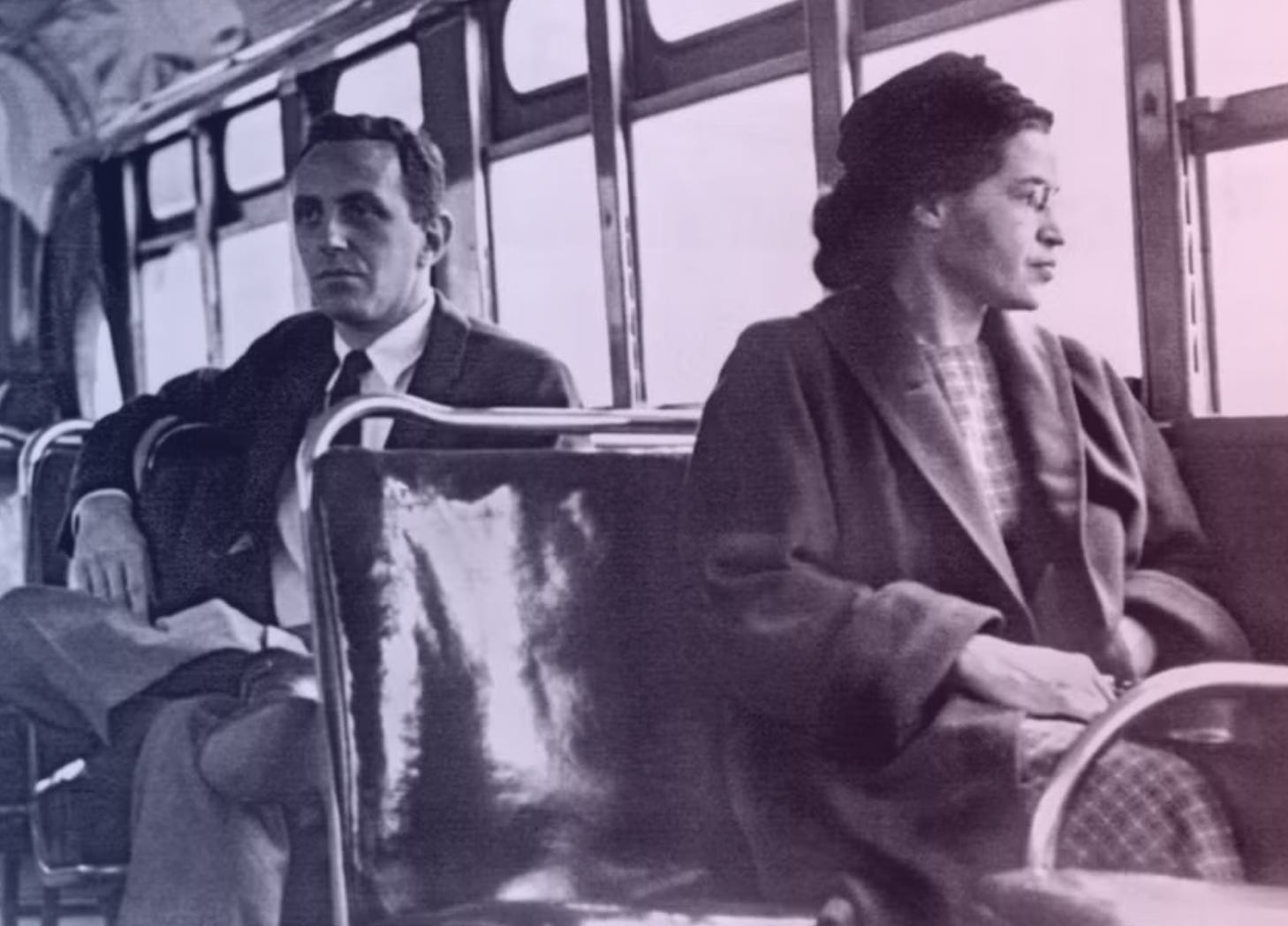
Racism survives partly because discrimination can become ordinary. When unfair treatment is repeated for long enough, people begin to mistake familiarity for normality. That is why the courage of Rosa Parks still matters.
In 1955, Rosa Parks was travelling on a segregated bus in Montgomery, Alabama, when she refused to give up her seat after being ordered to do so because of racial segregation.
Her arrest became a catalyst for the Montgomery Bus Boycott, in which thousands of Black residents refused to use the city’s buses in protest against discriminatory treatment.
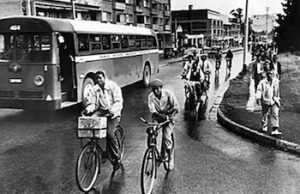
Rosa Parks did not know exactly how far her decision would travel.
She simply knew that she had reached a point where obedience to an unjust system felt worse than the consequences of resisting it.
The boycott brought together ordinary people who were willing to sacrifice convenience, time and money to challenge segregation.
Among the leaders who emerged from that struggle was a young Baptist minister named Martin Luther King Jr.
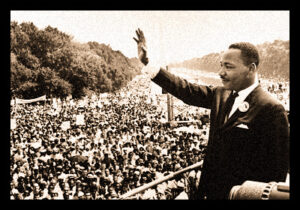
King soon became one of the most prominent voices of the American civil rights movement. He called for organised, nonviolent resistance to racial injustice and helped transform local protests into a broader national struggle for equal rights.
Rosa Parks had made a decision on a bus. Martin Luther King Jr. helped give a growing movement a powerful voice.
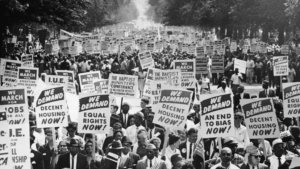
But neither of them changed history alone. Behind the names remembered in textbooks were thousands of ordinary people who walked instead of taking buses, joined boycotts, organised communities, endured intimidation and continued demanding equality when giving up would have been easier.
That is often how change begins. One person’s refusal can encourage another person to speak, another to join the struggle and another to organise.
What begins as a single act of courage can gradually become a movement when people who have experienced the same injustice realise that they do not have to face it alone.
And eventually, what once seemed impossible begins to look inevitable.
James Baldwin once wrote, “Not everything that is faced can be changed; but nothing can be changed until it is faced.”
Racism has taken different forms in different societies, and the history of racial injustice is not identical from one country to another. Yet the human demand behind the struggle remains remarkably familiar.
People want to be treated with dignity. They want their opportunities judged by their ability rather than their skin colour.
They want to enter a shop without being treated like suspects, apply for a job without being reduced to stereotypes and travel through a public space without being reminded that someone else believes they belong there more than they do.
From New York to London, Johannesburg to São Paulo, racial and ethnic prejudice has continued to provoke difficult conversations about belonging and equality.
The circumstances differ, but the need to challenge discrimination remains universal.
Back on Clara’s bus, the man was still waiting for her to move.
She held his gaze.
“No,” she said quietly.
It was not a speech, not an invitation to fight. It was simply a refusal to cooperate with humiliation.
The woman who had been looking at her phone finally raised her head.
“She has a right to sit there,” she said.
The elderly man beside her nodded.
“She does.”
The man looked around and realised that the silence had changed. People were no longer pretending not to notice.
He walked toward the back of the bus. Clara remained where she was. She knew one uncomfortable exchange would not end racism.
She knew that discrimination was much bigger than one bus ride. But she also understood something that history had demonstrated many times: injustice becomes harder to defend when people stop accepting it quietly.
Courage is often romanticised after history has already shown us the outcome.
We look back at Rosa Parks and Martin Luther King Jr. knowing what their actions helped produce, and it is easy to forget that they were making decisions without knowing exactly where those decisions would lead.
They had no guarantee that their actions would produce the change they hoped for, but they had the conviction to challenge an injustice they could no longer accept.
Most people will never stand before a massive crowd or become names in history books. Yet life still presents smaller moments in which conscience asks a similar question.
Will you laugh when someone is mocked because of their race?
Will you remain silent when someone is denied an opportunity because of prejudice?
Will you look away when another person is humiliated?
Or will you say, in whatever way the moment requires, that this is not acceptable?
Clara eventually reached her stop and stepped off the bus.
The city continued around her. Cars moved through the traffic, people hurried along the pavement and the afternoon carried on as though nothing important had happened.
But Clara knew something had happened. She had not changed the world. She had simply refused to help injustice feel normal. Sometimes that is where courage begins.
Personal Thoughts:
Racism becomes harder to challenge when people learn to treat discrimination as ordinary. Courage begins when someone decides that another person’s dignity is worth defending.
One Thing Worth Remembering:
Rosa Parks did not know that her refusal would become part of a historic movement, just as Martin Luther King Jr. could not know how far his leadership would reach. Courage rarely comes with certainty about the outcome; it begins with the decision to resist what is wrong.
Let’s Talk:
If you witnessed someone being treated unfairly because of their race or background, would you have the courage to speak up?
Editor’s Note:
Clara is a fictional character created for this feature. The historical references to Rosa Parks, the Montgomery Bus Boycott and Martin Luther King Jr. are based on documented events in the American civil rights movement. The fictional bus encounter is used to explore the broader question of how ordinary people respond when racial prejudice is treated as normal.