


Indonesia Wildfires Trap Families Indoors as Toxic Smoke Makes Children Sick
Families in Indonesia’s Central Kalimantan province are struggling to protect their children from toxic wildfire smoke, with some confined to a single room for months.
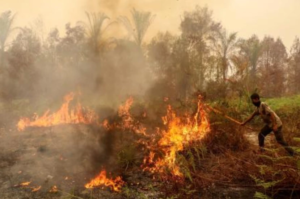
Palangkaraya, a city of about 300,000 people on Borneo, has endured months of thick haze as fires consume forests and peatlands surrounding the community there.
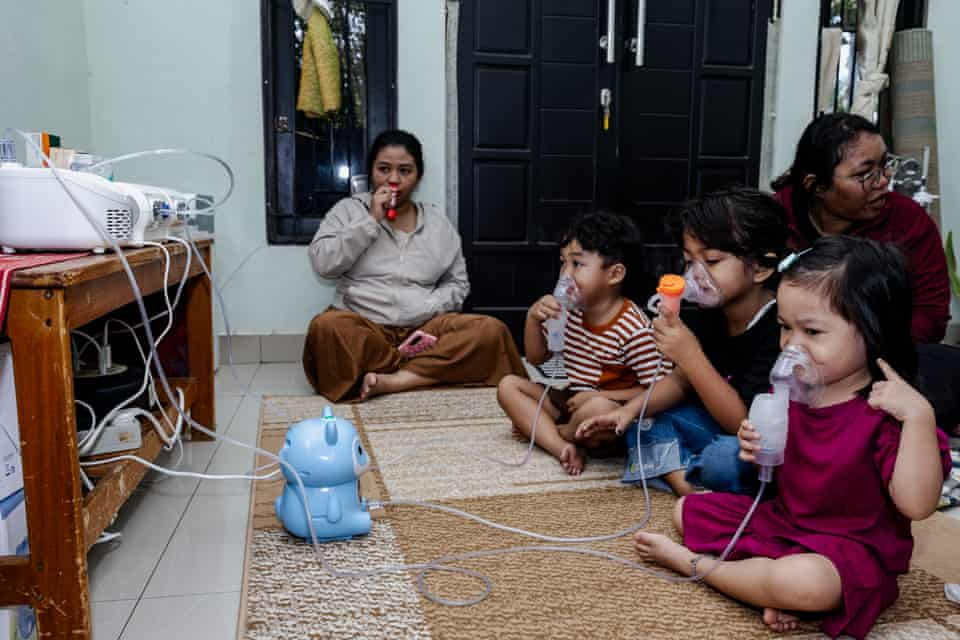
Apri Dona Yusmelita, 27, says her five-month-old son, Ares Alexander, has been sick for much of his short life, coughing until he vomits after feeding.
She uses a nebuliser to help him breathe and keeps both children in a bedroom fitted with an air purifier, away from smoke entering elsewhere.
For roughly half the past four months, the family has lived mainly in that room, moving their television and meals inside to protect the children.
Yusmelita says even brief outdoor play triggers symptoms, while power cuts and smoke leaking through the house make remaining indoors difficult for the entire family.
The fires began in July, and Indonesia has seen nearly two million hectares of forest and peatland burn this year, worsening the regional haze crisis.
Many fires are linked to deliberate land-clearing practices, including slash-and-burn methods used to prepare areas for agriculture, particularly palm oil cultivation in rural communities nationwide.
Unusually dry conditions associated with a strong El Niño have intensified the fires, while residents say official responses have yet to match the emergency’s scale.

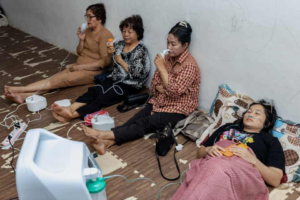
Community organisations have opened 14 clean-air shelters in Palangkaraya, providing air purifiers, oxygen tanks and nebulisers, particularly for children and older residents facing severe exposure.
The Ranu Welum Foundation, an Indigenous organisation, helps coordinate the shelters, which operate in donated rooms at churches and other public buildings across the city.
Co-founder Roro Ardya Garini says people visit simply to breathe more safely, although volunteers sometimes direct critically ill patients to hospitals for further medical treatment.
At one shelter, volunteer Sabrina Alfiana says smoke still enters homes through windows and cracks, making it difficult for families to create safe indoor spaces.
The pollution has spread beyond Indonesia, reaching Singapore, Malaysia, Brunei and Timor-Leste, with smoke also reported in parts of the Philippines and Vietnam too.
Schools have closed in affected areas, hospitals have treated large numbers of people with respiratory problems, and demand for air purifiers and oxygen has increased.
Indonesian authorities have deployed firefighters and say companies suspected of starting fires will face action, but residents continue to endure hazardous air across the region.
Volunteer Melodyna Adhesiva monitors PM2.5 pollution in Palangkaraya and shares readings through social media, warning residents when fine particles reach dangerous concentrations in their neighbourhoods.
PM2.5 particles are small enough to enter the bloodstream and damage the lungs, making prolonged exposure especially dangerous for infants, young children and older people.
The World Health Organization recommends a 24-hour PM2.5 average of 15 micrograms per cubic metre, but Palangkaraya readings frequently climb to 300 micrograms at times.
Adhesiva recorded a reading above 3,000 last month, while some monitoring devices cannot measure beyond 999, limiting their usefulness during the most severe smoke episodes.
Source: The Guardian



















Leave a comment