

By: Chioma Madonna Ndukwu
Nigeria’s Kidney Trade Is Feeding on Youths’ Vulnerability
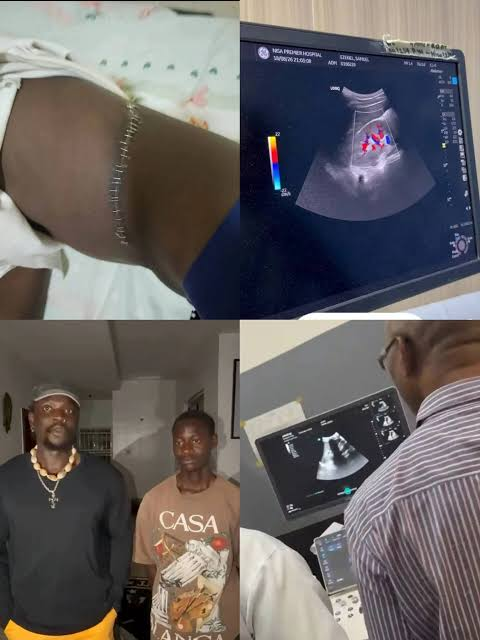
Samuel Ezekiel followed a friend to a hospital believing he was going there to make money. He did not know, according to his account, that he was walking into a decision that would permanently change his life.
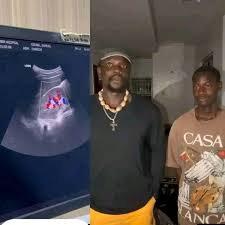
The 22-year-old alleged that his friend, Emmanuel Ode, took him to Wellington Hospital in Life Camp, Abuja, where one of his kidneys was removed on April 24, 2026.
Police have since arrested Ode, two nephrologists linked to the hospital and another suspect over an alleged human trafficking and organ-harvesting network operating around Nasarawa and Abuja.
According to the Nigeria Police Force, preliminary investigations indicate that economically vulnerable young people were targeted and allegedly persuaded to surrender their organs.
Investigators also alleged that documents, including National Identification Numbers, birth certificates, affidavits, age declarations and consent letters, were falsified to facilitate the operations.
But Samuel’s story has taken the matter beyond arrests and investigations. It has exposed the uncomfortable place where financial hardship, trust, limited awareness and desperation can converge, leaving young people vulnerable to people who know how to exploit their circumstances.
Samuel reportedly told investigators that he was paid $1,250 after his kidney was removed. He said he handed the money to Ode for safekeeping before the operation.
What happened to the money is one of the most disturbing details in his account.
Samuel alleged that Ode exchanged the dollars and used part of the money to buy two phones, two power banks and two Wi-Fi devices.
One set was reportedly given to Samuel while Ode kept the others. When the money later ran out, Samuel said his phone was collected and sold to raise money for transportation.
A kidney had allegedly left his body, the money had disappeared and even the gadget that represented part of the reward was eventually gone.
Yet Samuel’s story is only one part of a larger conversation now unfolding online and among young Nigerians themselves.
In an interview with Orbits News, Lagos-based entrepreneur Yemi Folorunsho said she had observed young men joking about selling their kidneys whenever they were provoked or frustrated, but believed the jokes could sometimes conceal a more serious intention.
“I know one or two among 20 of them could actually make it a reality,” Folorunsho said, expressing concern that what begins as a joke could become a desperate decision when the right opportunity or financial pressure comes along.
Her observation points to an uncomfortable possibility: the idea of selling an organ may sometimes begin casually before desperation, influence or the lure of money turns it into something far more serious.
There are also growing accounts of young Nigerians allegedly being approached with offers of money in exchange for a kidney.
More troublingly, some reports suggest that not everyone enters such arrangements after being completely deceived.
Some may understand that a kidney will be removed and still agree because the money appears to offer an escape from circumstances they cannot overcome.
That raises a difficult question: what does consent mean when a person’s circumstances have narrowed his choices so severely that losing an organ begins to look like a reasonable price for a better life?
The question becomes even more important when limited health literacy is added to the picture.
A person may understand that a kidney is being removed without fully appreciating the medical risks, possible complications or long-term implications.
Knowing what is happening is not necessarily the same as understanding what it means.
International standards on organ trafficking recognise this danger, particularly where financial incentives exploit economically vulnerable people.
This makes the Nigerian situation bigger than whether someone simply said yes or no.
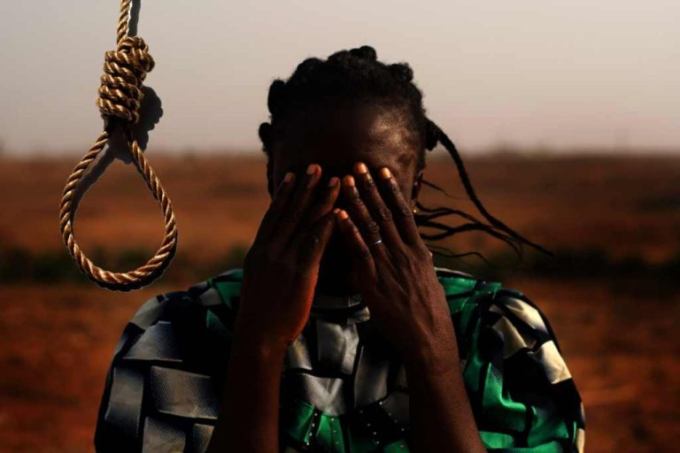
Why would a young person look at his own kidney and see something he can afford to sell?
For some, the answer may lie in unemployment, debt, family responsibilities or the desire to raise capital for a business.
For others, it may be peer influence, misplaced trust, limited awareness or the promise that losing a kidney will not seriously affect their lives.
Mr Ali Bashir Abubakar, a senior civil servant, said he was deeply disappointed by what he described as the “shameless engagement” of members of the elite in the kidney trade, calling it a “heartless activity.”
He said the alleged involvement of educated and influential Nigerians made the situation even more disturbing because people with knowledge and access to resources should be protecting vulnerable youths rather than taking advantage of their circumstances.
The concern is significant because the story is not only about young people who may be willing to sell.
It is also about the people who recruit them, the intermediaries who arrange the transactions and the professionals who may facilitate the procedures.
Samuel’s case became widely discussed after social media activist Martins Otse, popularly known as VeryDarkMan, drew attention to the matter.
His lawyer later alleged that more than 10 youths could have been affected by the suspected network, mentioning areas including Masaka, Nyanya and Mararaba. Those wider claims remain allegations and have not been independently established.
The FCT Police Command has also cautioned against unverified claims of widespread kidney selling in parts of Abuja and Nasarawa, urging people with credible information to approach the authorities rather than rely on social media reports.
But caution should not become silence.
Samuel’s alleged experience, the arrests and the ongoing investigation provide enough reason to ask how vulnerable Nigerians are being approached, how consent is obtained and who ultimately profits from the removal of human organs.
His mother reportedly learnt that her son had lost a kidney after receiving a phone call from someone who knew what had happened.
She had no idea that he had been taken to Abuja or that he was undergoing such a procedure.
That is what makes the story difficult to reduce to a transaction.
A kidney is not a phone that can be replaced when it is lost. It is not a power bank that becomes useless when its charge runs out.
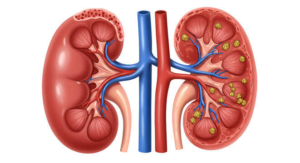
It is part of the body, quietly performing a function most people never think about until something goes wrong.
Yet for a vulnerable young person, money, trust, misinformation or desperation can make that permanent reality seem distant.
Nigeria therefore needs to look beyond the suspects already in police custody and confront the conditions that make such offers attractive.
Law enforcement must pursue those who recruit, facilitate and profit from organ trafficking, while medical institutions and professionals must be held to the highest standards of accountability.
Society must also confront the vulnerabilities that make young people susceptible to these offers, whether those vulnerabilities arise from poverty, unemployment, limited health literacy, peer influence or the desperate search for a way forward.
Samuel may have followed a friend into the hospital. Other young people may walk there knowingly.
Both stories deserve attention.
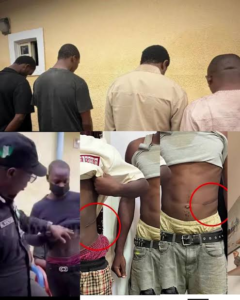
Because whether a kidney is taken through deception or surrendered because desperation has made the price seem irresistible, the question remains: what kind of society makes a young person believe that part of his body is the only thing he has left to offer?