


By: Chioma Madonna Ndukwu
Why Ibrahim Traoré Is Becoming Africa’s Most Watched President
A country that digs gold from its soil but sends it abroad for processing loses jobs, skills, industrial opportunities and part of the wealth those resources could create.
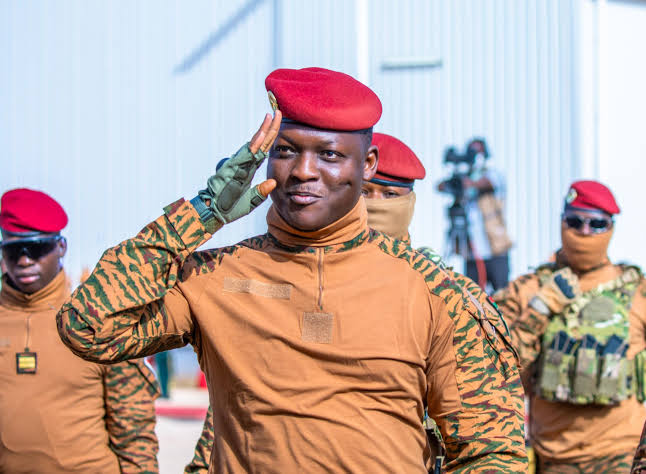
That argument now sits at the centre of growing interest in Ibrahim Traoré, the Burkina Faso president whose economic approach is attracting attention across Africa.
Traoré did not enter power through an ordinary election, but during a period of worsening insecurity that had already shaken Burkina Faso’s political establishment.
In January 2022, soldiers removed President Roch Marc Christian Kaboré, accusing his administration of failing to contain the growing jihadist insurgency threatening Burkina Faso.
Lieutenant-Colonel Paul-Henri Damiba took over and promised to make security his priority, yet his administration would last only eight months before another military takeover.
On September 30, 2022, Captain Ibrahim Traoré and other officers removed Damiba, arguing that the security situation had continued deteriorating under his leadership.
Why Ibrahim Traoré Is Attracting Attention: Since taking power, Ibrahim Traoré has built his public message around sovereignty, local production, natural resources and reducing Burkina Faso’s dependence on foreign powers.
That message gained another powerful symbol on September 28, 2026, when Traoré inaugurated Burkina Faso’s first national gold refinery, Raffinor-BF, in Ouagadougou.
The refinery has an initial capacity of 164 tonnes of gold annually, with plans to raise its production capacity to 515 tonnes as operations expand.
The project reportedly cost more than 11 billion CFA francs and is intended to keep more of Burkina Faso’s gold processing and value creation within the country.
Traoré captured the thinking behind the project during the inauguration, saying, “Producing in quantity does not suffice. Extracting does not suffice. Exporting our resources raw does not suffice.”
That statement touches an old African problem: countries rich in oil, cocoa, cotton, gold and other resources often export raw materials while importing finished goods.
Nigeria exports crude oil and imports refined petroleum products, while major cocoa-producing countries across Africa still depend heavily on foreign markets for finished chocolate.
Mineral-rich countries can therefore watch valuable resources leave their borders, only to see finished products return later at prices that carry profits generated elsewhere.
Traoré wants Burkina Faso to take another road, one where extracting natural resources becomes only the first step toward creating domestic industries and employment.
The Burkinabè government has promoted agricultural mechanisation, local manufacturing and greater state participation in mining, while the economy recorded 5.3 per cent real growth in 2025.
The International Monetary Fund reported that growth figure, giving another dimension to the economic argument surrounding Traoré’s administration and its push for domestic production.
The gold refinery, therefore, is not standing alone; it forms part of a broader attempt to connect political independence with production, industry and control.
Political independence can lose some of its practical meaning when essential goods, production capacity and major economic decisions remain heavily dependent on countries outside Africa.
For Paul Adewanju, a Nigerian living in Australia who spoke to Orbit News, that argument has become particularly compelling when he considers Africa’s current leadership.
Adewanu said he wished Nigeria could have a leader like Traoré, describing the Burkinabè leader as “undeniably the best African president” based on his assessment.
His opinion remains personal, but it reflects a frustration shared by Africans who want governments to build industries, create employment and reduce dependence on imported products.
A Kenyan who also spoke to Orbit News expressed similar admiration for Burkina Faso’s direction, especially its emphasis on national resources, domestic production and opportunities created within the country.
That admiration is understandable in a continent where millions of young people need productive work, while many countries continue importing goods they could potentially manufacture themselves.
The Questions Around Traoré: This is where Ibrahim Traoré’s leadership becomes more complicated, because economic projects alone cannot erase Burkina Faso’s continuing security problems or questions surrounding military rule.
The country still faces attacks from armed groups, while Traoré’s government has faced criticism over restrictions affecting political activity, journalists and dissent.
Those concerns make it difficult to judge his presidency through development projects alone, regardless of how attractive the language of economic sovereignty may sound.
Yet the attention surrounding Traoré cannot be dismissed simply as social-media fascination, because his policies have placed a serious economic question before other African governments.
What would happen if African countries stopped exporting most of their raw wealth and began processing more of those resources inside their own borders?
That question reaches beyond Burkina Faso because the continent’s long struggle with raw-material exports has shaped employment, industrial development, trade and the distribution of economic power.
Nelson Mandela once spoke of the need for Africa to “again take her rightful place in the world,” a challenge that remains relevant today.
The question now is what that rightful place should look like in an economy where production, technology and control over resources increasingly determine national power.
Traoré may not have solved Burkina Faso’s problems, and his administration still faces questions that history will eventually have to answer about military governance.
But he has succeeded in placing economic sovereignty firmly inside Africa’s everyday leadership conversation, moving the subject beyond speeches and political campaign promises.
The gold refinery in Ouagadougou is therefore more than a building filled with machinery; it represents an argument about who should benefit from African resources.
Whether Burkina Faso’s experiment becomes a lasting model or another chapter in a complicated political story remains uncertain, particularly while security challenges continue to weigh heavily.
For now, however, Ibrahim Traoré has given Africa something worth watching: a leadership project built around the idea that independence should not end at the flag.








Leave a comment