


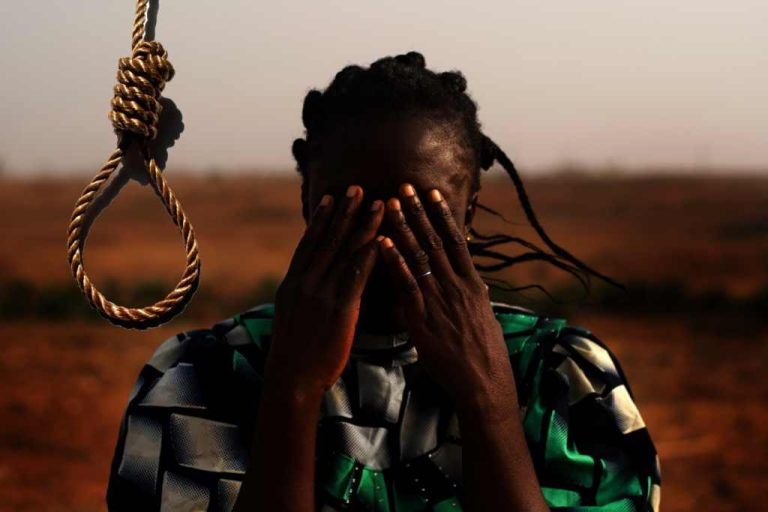
Decriminalising Attempted Suicide: Why Nigeria Is Rethinking Mental Health Law
Imagine surviving the darkest moment of your life, only to discover that the law may still have something to say about your survival.
For years, attempted suicide has remained a criminal offence under parts of Nigeria’s Criminal and Penal Codes, placing vulnerable people under legal pressure after surviving severe psychological distress.
Nigeria is now reconsidering that position. In August 2026, the Federal Executive Council approved a proposal to amend the National Mental Health Act and decriminalise attempted suicide.
The proposal is not yet law. It must still pass through the National Assembly before the proposed changes can take effect across the country.

Under Section 327 of the Criminal Code, attempted suicide is a misdemeanour punishable by imprisonment for up to one year, while the Penal Code carries similar sanctions.
The legal position is increasingly being questioned as Nigeria expands its understanding of mental health, suicide prevention and the need for early intervention.
The central question is simple but difficult: when someone attempts suicide during a mental health crisis, should the first response be punishment or professional care?
The Federal Government has indicated a preference for care. Minister of State for Health, Iziaq Salako, said decriminalisation could reduce stigma and encourage people to seek timely assistance.
The statistics explain why the debate deserves attention. WHO estimated 7,019 suicide deaths in Nigeria in 2019, while government officials have cited more than 7,000 deaths annually.
The Federal Ministry of Health has also cited an estimate of about 300,000 suicide attempts annually, although such figures are difficult to measure accurately because many cases remain unreported.
Globally, WHO estimates that more than 720,000 people die by suicide each year, while many more make attempts that may never enter official health records.
Behind every number is a person dealing with pain that may have become too heavy to carry alone, often while family members remain unaware.
An attempted suicide can leave physical injuries, emotional trauma, family distress and unanswered questions long after the immediate danger has passed.
This is where the argument for decriminalisation becomes more than a legal debate. Fear of arrest may discourage people experiencing suicidal thoughts from seeking professional mental health support.
WHO has encouraged countries to remove criminal penalties for suicide and attempted suicide while strengthening mental health services, community support and suicide prevention measures.
Nigeria’s proposed reform therefore cannot stand alone. Removing criminal sanctions without improving access to treatment could leave vulnerable people with fewer fears but insufficient places to seek help.
The country already has a National Mental Health Act, a National Mental Health Policy and a National Suicide Prevention Strategic Framework covering the period from 2023 to 2030.
The Federal Ministry of Health has also established a national task force involving government institutions, legal experts, mental health professionals, civil society groups and people with lived experience.
The Association of Psychiatrists in Nigeria has welcomed the proposed decriminalisation while emphasising the need for accessible, affordable and properly implemented mental healthcare.
That concern goes to the heart of Nigeria’s mental health challenge. A changed law cannot help someone who cannot reach a trained professional when psychological distress becomes overwhelming.
The government has set a target of reducing suicide deaths and attempts by 15 per cent by 2030, making prevention part of its broader national health agenda.
Achieving that target will require more than legislative action. Nigeria will need stronger prevention programmes, better data, trained professionals, affordable treatment and reliable systems for continued support.
There is also a legal complication that cannot be ignored. Existing provisions in the Criminal and Penal Codes may require attention if decriminalisation is to provide clear protection.
Beyond government offices and courtrooms, the response to suicide begins in ordinary places. Families, schools, workplaces and religious communities often encounter distressed people before professionals do.
A teacher may notice a student withdrawing from others. A colleague may recognise an unusual change in behaviour. A family member may hear words that signal deep hopelessness.
Such signs should not automatically be dismissed as weakness, attention-seeking or bad behaviour. Sometimes they are the visible edge of a struggle that has remained hidden for months.
Mental health care must therefore move closer to the communities where people live, work, study and worship, rather than remaining an idea discussed mainly in hospitals.
Nigeria’s proposed decriminalisation raises a larger question about how society responds when emotional pain pushes someone towards the edge of life.
For years, the law has been part of that response. The proposed reform suggests that compassion, treatment and prevention may now deserve a stronger place.
A changed law can remove the fear of punishment, but meaningful mental health care must address the pain that brought a person to that point.
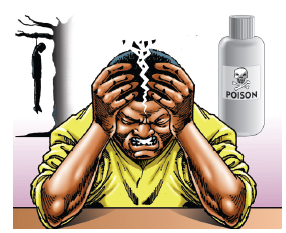
For someone who survives a suicide attempt, that difference matters. Survival should create an opportunity for treatment, understanding and another chance to rebuild a life.
























Leave a comment