

By: Chioma Madonna Ndukwu
N700,000 For A Godly Partner? Pastor Kingsley Okonkwo’s Matchmaking Puts Faith On Trial
So, how much should it cost to find a godly partner?
It is a question that sounds almost uncomfortable, especially when the answer comes in hundreds of thousands of naira.
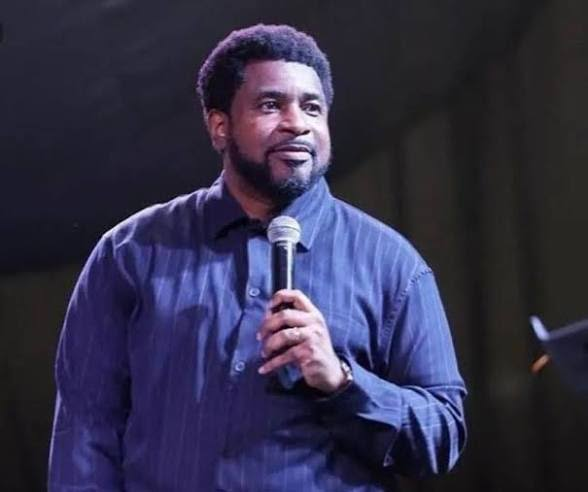
Pastor Kingsley Okonkwo, Lead Pastor of David’s Christian Centre, has stirred public debate with Mentor To Marry, a Christian matchmaking platform whose membership packages rise from N70,000 to N700,000 a year.
And suddenly, marriage, money and faith are sitting at the same table.
Some Nigerians are asking whether a Christian matchmaking service should charge such fees. Others have defended the idea, arguing that professional services require money to operate.
But beneath the argument over N700,000 lies a more important question: What happens when a Christian solution to a deeply personal need takes the shape of a professional paid service?
That is the question I find more interesting.
Not because Pastor Okonkwo should be attacked. Not because everything carrying a Christian label must be free.
But because whenever faith enters a commercial space, the rules of trust become heavier.
Let us be fair.
Matchmaking itself is not strange. People pay relationship coaches, counsellors and professional matchmakers to help them navigate the difficult road to marriage.
Their time, experience, research, screening and professional attention have value.
So, charging money for matchmaking does not automatically make a service wrong.
Mentor To Marry also does not claim to sell husbands or wives. Its programme begins with mentoring, assessments and guided reflection before matchmaking.
The platform states clearly that payment does not guarantee a match, mutual interest or marriage.
So, strictly speaking, nobody is selling a spouse. What is being sold is access to a process. And that distinction matters.
Yet, this is where the Christian identity of the platform makes the conversation more complicated.
A person searching for a partner is not simply buying a haircut or registering for a professional course.
Some are coming with loneliness. Some are under family pressure. Some have watched friends marry while their own relationships repeatedly collapse. Some are worried about age. Hope can make people vulnerable.
Mrs. Onyinye Augustine, a civil servant from Plateau State, does not agree with the idea of charging money for a Christian matchmaking service.
For her, the fact that the platform operates within a Christian framework makes the payment difficult to accept.
Mr. David Kaminele is equally critical, describing the programme as something designed for the gullible.
Their reactions capture one side of the public debate. But criticism alone does not settle the matter.
Calling a paid service exploitative simply because it is expensive would be too easy. On the other hand, calling it legitimate simply because it provides a professional service would also be too convenient.
The real question is what exactly people are paying for, how much value they receive, how transparent the process is and whether the people being served are treated with sufficient care.
After all, there is a delicate difference between selling a service and selling hope.
And when the customers are people longing for companionship, that difference becomes important.
The Bible itself gives us an interesting tension.
Jesus said in Matthew 10:8, “Freely ye have received, freely give.”
Yet Luke 10:7 says, “The labourer is worthy of his hire.”
Both statements sit comfortably in Scripture.
So perhaps the issue is not whether every Christian service must be free. The deeper question is where ministry ends and professional service begins—and what responsibilities come with crossing that line.
This becomes even more interesting because Pastor Okonkwo has previously spoken about the commercialisation of relationships. Critics therefore see a contradiction.
Supporters, however, may argue that there is a difference between charging for love itself and charging for the professional work involved in helping people meet suitable partners. That distinction deserves consideration.
There is also another question Nigerians should ask: Does paying more improve one’s chances of finding a godly spouse, or does it simply provide access to more personalised professional attention?
Because there is no price tag for compatibility. There is no receipt for genuine affection.
Nobody can pay a matchmaker to make another human being fall in love.
At best, a matchmaker can open a door. The two people who walk through it must still decide whether to build a house together.
That is why the N700,000 figure should not be examined in isolation. The bigger issue is the promise surrounding the service, the expectations it creates and the responsibility that comes with presenting it as a Christian path to intentional relationships.
A Christian organisation can offer a professional service. Christians can employ professionals. Christian businesses can charge for legitimate work. But faith also carries a moral weight.
People who come looking for marriage are placing something deeply personal in the hands of the people guiding them. They deserve honesty, confidentiality, dignity and clear boundaries.
Perhaps that is why this debate has refused to disappear.
It is not merely about whether N700,000 is too much or too little.
It is about what happens when something as sacred, personal and unpredictable as finding a life partner enters the language of packages, membership tiers and premium access.
Maybe the better question is not, “Can Christians charge for matchmaking?”
Maybe it is, “What must a Christian matchmaking service owe the people who pay for it?” That question leaves room for both sides.
It leaves room for those who believe professional matchmaking deserves to be paid for. It also leaves room for those who worry that faith should never become a doorway through which vulnerable people are pressured to spend money.
I do not think we need to join the crowd throwing stones at Pastor Okonkwo.
Neither do we need to join the crowd defending everything simply because it carries a Christian identity. We can pause. We can look at the idea.
A Christian matchmaking service can be sincere. It can be professional. It can charge for legitimate work.
But because it deals with faith, loneliness and the search for a life partner, it carries a higher burden of trust. And maybe that is where the real examination begins.
Can a Christian service put a price on the road to a godly partner without putting faith itself under scrutiny?
I leave that question with you.