


FG, UN Rally Traditional and Faith Leaders to Tackle Gender-Based Violence
The Federal Government, UN Women and other development partners have stressed that traditional rulers, religious leaders and community influencers must take a leading role in ending gender-based violence (GBV).
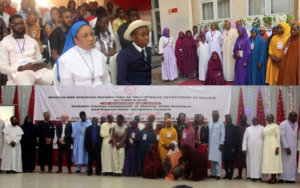
They said these leaders are uniquely positioned to challenge harmful cultural beliefs, reshape social norms and promote attitudes that foster respect, equality and safer communities across Nigeria.
The call was reiterated at the conclusion of the Leadership, Engagement, Advocacy and Prevention (LEAP) Project, a Ford Foundation-backed initiative implemented by UN Women between 2023 and 2026.
The programme focused on encouraging male leaders to become advocates for gender equality and violence prevention across Nigeria and parts of West Africa.
Speaking at the event, the Minister of Women Affairs and Social Development, Hajiya Imaan Sulaiman-Ibrahim, said cultural and traditional leaders remain central to raising boys with values that reject violence and embrace respect, responsibility and empathy toward women and girls.
Represented by the Director of Women Development, Mrs Blessing Anunike, the minister observed that many cases of violence against women and girls occur behind closed doors and often go unreported.
She said respected male figures within communities are well placed to influence attitudes, discourage abusive behaviour and help break cycles of violence.
According to her, redefining masculinity is essential to building safer communities. She urged traditional institutions to promote models of manhood rooted in protection, emotional maturity and peaceful leadership rather than domination and aggression.
Meanwhile, the Anglican Diocese of Enugu has unveiled a strict policy against gender-based violence, warning that any clergy or lay member found responsible for abuse will face disciplinary action, including suspension, removal from office where necessary, and possible prosecution by civil authorities.
The Bishop of the Diocese, Rt. Rev. Samuel Ike, announced the policy during the Third Session of the 19th Synod held at St. Peter’s Anglican Church in Ogbete, Enugu State.
Describing the Church as a place of refuge and protection, Ike said every worshipper deserves to feel safe within church premises and institutions.
He declared that the Diocese would maintain a zero-tolerance stance on all forms of gender-based violence.
He explained that the newly introduced policy is founded on the Christian teaching that every person bears the image of God and should be treated with dignity, respect and security.
The framework recognises a broad range of abuses, including physical, sexual, emotional, economic and spiritual violence.
It also addresses harmful widowhood practices, property inheritance abuses, misuse of authority by church leaders, cyberbullying and the non-consensual sharing of intimate images.
As part of preventive efforts, Bishop Ike directed all churches within the Diocese to dedicate sufficient time each Sunday to the Church of Nigeria Bible Study outline, noting that the national teaching guide already incorporates lessons aimed at preventing gender-based violence.