

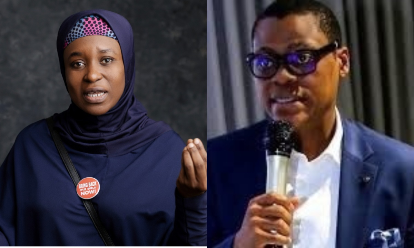
N8bn for Churches, Mosques in 2026 Budget Sparks Outrage from Aisha Yesufu, Rufai Oseni
The inclusion of more than N8 billion for church- and mosque-related projects in Nigeria’s 2026 budget has triggered strong reactions from social commentator Aisha Yesufu and Arise TV host Rufai Oseni.
An analysis by public accountability organisation Tracka showed that N8.05 billion was earmarked for projects linked to religious institutions, with N1.91 billion allocated to church-related projects and N6.14 billion for mosque-related projects.
The allocation has drawn criticism amid widespread concerns over poverty, unemployment and the state of public services across the country.
Former Vice President Atiku Abubakar, the African Democratic Congress presidential candidate, was among those who questioned the decision, asking why such a large sum would be directed towards religious projects while millions of Nigerians continue to struggle with poverty.
Yesufu, a chieftain of the Nigeria Democratic Congress, also criticised the allocation, questioning the role of government in funding religious institutions.
“What is the business of the State with religion? Why is the Nigerian government funding churches and mosques? Why should churches and mosques be in the budget?” she asked in a post on X.
She argued that the money could instead be directed towards education and other areas requiring urgent government attention.
“We are just not a serious country,” she added.
Oseni also questioned the inclusion of the projects, alleging that lawmakers may have inserted them into the budget to divert public funds.
During a discussion on Arise TV’s Morning Show, he pointed to the locations of some of the projects and questioned the political connections behind them.
“Why is it that the church project went to Bende? Who is from there? Why is it that the Mosque budget went to Zaria? Who is from Zaria?” Oseni asked.
He further accused lawmakers of engaging in what he described as fraudulent practices involving public budgets and criticised them as “rubber stamp lawmakers.”
The controversy has renewed debate over the use of public funds for religious projects and whether scarce government resources should instead be channelled towards education, healthcare, infrastructure and poverty reduction.