


Anti-Migrant Protests Raise Fears Over South Africa’s Economic Future
Growing anti-migrant protests in South Africa are fueling concerns among economists that the country could face serious economic consequences if large numbers of foreign workers continue to leave.
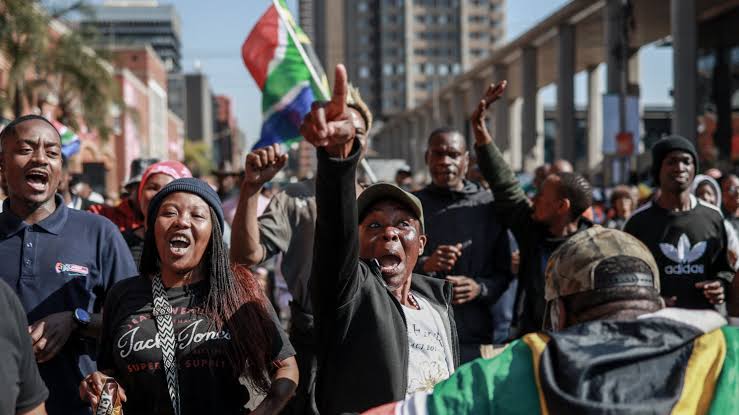
The demonstrations, driven by public frustration over rising unemployment, crime and years of sluggish economic growth, have intensified in recent months.
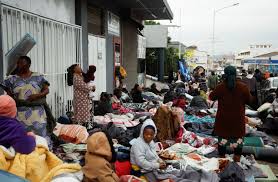
Although many of the protests have remained peaceful, fears of violence have prompted thousands of migrants from across Africa to leave the country.
Experts warn that the exodus could create labour shortages in key sectors that rely heavily on migrant workers, including agriculture, construction, hospitality, transport, retail and the informal economy.
According to United Nations estimates, about 2.6 million migrants were living in South Africa in 2024, accounting for roughly five per cent of the country’s population.
Previous estimates by the Organisation for Economic Co-operation and Development (OECD) and the International Labour Organization (ILO) suggested migrant workers contributed about nine per cent of South Africa’s gross domestic product.
Economists argue that migrants not only fill jobs that are often difficult to staff but also establish businesses that create employment opportunities for South Africans while increasing competition and consumer choice.
The impact of the protests has already been felt in parts of the retail industry. Foreign-owned neighbourhood convenience stores, commonly known as spaza shops, have faced disruptions, while grocery delivery services have also experienced staffing challenges because many of their drivers are foreign nationals.
South Africa continues to battle high unemployment and weak economic growth, conditions that have fueled anti-immigrant sentiment.
However, labour experts say research shows that greater migrant participation in the workforce can also lead to increased employment opportunities for South African-born workers.
Analysts further warn that prolonged unrest could disrupt supply chains, force businesses to close and discourage investment, adding fresh pressure to an economy already struggling to recover.

Beyond South Africa, the impact could also be felt across neighbouring countries that depend heavily on money sent home by migrant workers, making the crisis one with significant regional implications.