


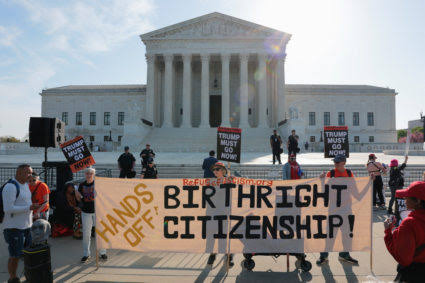
US Supreme Court Blocks Trump’s Bid to End Birthright Citizenship, Upholds Transgender Sports Bans
The United States Supreme Court on Tuesday delivered a series of landmark decisions, striking down former President Donald Trump’s executive order seeking to end birthright citizenship while also allowing states to restrict transgender athletes from competing on female sports teams.
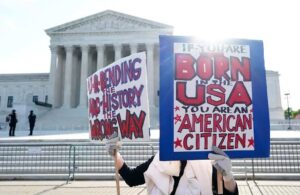
The ruling on birthright citizenship was welcomed by civil rights organisations and Democratic leaders, who described it as a major victory for the U.S. Constitution and a reaffirmation of the protections guaranteed under the 14th Amendment.
Neera Tanden, President and Chief Executive Officer of the Center for American Progress, said the decision preserved a constitutional principle that has existed for more than a century and safeguarded the citizenship rights of millions of Americans.
The National Association for the Advancement of Colored People (NAACP) also applauded the judgment, with its President, Derrick Johnson, saying the court had rejected efforts to weaken one of the country’s fundamental constitutional protections.
Leading Democrats echoed similar sentiments. House Democratic Leader Hakeem Jeffries described Trump’s attempt to end birthright citizenship as unlawful and inconsistent with American constitutional values.
California Senator Alex Padilla called the ruling deeply personal, recalling that his parents arrived in the United States as undocumented immigrants before eventually becoming citizens. Padilla, however, warned that legal battles over constitutional rights were far from over.
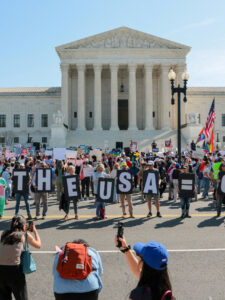
The decision sparked outrage among Trump’s allies. Stephen Miller, one of the architects of Trump’s immigration policies, condemned the ruling as one of the most damaging decisions in the Supreme Court’s history, arguing that American citizenship should not automatically extend to everyone born on U.S. soil.
Kevin Roberts, President of the conservative Heritage Foundation, also criticised the judgment, accusing the court of weakening national sovereignty.
He called for a constitutional amendment to overturn the interpretation of birthright citizenship, although such a move would require overwhelming support from Congress and the states.
Trump had not publicly reacted to the ruling at the time of reporting. Instead, he celebrated a separate Supreme Court decision expanding political parties’ campaign spending rights, describing it as a significant victory for Republicans and free speech.
House Speaker Mike Johnson also expressed disappointment over the birthright citizenship ruling, arguing that the existing policy had been exploited through what critics describe as “birth tourism.”
However, government lawyers previously acknowledged during court proceedings that the true scale of the practice remains uncertain, with available estimates suggesting such births account for less than one per cent of annual births in the United States.
In another closely watched decision, the Supreme Court ruled that states may restrict participation in women’s and girls’ sports based on biological sex, effectively allowing bans on transgender athletes competing in female sporting events.
The cases involved challenges brought by college student Lindsay Hecox in Idaho and high school athlete Becky Pepper-Jackson in West Virginia.
The majority held that the state laws did not violate Title IX, the federal law prohibiting sex-based discrimination in education.
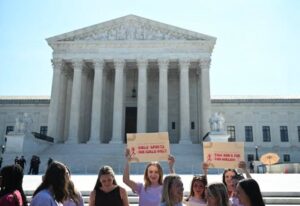
The court’s three liberal justices dissented, arguing that the restrictions undermine constitutional guarantees of equal protection and unfairly discriminate against transgender students.

















https://shorturl.fm/vEBqx