


By: Chioma Madonna Ndukwu
The Way We Live: One Dirty Drain, Fifty Excuses
Daniel had just locked his front gate when he heard the familiar splash. A young boy, trying to leap across the open drain beside the street, landed squarely in the murky water.
His mother hurried over, brushing at his trousers with the corner of her dress while muttering, “Watch where you’re going.” The boy looked at the drain, then at the adults walking past it as though it had always belonged there.
Nobody stopped. By the time Daniel reached the corner shop, the conversation had already begun.
“The council should clear it.”
“They collected taxes last month.”
“I cleaned my frontage yesterday. Why should I clean everybody else’s mess?”
The blocked drain had become part of the neighbourhood’s vocabulary. People complained about it with remarkable consistency but passed it with equal consistency.
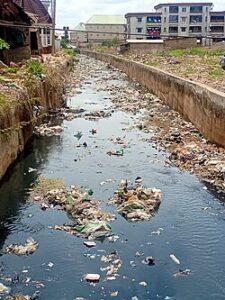
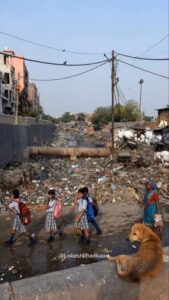
Plastic bottles, food wrappers and fallen leaves gathered until the water barely moved, and when the rain came, the street flooded as faithfully as sunrise.
Then, one Saturday morning, something unusual happened. An elderly woman named Grace appeared carrying nothing more than a rake, a shovel and a pair of old rubber gloves.
Daniel watched from his gate.
“You can’t be serious,” he called.
Grace smiled without looking up. “I am.”
“But this isn’t your responsibility.”
She pushed another heap of soggy rubbish into a bucket before answering.
“No, Daniel. That’s precisely why it’s everyone’s.”
A few neighbours slowed down to watch.
One man laughed. “You’ll be back here next week. People will dirty it again.”
“Perhaps,” Grace replied. “But they’ll have to dirty a clean drain first.”
The words lingered long after the laughter faded.
Daniel stood there another minute before disappearing into his compound. When he returned, he was carrying two refuse bags.
“Where do you want these?” he asked.
Grace grinned.
“Beside me.”
Neither of them noticed Sarah until she arrived with a broom. Then Michael appeared carrying a wheelbarrow. Hannah brought drinking water. Peter found a wheelie bin that had been sitting unused behind a church hall.
Rebecca convinced the children to gather plastic bottles before they reached the gutter, turning the work into a game instead of a punishment.
Nobody announced they had become a community. It simply happened while their hands were busy.
By late afternoon, sunlight reflected off water that had not been visible for months. The drain, once hidden beneath neglect, seemed almost relieved to breathe again.
Daniel laughed as he wiped sweat from his forehead.
“I’ve lived here for eight years,” he admitted. “I never realised the drain was this deep.”
Grace chuckled.
“It wasn’t the drain that disappeared.”
That evening, Daniel called his younger brother in Porto.
“I spent my Saturday cleaning a drain,” he said.
His brother laughed.
“So did my neighbour last month.”
“What happened?”
“One person started. Then another. Before anyone noticed, the whole street had turned up. Funny how excuses spread quickly until someone decides effort should spread instead.”
A few days later, Sarah received a voice message from an old university friend in Busan.
“Our apartment residents take turns cleaning around the building,” her friend said. “It isn’t because everyone enjoys it. It’s because nobody wants to be the person who keeps waiting for somebody else.”
Sarah smiled as she listened.
The conversation reminded her how ordinary people, separated by oceans, often wrestle with exactly the same habit of postponing responsibility.
Later that week, Rebecca joined an online family call with cousins in Puebla. One of them mentioned how an elderly neighbour had quietly begun sweeping the market square every dawn after noticing litter piling up. Nobody asked him to do it, yet shopkeepers gradually started arriving earlier just to help.
Rebecca ended the call thinking less about three cities and more about one truth. Human beings rarely change because they are instructed. More often, they change because someone nearby makes responsibility look possible.
As neighbours gathered outside that evening, Grace rested on the low wall beside the now-flowing drain.
“You know,” she said softly, “people spend years waiting for leaders to inspire communities.”
Daniel nodded.
“And sometimes communities end up inspiring themselves.”
Grace smiled again.
“I once read Mahatma Gandhi’s words: ‘Sanitation is more important than independence.’ I never fully understood them until I watched how neglect quietly steals people’s dignity long before it threatens their health.”
Nobody replied immediately. The silence carried agreement.
After a while, Sarah added, “That reminds me of something Wangari Maathai said: ‘It’s the little things citizens do. That’s what will make the difference.’ We always imagine change arriving with speeches, but today it arrived with gloves, brooms and neighbours who stopped making excuses.”
The drain no longer drew attention because it was dirty. It drew attention because people had begun protecting it.
Children who once skipped over rubbish now reminded one another not to throw wrappers into the water. Adults who had perfected the art of complaining found themselves gently correcting anyone who tried to undo the work. The place had not become perfect. It had become shared.
Perhaps that is how every healthier community begins, not with spotless streets, but with ordinary people deciding that the space outside their gate also belongs to them.
Moral:
Communities are not transformed by the absence of problems but by the presence of people who refuse to wait for someone else to solve them.
Comment Hook:
Have you ever known one ordinary person whose simple action changed the attitude of an entire street, school or neighbourhood? Share that story in the comments. Someone else’s example may become the beginning of another community’s change.























It’s good
Really interesting