

Nigeria–U.S. Security Realignment Shifts Global Counter-Terror Fight to the Sahel
A new phase is emerging in global counter-terrorism as security cooperation between Nigeria and the United States signals a strategic pivot that places the Sahel at the centre of international security operations.
Security developments suggest that Washington is increasingly shifting its counter-terrorism focus away from the Middle East and toward Africa, where extremist networks linked to ISIS and Al-Qaeda have expanded their presence across fragile borders and ungoverned spaces.
Analysts say the Sahel region, stretching across West and Central Africa, has become one of the world’s most volatile terror corridors, with insurgent movements strengthening around the Lake Chad axis and across weakly governed territories.
In particular, the Lake Chad Basin continues to face sustained pressure from Boko Haram-linked factions and ISIS-affiliated groups, even as military operations intensify across Nigeria’s northeast.
Recent joint operations between Nigerian forces and U.S. support have reportedly targeted insurgent hideouts in parts of northern Nigeria, signalling a deepening intelligence and operational partnership between both countries.
Security sources also say sustained air and ground pressure has disrupted movement corridors used by militants, forcing some groups to adjust logistics routes and recruitment channels.
Experts argue that the shift reflects a broader American strategy to contain instability before it spreads further, warning that ungoverned regions in the Sahel could serve as launch points for wider transnational threats.
Beyond security concerns, analysts note that geopolitical and resource interests also play a role, as global powers compete for influence and access across Africa’s strategic energy and mineral corridors.
Despite reported battlefield gains, Nigeria continues to face internal security pressure. Kidnapping, banditry, and communal violence remain widespread across several regions, stretching state capacity.
Security professionals say lasting progress will require more than military action, urging reforms in intelligence sharing, governance, border control, and financing networks that sustain extremist operations.
Some experts are also renewing calls for decentralised policing structures, arguing that stronger local security systems could improve response time and accountability in affected states.
Others maintain that porous borders across the Sahel remain a critical vulnerability, allowing militant movement despite ongoing cross-border military efforts.
There are also reports that ISIS-affiliated groups in West Africa are under increased operational strain due to sustained military pressure, disrupting traditional supply and movement routes across the region.
Still, analysts caution that while pressure on insurgent networks is increasing, long-term stability will depend on addressing poverty, weak governance, and regional instability that continue to fuel recruitment.
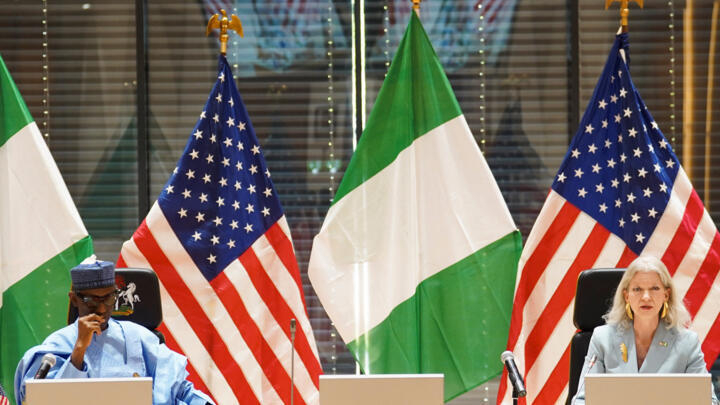
The evolving Nigeria–U.S. security partnership, observers say, now sits at the centre of a wider global recalibration of counter-terrorism strategy, with the Sahel emerging as its most active and contested frontier.