


How Adulterated Palm Oil and Pepper Are Putting Nigerians at Risk
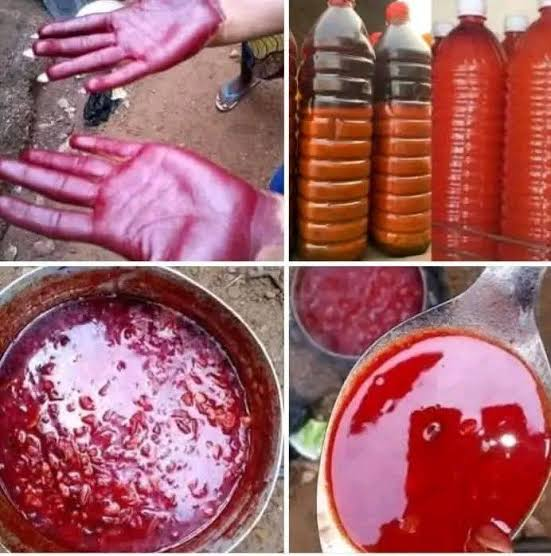
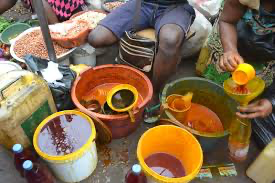
Something about the palm oil caught my attention when I visited a market in Rivers State. The colour was so intense that, from a distance, I initially thought I was looking at zobo.
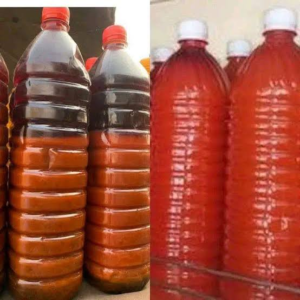
It was only after I moved closer and asked the seller what she was selling that I discovered it was palm oil.
“Are you sure this is palm oil?” I asked her.
She answered yes and insisted that it was original palm oil. I asked whether she used the same oil to cook at home. She said she did, explaining that she also ate the food prepared with it.
I continued looking at the oil. I have known palm oil from childhood, and the colour before me looked markedly different from what I had always known.
I could not determine simply by looking at it whether anything had been added, but the unusual appearance was enough to make me curious about what consumers are buying in some Nigerian markets.
The same concern came up when I looked at the pepper being sold in the market. The colour appeared unusually bright and artificial to me. I asked the seller whether it was actually pepper and how she obtained it.
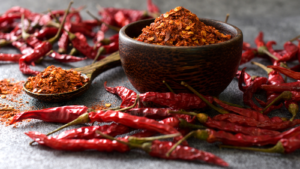
She explained that she bought the pepper, had it ground and was selling the ground product. When I asked whether she used the same pepper in her own cooking, she said yes.
I encountered a similar situation in Abia State. A woman selling red pepper had a product whose colour did not look like the pepper I had grown up seeing.
It appeared unusually intense, and I asked her about it. She said she had bought the pepper and ground it for sale. Again, when I asked whether she used it herself, she said yes.
Those encounters do not establish that the products were adulterated. Only proper laboratory testing can determine whether a food contains an unauthorised chemical or other contaminant.
What they did, however, was raise a concern that deserves serious attention: consumers often have very little information about what happens to everyday food between the point of production and the point of sale.
Palm oil and dried pepper are not occasional ingredients in Nigerian homes. They are part of daily cooking, from soups and stews to beans, yam, plantain and sauces.
If the quality of either product is compromised, the potential exposure can extend far beyond the market where the product was sold.
Recent reports have raised allegations of palm oil being mixed with substances such as industrial dyes, starch, candle wax and other materials to change its colour, texture or volume.
Similar concerns have been raised over ground pepper, including the use of materials and colouring substances that should not be present in food.
The issue becomes particularly worrying because adulterated food is not necessarily sold at a cheaper price.
A consumer may pay the prevailing market price for what appears to be good-quality palm oil or pepper without knowing whether anything was added before it reached the stall.
What Happens When Unauthorised Chemicals Enter Food? The health concern deserves more attention than it often receives.
The body has sophisticated systems for processing and eliminating substances that enter it, with the liver and kidneys playing important roles.
The liver metabolises many chemicals, while the kidneys filter the blood and help remove waste products and certain substances from the body.
This does not mean that everyone who consumes suspected adulterated food will develop kidney or liver disease. The health effect depends on the substance involved, the quantity consumed, the frequency of exposure and other individual factors.
There is, however, scientific reason to be concerned about the deliberate use of industrial chemicals in food.

Sudan III and Sudan IV, for example, are industrial dyes and are not approved as food colours. Food-safety authorities have raised concerns about their potential health effects.
Experimental research has also examined the effect of Sudan IV-adulterated palm oil on laboratory animals and reported changes associated with kidney and liver function.
A 2026 publication by Augustus Newton Ebelegi of Niger Delta University examined reported concerns over Sudan II and Sudan III in palm oil and garri in the Niger Delta, highlighting the need for stronger surveillance and analytical testing.
Research into other unauthorised food dyes has produced similar concerns. Experimental work involving Metanil Yellow, for instance, has reported oxidative stress and changes in kidney-related biochemical markers in animals.
Such findings cannot be used to conclude that the same effect will occur in every human consumer, but they demonstrate why the presence of these substances in food should not be dismissed as a harmless attempt to improve appearance.
Rhodamine B is another industrial dye that has been associated with food adulteration. Research has examined its distribution in the body and found substantial accumulation in the liver, with smaller amounts detected in the kidneys in animal studies.
The distinction between laboratory evidence and human disease is important. It would be irresponsible to take an animal study and announce that Nigerians eating a particular food will develop kidney failure.
Science does not work that way. But it would be equally unwise to ignore evidence that certain unauthorised chemicals can affect organs when food-safety authorities and researchers have already raised concerns about their use.
Is adulteration linked to Nigeria’s kidney disease Burden? This is an area where caution is necessary.
Nigeria has a substantial burden of chronic kidney disease, but established risk factors include conditions such as hypertension and diabetes, alongside other factors. Studies in Nigeria have documented significant levels of kidney disease in various populations.
There is currently no sufficient population-level evidence to conclude that adulterated palm oil or pepper is responsible for Nigeria’s kidney disease burden.
That does not make the question irrelevant. It makes it a subject that deserves proper research. If Nigerians are repeatedly exposed to harmful substances through food, the possibility of long-term effects should be investigated rather than assumed or dismissed.
Researchers would need to establish what substances are present, how frequently people are exposed to them and whether sustained exposure is associated with measurable changes in kidney, liver or other health outcomes.
For now, the evidence supports concern about the potential toxicity of particular unauthorised chemicals, not a claim that they are responsible for the country’s kidney disease statistics.
The health implications deserve attention because palm oil, pepper and garri are everyday foods for millions of Nigerians. Any harmful substance introduced into such foods can potentially expose consumers repeatedly over time.
The World Health Organization has also stressed that food safety is a public-health issue. In June 2026, WHO estimated that unsafe food causes about 866 million illnesses and 1.5 million deaths globally each year.
WHO Director-General, Dr Tedros Adhanom Ghebreyesus, said: “Food safety is not an abstract issue; it touches every meal, every family, every day.”
The liver is one of the body’s major organs for processing substances absorbed from food. Some experimental studies involving unauthorised dyes have reported changes in liver tissue and biochemical markers.
Again, the findings must be interpreted carefully. An experimental result does not automatically tell us what will happen to a person who consumes a contaminated food product once or occasionally.
The concern becomes more relevant when exposure is repeated over time, particularly where the substance is toxic and the consumer does not know it is present.
This is why food adulteration should be treated as more than a matter of appearance.
The attention given to palm oil should not cause ground pepper to disappear from the conversation.
Once pepper has been ground, the consumer loses the ability to examine the original product. What comes out of a grinding machine may look completely different from the raw pepper that went into it. That makes traceability especially important.
A market woman may genuinely believe the pepper she is selling is safe because she bought it from another person and uses it in her own kitchen. The same may be true of the seller I spoke to in Abia State. But personal consumption is not proof of safety.
A seller may not know what happened before she bought the product, just as the final consumer may not know what happened before it reached the seller.
This creates a chain of uncertainty stretching from the processor to the wholesaler, from the wholesaler to the retailer and from the retailer to the family kitchen.
One of the difficulties in identifying adulterated palm oil is that natural palm oil is already reddish because of its carotenoid content. A red colour, therefore, cannot by itself prove that a product has been chemically coloured.
The same caution applies to many of the home tests circulating on social media. Videos showing palm oil being mixed with water, separated or leaving stains may attract attention, but they cannot establish which substance is responsible for a reaction or whether a product is unsafe.
NAFDAC has cautioned Nigerians against relying on unverified social-media claims and has stressed the importance of proper investigation and laboratory testing when adulteration is suspected.
That is a message consumers need to hear. Fear is not a substitute for evidence, and neither is appearance.
The difficulty is that the final seller may not be the person responsible for adulterating the product.
A trader can purchase palm oil from a supplier believing it to be genuine. A pepper seller can buy dried pepper, have it ground and sell it without knowing whether anything was added earlier in the chain.
This makes enforcement more complicated than simply visiting market stalls. Regulators need to know where products come from, who processes them, where they are stored and who distributes them.
Testing also needs to extend beyond packaged foods to the informal markets where millions of Nigerians buy their everyday ingredients.
Previous enforcement operations in different parts of the country have shown that adulteration is not a completely new phenomenon.
The recurring concern is whether enough surveillance is being done to identify offenders before questionable products reach consumers.
There is a troubling reality behind food adulteration. The person altering a product may be thinking about profit while the person who eventually consumes it is thinking about feeding a family.
Those two interests should never be allowed to collide at the expense of public health.
A trader trying to make a product look richer, redder or thicker may see only a business opportunity. The consumer sees food. That difference in perspective is precisely why regulation exists.
The people selling these products may also be victims of the same supply chain. If a seller does not know that something has been added before the product reaches her, she can unknowingly pass the problem to another household.
That is why the responsibility cannot rest entirely on consumers.
My experiences in Rivers and Abia States left me with questions rather than conclusions. I cannot say from appearance alone that the palm oil or pepper I saw had been adulterated.
I did not conduct a laboratory test, and the sellers themselves insisted that they used the products they were selling.
But consumers should not have to rely entirely on assurances from sellers when the safety of food is involved.
There should be stronger monitoring of the food supply chain, more accessible testing, better traceability and firm action where deliberate adulteration is established.
Nigeria already faces serious challenges from diseases linked to established risk factors. The country should not allow preventable exposure to harmful substances through food to become another neglected public-health concern.
The responsibility begins with the people who process and sell food, but it does not end there. Regulators must be able to identify what is entering the market, researchers must investigate possible long-term effects, and consumers must have access to reliable information.
The palm oil I saw in Rivers State may have been genuine. The pepper I saw in Rivers and Abia States may also have been genuine. I cannot claim otherwise without testing.
But the fact that a consumer can look at a familiar food and wonder whether it is still what it claims to be should be enough to make food safety a subject worth taking seriously.
Source: Daily Post Nigeria.
Additional reporting and research: Orbits News


























Leave a comment