


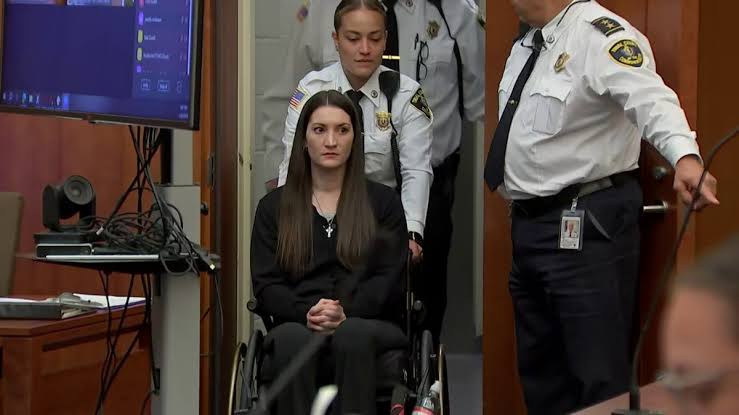
Former Nurse Accused of Killing Her 3 Children Faces Trial
A Massachusetts court is set to begin the trial of Lindsay Clancy, a former labour and delivery nurse accused of killing her three young children in a case that has raised difficult questions about postpartum mental illness, criminal responsibility and the limits of the justice system.

The tragedy unfolded on January 24, 2023, in Duxbury, Massachusetts, after Clancy’s husband, Patrick, briefly left their home to collect takeout food and medicine for one of their children.
When he returned, prosecutors said he immediately sensed that something was wrong. The house was unusually quiet, and the bedroom door was locked. After forcing his way inside, he reportedly found blood in the room and an open window on the second floor.
Outside the house, he discovered Lindsay seriously injured beneath the window.
According to court documents, she told her husband that she had tried to end her own life. When he asked about their children, she directed him to the basement.
There, Patrick found their three children—five-year-old Cora, three-year-old Dawson and eight-month-old Callan—unconscious.
Emergency responders rushed the children to hospital, but none survived. Prosecutors allege that the children were strangled.
Lindsay survived the fall but suffered injuries that left her paralysed. She was later charged with three counts of murder, as well as additional charges connected to strangulation. She has pleaded not guilty.
She is currently being held at Tewksbury Hospital, a state-run medical facility in Massachusetts, while the case proceeds.
Her defence is expected to argue that she should not be held criminally responsible because she was suffering from severe mental illness at the time of the deaths.

Her lawyer, Kevin Reddington, has previously said that Clancy had a long history of depression and had voluntarily admitted herself to a psychiatric hospital less than a month before the tragedy.
The defence also maintains that she underwent several changes to her psychiatric medication in the weeks before the deaths, after which her mental condition allegedly deteriorated sharply.
“Our society fails miserably in treating women with postpartum depression or even postpartum psychosis,” Reddington said during an earlier court hearing.
Prosecutors are expected to challenge that argument and insist that Clancy remained legally responsible for her actions.
Under Massachusetts law, a defendant can argue that severe mental illness made them legally incapable of understanding that their actions were wrong or of controlling their conduct. But the defence must provide convincing evidence to support that claim.
The trial is expected to bring testimony from medical experts, mental health professionals, investigators and members of the family as jurors examine what happened inside the Clancy home and whether Lindsay can be held criminally responsible for the deaths of her three children.
At the centre of the case is a question that has no easy answer: where does severe mental illness end and criminal responsibility begin?

The trial is expected to become one of the most closely watched American cases in recent years involving maternal mental health and criminal responsibility.