


By: Chioma Madonna Ndukwu
Applause Was Loud. The Debt Was Louder
Amara asked the question the same way she had asked it the first time, but this time there was no patience left in her tone.
“So explain to me again why our wedding needs moving lights and a drone camera?”
Tunde didn’t answer immediately. He was holding his phone, still scrolling through a vendor page like the answer might appear there.
His mother spoke instead from the sofa.
“In our time, nobody asked those kinds of questions. You just made it happen properly so people will not talk.”
Amara turned toward her slowly.
“Ma, people will talk whether it is proper or not.”
Tunde exhaled.
“That is the problem,” he said quietly. “Everybody is already talking before anything even happens.”
The wedding conversation had started months earlier in a much smaller way, just plans between two people. But it never stayed between two people.
A cousin sent a message one evening saying,
“You cannot do your wedding in a small hall, Tunde. People from the office will come.”
A church elder followed with another suggestion.
“At least bring a live band. It shows honour.”
A family friend added, “Your boss’s daughter’s wedding is still what people are talking about. Don’t let yours be less.”
Each message sounded harmless alone. Together, they started to reshape decisions that nobody openly agreed on.
At work, Tunde heard something that stayed with him. A colleague said casually, “In this life, if it doesn’t look expensive, it is not worth remembering. Nobody argued. People just laughed.
That night, Tunde repeated it at home. Amara looked at him.
“So we are now building memory based on expense?”
He didn’t respond. That silence became agreement by default.
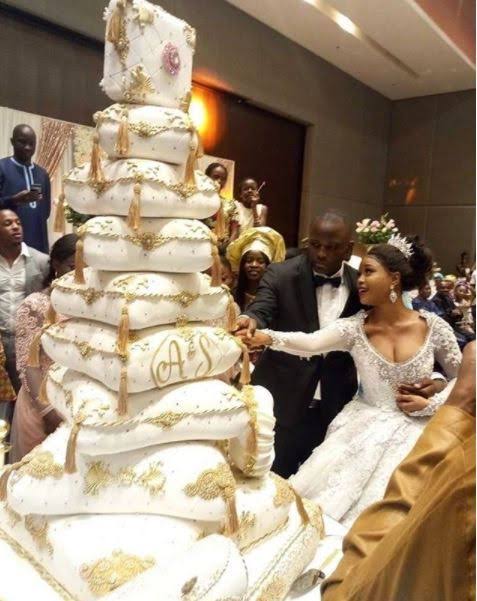
By the time the wedding week arrived in Lagos, the guest list had expanded far beyond what they originally planned. Not because they wanted it that way, but because saying no had become harder than saying yes.
Amara saw the final list and didn’t even react anymore. She just said, “We don’t know half these names.”
Tunde replied, “They will still come.”
The wedding day itself felt like something staged for people who were not in the room yet. Guests kept arriving and immediately lifting phones before greeting anyone. Someone near the entrance said, “This is what I’m talking about. Proper wedding.”
Tunde heard it and nodded like it was a compliment he had been working toward for years. But what stayed with him was not the applause. It was the bill that arrived after.
Three weeks later, Amara placed the repayment schedule on the table without saying much. Tunde looked at it longer than he looked at the wedding photos.
Outside, another street celebration was already starting somewhere nearby, music spilling into the night. Inside, there was no sound except a fan struggling against heat.
At work, Tunde tried to focus, but conversations kept circling back to weddings. One colleague said, “If you cannot match the standard, just wait until you can. He didn’t know how to respond to that either.
Later that day, an older colleague noticed his mood and asked what was wrong. Tunde explained everything briefly.
The man listened, then said;
“I remember something Eleanor Roosevelt once said when I was younger,” he paused, then continued;
“she said, ‘No one can make you feel inferior without your consent.’ But people forget they are the ones handing out that consent every time they start comparing their lives.”
Tunde didn’t laugh. He just sat with it.
That same week, Amara was on a video call with a friend in Texas who had just attended a wedding that cost more than a house deposit.
“It was perfect,” the friend said. “But honestly, I think they are still paying for it in installments.”
In India, a cousin mentioned something similar over another call. The wedding had lasted three days. The repayment plan was still ongoing.
In Kenya, Amara’s school friend sent photos of a beautiful reception hall, then later admitted she had delayed opening her small business because savings had gone into “making it right.”
Different countries faces the same pressure, the same language underneath it all.
“It has to look good.” Not one of them said it was worth it in hindsight.
One evening, Amara came across something someone had shared online. A woman she had been reading about said:
“We are called to assist the earth to heal her wounds, and in the process heal our own.” It was Wangari Maathai. She stared at it longer than expected.
Later she told Tunde, “It feels like we are carrying expectations like wounds we never treated properly.” Tunde nodded.
“Or wounds we keep reopening every time there is a wedding.”
They didn’t fix everything immediately. Life still required payments. Adjustments still had to be made. But the conversations changed. Less about appearances.
More about what they actually wanted their life to look like after the event.
One day, Amara declined to join a bridal committee for a friend’s wedding. Her friend laughed. “You are too serious now.”
Amara replied calmly, “I’ve just learned what I can afford without borrowing peace from the future.” That line didn’t sound dramatic, it sounded final.
Months later, another wedding came up. This time, it was simple. No pressure. No spectacle. Just people gathered without performance.
On the way home, Tunde spoke first.
“I didn’t feel like I was watching anything.”
Amara nodded.
“Because nothing was trying to impress you.”
He smiled slightly.
“That might be the first peaceful wedding I’ve attended.”
Amara replied, “That’s how life is supposed to feel after the celebration.”

Moral:
A celebration should mark the beginning of a life, not mortgage it. When approval becomes the audience, even love starts to compete instead of breathe.
Comment Hook:
How many decisions around us are still being made for an audience that will not pay the bill afterwards?























https://shorturl.fm/P5IEu