


By: Chioma Madonna Ndukwu
Can Someone Else’s Poop Make You Younger? The Strange Science Behind Stool Transplants
There are some medical stories that sound so strange that the first instinct is to laugh. Then comes the second instinct: to check whether they are actually true. This is one of those stories.

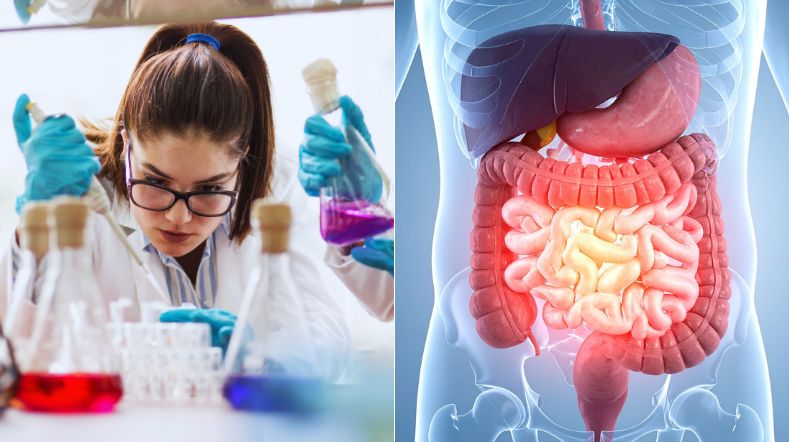
Doctors can take material from the stool of a carefully screened donor and introduce it into another person’s body to help restore a damaged community of microorganisms in the gut. The treatment is known as faecal microbiota transplantation, or FMT.
The name alone may be enough to make some people uncomfortable. The idea of receiving another person’s gut microbes may sound even more difficult to accept. But FMT is not a bizarre internet experiment.
It is a real medical treatment, and the science behind it is beginning to raise an even more intriguing question: could the microscopic organisms living inside the gut influence how the human body ages?
That question, however, needs to be separated from the more dramatic claim that an older person can receive the stool of a young person and somehow become young again.
There is no established medical treatment that transfers youth, beauty, strength or a person’s biological age through stool. There is no proven “youth enzyme” that doctors collect from young people and transplant into older bodies.
But the real science is fascinating enough without the exaggeration. What doctors are actually transplanting
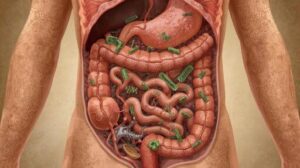
The simplest way to understand FMT is to think of the human gut as an ecosystem.
The digestive system contains a vast community of microorganisms, often referred to collectively as the gut microbiome. Many of these organisms are also found in stool.
When serious illness or repeated antibiotic treatment disrupts the balance of this ecosystem, harmful organisms may gain an advantage.
One of the best-known examples is Clostridioides difficile, commonly called C. difficile or C. diff. The infection can cause severe diarrhoea and may repeatedly return even after treatment.
In such cases, the purpose of FMT is not to give a patient another person’s age. It is to introduce a carefully screened microbial community that may help restore the balance of the recipient’s gut.
The United States Food and Drug Administration describes faecal microbiota products as preparations made from stool donated by healthy individuals and administered to another person with the aim of restoring gut flora.
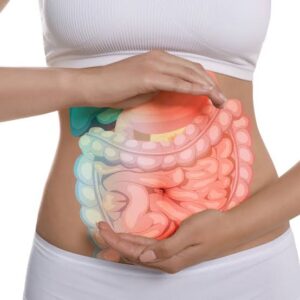
The FDA has approved REBYOTA and VOWST for preventing the recurrence of C. difficile infection in adults following antibacterial treatment for recurrent infection. That is the part of the story that is already established medicine.
The idea may sound unusual, but the principle is not entirely different from restoring something that has been lost. If antibiotics have damaged a patient’s microbial ecosystem, doctors may attempt to rebuild it with a carefully prepared and regulated microbial product.
The stool is the source material. The microbiome is the real subject of the treatment.
Then why are scientists talking about young donors?
This is where the story moves from established treatment into research. As people age, the gut microbiome can change.
Researchers are studying whether these changes are simply a consequence of ageing or whether they may also contribute to some of the biological changes associated with growing older.
The question is not whether an older person can somehow borrow the body of a young person.
The question is whether microorganisms from a particular donor may influence the way certain systems in the recipient’s body function.
The gut is not merely a passage through which food travels. Its microbial inhabitants interact with the intestinal lining, the immune system and the body’s metabolism.
They also produce or influence biologically active substances. Because of these complex relationships, researchers are investigating whether changes in the microbiome might affect processes beyond digestion.
This is the scientific reasoning behind interest in young-donor microbiota.
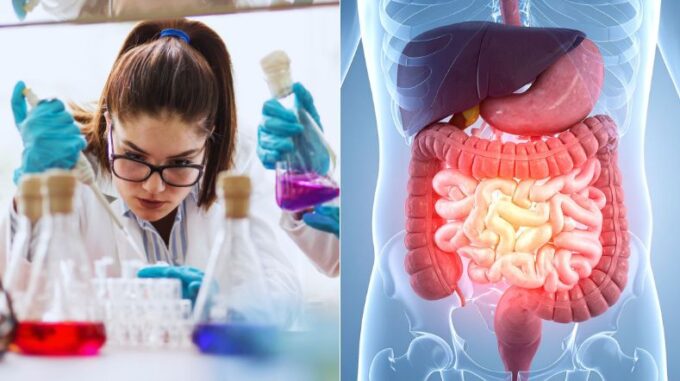
In February 2026, researchers published the protocol for the ARMOR study, a randomised, double-blind, placebo-controlled clinical trial involving adults aged 65 to 84.
The study is designed to investigate the safety and possible effects of oral FMT derived from young, physically active donors on areas including muscle performance, metabolism, cognition and functional independence.
The wording matters. The study is investigating whether the approach may help. It has not proved that young-donor stool reverses ageing.
That is the line that sensational headlines often erase. A trial is not a miracle cure
There is a considerable difference between “scientists are testing this” and “science has proved this works.”
The ARMOR study is important because it moves the question into a controlled human trial. But until the research produces reliable results and those results are confirmed by further studies, nobody can responsibly say that a young person’s microbiome can make an older person young again.
Science must be allowed to remain uncertain while it is still investigating. A laboratory result is not the same as a treatment. An animal study is not the same as a human clinical trial. A clinical trial protocol is not the same as a successful clinical trial. And a promising idea is not the same as a proven cure.
The claim about “youth enzymes” also needs to be treated with caution. The scientific interest lies in the organisms and biological processes associated with the gut microbiome, not in a magical substance that carries a young person’s age from one body to another. You cannot transplant somebody else’s age.
What researchers are asking is much more complicated: can changing the microbial ecosystem inside the gut influence certain aspects of health and ageing? The answer is not yet known.
Why Africa should be paying attention For Africa, this is not simply a strange story about an unusual treatment in foreign hospitals.
The continent already faces a major problem that makes research into the relationship between antibiotics and the gut especially important: antimicrobial resistance.
The World Health Organization says sub-Saharan Africa experienced the highest mortality rates associated with bacterial antimicrobial resistance in 2021.
In Nigeria, the WHO reported that an estimated 263,400 deaths were linked to antimicrobial resistance in 2019, while the country has since begun its first national antimicrobial-resistance survey in partnership with the organisation.
The connection is important because antibiotics can affect the microbial communities living inside the human gut. As medicine continues to learn more about the consequences of disrupting those communities, African researchers will need to be part of the conversation.
Ifeyinwa George, an antimicrobial-resistance programme manager at Nigeria’s Dr Ameyo Stella Adadevoh Health Trust, told the WHO Regional Office for Africa that the continent needs stronger efforts to address antimicrobial resistance, while the organisation has repeatedly stressed the importance of surveillance, responsible antimicrobial use, research and innovation.
The future of microbiome medicine also raises an important African research question.
Are the microbiomes of people living in Africa the same as those of people living in Europe, North America or Asia? Not necessarily.
Diet, environment, geography, genetics, antibiotic exposure and patterns of disease can all influence the microbial communities living in the human body.
This is why African scientists cannot simply wait for the rest of the world to develop microbiome treatments and assume that every finding will automatically apply to African populations.
A 2025 commentary in Nature Reviews Gastroenterology & Hepatology called for stronger microbiome research in Africa and highlighted the important role of African clinician-scientists in developing the field.
That may be one of the most important parts of this entire conversation.
The question is not only whether a young person’s microbiome might one day help an older person. It is also whether Africa will conduct enough research to understand the microbiomes of its own people.
The danger of turning fascinating science into a home experiment. The fact that FMT exists as a medical treatment does not mean that stool from a person who appears young and healthy is automatically safe for another person.
A donor may carry infectious organisms without appearing ill. This is why medical screening, laboratory testing, processing and clinical supervision are essential.
The FDA has warned that faecal microbiota products can carry risks, including the transmission of infectious agents.
This is also why the treatment should not be reduced to an internet recipe.
The phrase “stool transplant” can make the procedure sound simple. It is not. The safety of a medical microbiota product depends on far more than the age or appearance of the donor.
The science is in the screening, the testing, the preparation and the evidence.
So, can another person’s poop make you younger? At present, there is no proven medical treatment that can make an older person young again by transferring stool from a younger person.
What does exist is a genuine medical treatment involving faecal microbiota products, with established use in preventing recurrent C. difficile infection.
What also exists is a growing field of research investigating whether the gut microbiome may influence broader aspects of health, including some features associated with ageing.
The most honest answer, therefore, is neither a simple yes nor a simple no. No, science has not discovered a way to transfer youth through stool.
But yes, scientists are seriously investigating whether the microscopic ecosystem inside the gut can influence how the body functions as it grows older. And perhaps that is the real surprise.
For generations, people thought of the human body as an individual organism. Science now understands that we also live in close relationship with an enormous community of microorganisms whose influence we are still trying to understand.
The future of medicine may not involve transferring youth from one person to another. It may instead involve discovering why certain microbial communities are associated with better health and whether some of their beneficial functions can be safely reproduced. That possibility is still being investigated.
For now, the responsible conclusion is simple: a fascinating medical possibility is not the same thing as a proven treatment.
But the next time somebody says that scientists are studying whether material from a young person’s gut could help an older person, the answer should not be an immediate laugh. The question is real. The science is still unfolding.
And the most important discoveries may be happening in a place most of us have spent our entire lives refusing to discuss at the dinner table.
Editor’s Note:
This article is for public education and does not recommend attempting faecal microbiota transplantation outside regulated medical care. Evidence for uses beyond established indications remains under investigation.





















Leave a comment