


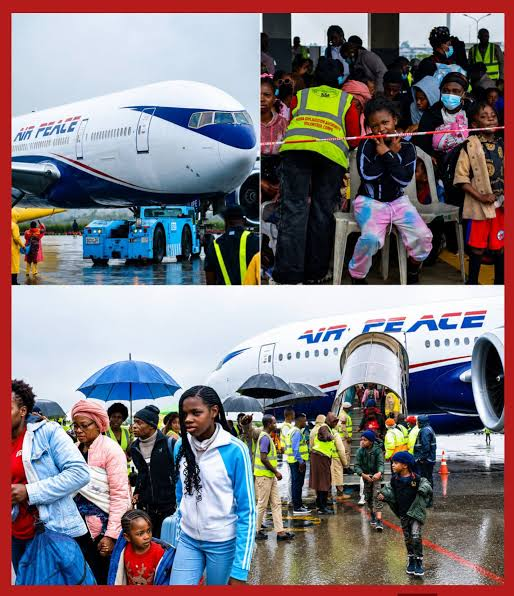
Air Peace, Others Face Government Action Over Mounting Flight Delays
The Nigerian Government is considering sanctions against Air Peace, United Nigeria Airlines and other carriers over persistent delays on domestic flights.
The development followed an August 2026 report by the Nigerian Civil Aviation Authority, NCAA, which recorded delays on 4,765 of the 7,961 domestic flights scheduled during the month.
The figure represented nearly 60 per cent of all scheduled flights, with Air Peace and United Nigeria Airlines recording particularly high delay rates.
According to the report released by NCAA Director of Public Affairs and Consumer Protection, Michael Achimugu, 71 per cent of Air Peace flights and 76 per cent of United Nigeria Airlines flights were delayed in August.
Achimugu said the NCAA had begun regulatory measures to address the situation and had met with Air Peace, United Nigeria Airlines and Max Air over their operational challenges.
He added that the airlines had received stern warnings over the recurring disruptions.
Achimugu also advised passengers to consider other carriers when making travel arrangements.
“When one airline is continuously misbehaving, buy tickets on another airline and make your flight,” he said in an interview with DAILY POST.
The latest development comes as domestic travellers continue to complain about delays and cancellations despite the high cost of air travel.
Meanwhile, aviation expert and Chief Executive Officer of Centurion Aviation Security and Safety Consult, Capt. John Ojikutu, attributed the recurring disruptions partly to weak enforcement of aviation regulations and poor planning by some airlines.
Ojikutu said regulations were already available to protect passengers but questioned whether regulatory authorities were enforcing them effectively.
“The regulation is there to protect the customer. What is the enforcement?” he asked.
He said passengers knew where to report violations but argued that complaints would only have meaning if regulators took effective action against airlines found wanting.
Ojikutu also recounted his personal experience of boarding an aircraft three times before another aircraft was eventually provided for the journey.
He argued that some airlines were also making poor decisions about aircraft size, routes and flight frequency without adequately considering passenger demand.
According to him, airlines should conduct proper market assessments and develop credible business plans before committing aircraft to particular routes.
He questioned the number of airlines operating several daily flights between Lagos and Abuja, saying passenger traffic might not always justify the level of competition.
Ojikutu advised airlines to consider less congested routes where passenger demand could support sustainable operations.
He cited the former Nigerian Airways as an example of an operating model in which aircraft sizes were matched with passenger traffic on different routes.
He said smaller aircraft could be used to connect regional destinations to major airports instead of having several large aircraft compete for limited passengers on the same routes.
The aviation expert also called for airlines to establish operational bases outside Lagos, arguing that concentrating operations in the commercial capital was not the only sustainable approach.
He suggested stronger regional connections involving cities such as Kaduna, Jos, Minna and Sokoto, with passengers connecting onward to major airports.
Ojikutu further expressed concern about the short lifespan of some Nigerian airlines, linking the problem partly to inadequate business planning.
He urged the NCAA to scrutinise the business plans of airlines and ensure that their proposed operations were commercially sustainable before they expanded routes or fleets.




















Leave a comment