


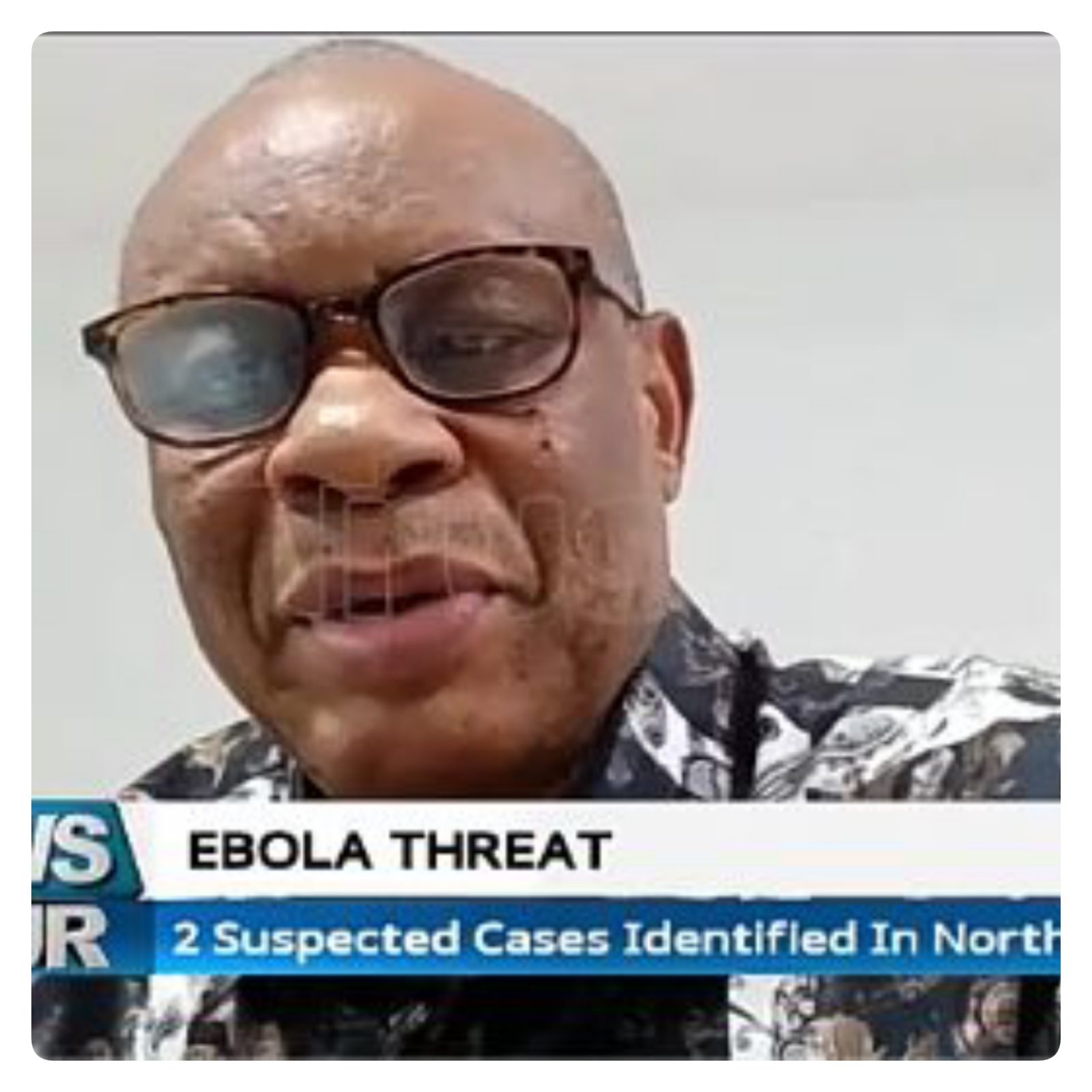
Dr. Iwot Ndaeyo, Fellow of the Academy of Public Health, has said Nigeria’s detection of two suspected Ebola cases in the Northeast shows that the country’s public health surveillance system remains active despite the evacuation of the initial patient to Switzerland.
During an interview on Trust TV’s NewsHour, Ndaeyo explained that the evacuation of the index case did not mean Nigeria was completely out of danger. He said the country had continued its epidemic preparedness and response activities to identify possible infections and respond to emerging threats.
The public health expert said he was not surprised that the system could still identify suspected cases after the initial patient had been evacuated.
He noted that the country had activated emergency preparedness measures across the states and the Federal Capital Territory, with support from partners and emergency operations rooms.
Ndaeyo said contact tracing and quarantine were central to controlling a possible Ebola outbreak. He stressed that people who had been in contact with suspected patients must be identified and monitored to prevent further transmission, warning that “you must make sure that contacts do not get loose out there.”
He also described the Northeast as a particularly challenging area for public health interventions because of population movement, the presence of people in camps and the prevailing security situation.
According to him, these factors could make it difficult for response teams to reach communities and monitor people who might have been exposed.
Despite these challenges, Ndaeyo expressed confidence in the public health system, saying its ability to detect suspected cases showed that surveillance activities were continuing.
He also highlighted the importance of cooperation between health officials and security agencies in reaching affected communities.
He explained that primary and secondary contacts must be traced and monitored, adding that authorities could rely on collaboration with security agencies in the Northeast to identify people who might have been exposed and limit further spread.
Ndaeyo further said laboratory tests would determine whether the two suspected cases were genuine Ebola infections.
He maintained that Nigeria was not starting from zero because the emergency response system was already operational and could be sustained if the infections were confirmed.
The health expert also called for prompt clarification about the location of the suspected cases. He said he wanted authorities to establish which state was involved, adding that “we want to be sure which state the suspected cases are in; we do not want to waste time.”
He said the public health community was looking forward to an official briefing to provide more details about the situation and establish what was happening on the ground.
Ndaeyo added that “we want to be sure of what is on the ground and what is happening,” while expressing confidence in the response system.
Watch the video from 02:03 to 06:56






















Leave a comment