



AI in Africa Offers Poverty Relief, but Millions Risk Being Left Out
Artificial intelligence could help African countries expand their digital economies, improve productivity and reduce poverty, but millions of poorer households risk missing out because of limited access to technology.
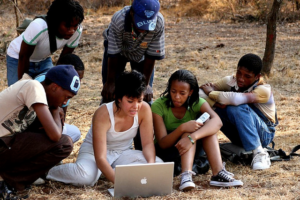
The warning is contained in the World Bank’s October 2026 Africa Economic Update, which examined the opportunities and challenges surrounding AI in Africa.
The financial institution said AI could become an important tool for poverty reduction if governments expand access to affordable internet, electricity, digital devices and the skills needed to use emerging technologies.
Nigeria is already showing signs of rapid growth in software development. According to the World Bank, the country’s GitHub developer community has expanded tenfold since 2020, reflecting increased activity following the global AI boom.
Ghana has also recorded strong growth, with its GitHub developer base increasing nearly eightfold. The Bank said registrations accelerated after free AI coding assistants became available.
The World Bank said these developments offer an indication of what broader AI adoption could bring to African economies, including a larger digital services sector, stronger regional cooperation and higher productivity.
“These early signals point to what AI could deliver if access broadens: a larger digital services sector, stronger regional collaboration, and productivity gains in the sectors that touch poor households, from agriculture to education, health, and finance,” the Bank said.
Poor households face steep digital barriers
Despite the opportunities created by AI, the World Bank said affordability remains one of the biggest obstacles preventing poorer Africans from benefiting from the technology.
It identified expensive internet services, the cost of digital devices, unreliable electricity and limited digital skills as major barriers to wider adoption.
According to the report, mobile internet in Sub-Saharan Africa remains the least affordable in the world relative to income.
A basic data package costs about twice the United Nations affordability target of two per cent of average monthly income.
Internet-enabled devices are also beyond the reach of many poor households. The Bank said an entry-level handset costs people in the poorest fifth of the population the equivalent of about three-quarters of a month’s income.
Electricity presents another challenge. The World Bank noted that owning a mobile phone does not guarantee meaningful access to digital services when households lack reliable electricity.
Across 19 African countries with available data, only 12 per cent of households in the poorest income group have both a mobile phone and an electricity-grid connection.
The figure rises to 54 per cent among households in the richest income group, illustrating the significant digital access gap between poorer and wealthier communities.
Internet use also varies sharply according to household income. In many African countries, fewer than 10 per cent of adults in the poorest income group are online, while internet use among richer households can exceed 60 or 70 per cent in better-connected economies.
AI could deepen existing inequalities
The World Bank warned that without wider access, the productivity gains generated by AI could become concentrated among highly educated workers, formal businesses and wealthier urban households.
It said the immediate concern for most African economies was not mass replacement of poor workers by AI, but the possibility that those already equipped with digital access would capture most of the economic benefits.
Farmers, informal businesses, schools, health facilities and communities in underserved areas could therefore remain outside the emerging AI economy.
“The divide is therefore not simply between countries that adopt AI and those that do not; it is between countries able to diffuse its benefits widely and those where adoption remains an enclave phenomenon,” the Bank said.
Connecting poor communities to AI
The World Bank said African countries need to move beyond connecting markets and focus on connecting poor people and underserved communities.
It called for greater investment in affordable internet connectivity, reliable electricity, digital skills and computing capacity to ensure that AI benefits extend beyond those who can already afford the technology.
The Bank said broader access could allow AI to support productivity and poverty reduction across sectors that directly affect low-income households.
“If African countries make that transition, AI can become a platform for broad-based productivity growth and poverty reduction.

If they do not, it will amplify the advantages of those already connected,” the World Bank said.





















Leave a comment