

By: Chioma Madonna Ndukwu
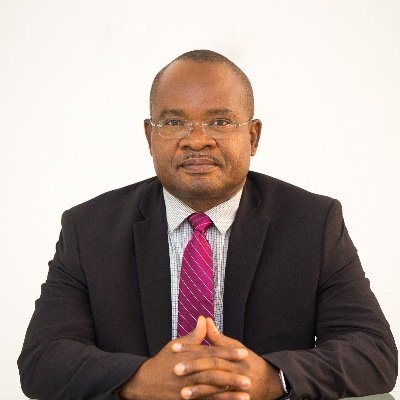
Barrister Clement Nwankwo: A Quiet Giant of Nigeria’s Democracy
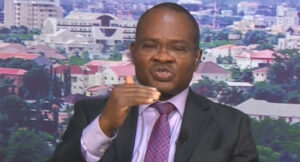
The trouble with Nigeria is simply and squarely a failure of leadership. — Chinua Achebe. Some people measure success by the offices they occupy. Others measure it by the lives they change. Barrister Clement Okechukwu Nwankwo belongs to the second group.
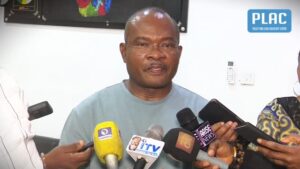
At a time when military rule cast a long shadow over Nigeria and speaking truth to power often came with grave consequences, Nwankwo chose a different path.
While many sought safety in silence, he stepped into the courtroom, the streets and the public square with one unwavering belief, that justice should never bow to fear.
History often celebrates presidents, governors and political heavyweights. Yet democracy is also built by men whose names may not appear on election ballots but whose courage keeps the ballot alive. Clement Nwankwo is one of those men.
Born on May 9, 1962, in Lagos, Nwankwo received his early education at Baptist Primary School, Apapa, before attending Methodist College, Uzuakoli, for his secondary education.
He later studied law at the University of Nigeria, Nsukka, graduating in 1984, and proceeded to the Nigerian Law School, where he was called to the Nigerian Bar in 1985.
His legal career could have followed a comfortable path, but he chose one filled with uncertainty. Rather than simply practising law, he committed himself to defending those whose rights were often ignored.
In 1987, alongside fellow lawyer Olisa Agbakoba, he co-founded the Civil Liberties Organisation (CLO), widely regarded as Nigeria’s first dedicated human rights organisation.
The organisation investigated human rights abuses, provided legal support to victims and challenged arbitrary actions by those in authority during one of the country’s most difficult political periods.
Three years later, convinced that constitutionalism needed an even stronger voice, Nwankwo established the Constitutional Rights Project (CRP).
Under his leadership, the organisation became one of Nigeria’s boldest defenders of civil liberties during the military era, particularly under General Sani Abacha, when many activists faced harassment, detention and persecution.
His commitment to justice was tested beyond Nigeria’s borders. In April 1997, while attending a session of the United Nations Commission on Human Rights in Geneva, Switzerland, Nwankwo was arrested after being wrongly accused of shoplifting.
He alleged that he was assaulted, racially abused, strip-searched and subjected to degrading treatment while in police custody.
Although Swiss authorities rejected some of his allegations, investigations later acknowledged irregularities in his treatment.
Officials admitted that he had been prevented from dressing for an extended period after a strip search, an action considered improper.
Some officers faced disciplinary measures, while United Nations human rights experts questioned the handling of the case and called for compensation.
The matter later reached the European human rights system, drawing international attention to concerns about police conduct and racial discrimination.
For Nwankwo, the incident became more than a personal ordeal. It reinforced the values he had spent years defending, that human dignity should never depend on nationality, race or the whims of those in power.
When Nigeria began its transition from military rule to democracy in 1998, Nwankwo founded the Transition Monitoring Group, bringing together more than 50 civil society organisations to observe elections and encourage public confidence in the democratic process.
He later established the Policy and Legal Advocacy Centre (PLAC), where he continues to champion electoral reform, legislative accountability and democratic governance.
Through the Civil Society Situation Room, he has remained one of Nigeria’s most respected voices on elections, consistently advocating transparency, credible polls and stronger democratic institutions.
Whether challenging attempts to alter constitutional term limits, criticising the militarisation of elections or calling for greater electoral accountability, Nwankwo has remained guided by principle rather than politics.
His message has always been simple: democracy cannot survive where institutions are weak and the rule of law is treated as an afterthought.
His decades of service have earned both national and international recognition. In 1996, he received the Martin Ennals Award for Human Rights Defenders, one of the world’s highest honours for human rights advocacy.
He has also been recognised by Human Rights Watch and the National Endowment for Democracy. In 2023, he was among distinguished Nigerians honoured with a National Honours Award.
Yet perhaps his greatest achievement cannot be displayed in a trophy cabinet. It is found instead in stronger democratic institutions, a more vigilant civil society and generations of lawyers and activists inspired by his example.
Like the iroko tree that does not announce its strength yet shelters countless lives beneath its branches, Barrister Clement Nwankwo has quietly helped steady Nigeria’s democratic journey.
His story is a reminder that nations are shaped not only by those who govern, but also by those who never stop demanding that governments govern justly.
In the end, his legacy is not merely that he defended the law. It is that he reminded a nation, time and again, that the law must always defend its people.