


British Troops to Train in Large-Scale Drone Warfare Exercise in Canada as Military Shift Accelerates
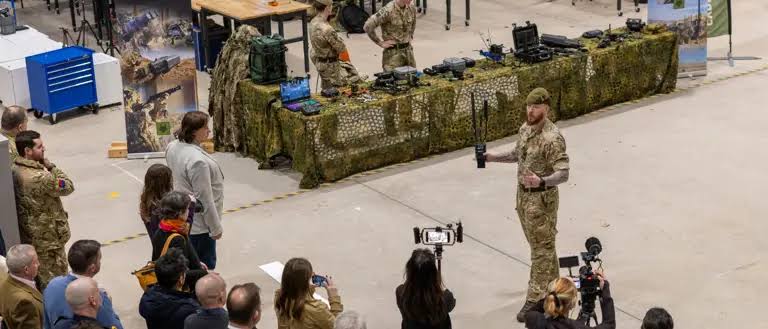
Hundreds of British soldiers are preparing to take part in a major training exercise in Canada focused on drone operations and electronic warfare, marking a clear shift in how modern militaries are adapting to new forms of conflict.
A UK defence source confirmed that around 350 troops from the 2nd Battalion, The Parachute Regiment will be deployed to the British Army Training Unit Suffield (BATUS) in Alberta this July for the exercise, which is being developed to reflect lessons learned from recent conflicts, particularly the war in Ukraine.
The Canadian army’s senior leadership says the vast training area offers ideal conditions for testing emerging battlefield technologies, especially uncrewed systems and counter-drone capabilities.
Lieutenant-General Michael Wright, Commander of the Canadian Army, said both countries are working to “reinvigorate Suffield” by shifting its focus away from traditional large-scale armoured drills toward modern warfare simulations.

The exercise will centre on drone warfare tactics, including the use of one-way attack drones and electronic jamming systems designed to disrupt unmanned aerial operations.
The training area, which is significantly larger than the UK’s Salisbury Plain, allows for more realistic testing conditions than are currently possible in Britain due to regulatory limits on drone activity.
Officials say the goal is to mirror battlefield realities seen in Ukraine, where drones have become a dominant force and are used in large numbers for both surveillance and strikes.
The programme, internally referred to as “Rhino Biz,” will also involve collaboration with defence technology companies, reflecting the growing integration between militaries and private industry in developing battlefield systems.
Lieutenant-General Wright noted that future soldiers must be as comfortable operating drones as they are handling traditional weapons.
Canada is already introducing training reforms requiring recruits to learn drone operation, surveillance awareness, and counter-drone defence as core combat skills.
However, Canada’s current drone inventory remains limited compared to the scale of modern drone warfare, with officials acknowledging the need for rapid expansion.
The British Army has used the Suffield training facility since 1972, historically relying on it for large-scale exercises involving tanks, artillery, and live-fire operations.
Those drills were scaled back in recent years due to budget constraints and the COVID-19 pandemic, with some training relocated to Oman.
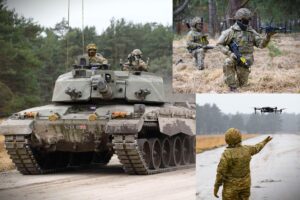
If successful, the new drone-focused exercises could mark the return of more regular British deployments to the Canadian site, but in a fundamentally transformed form shaped by the realities of modern warfare.

























https://shorturl.fm/hpef3