

By: Chioma Madonna Ndukwu
Nigeria’s Borehole Expansion and the Hidden Cost of Unregulated Groundwater
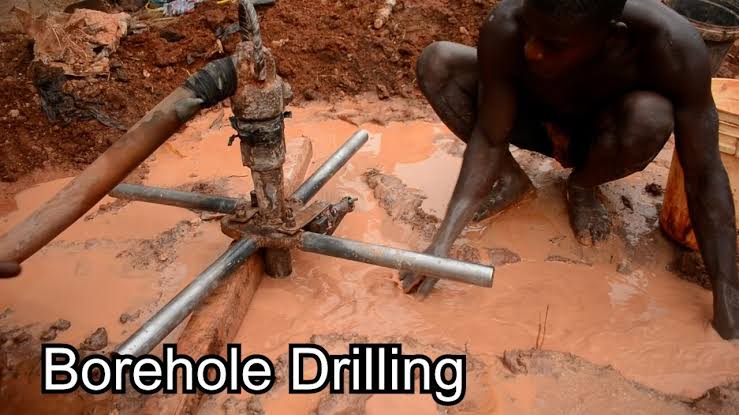
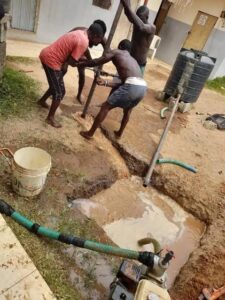
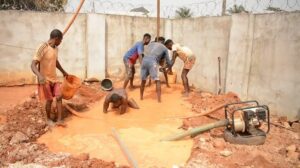
In Port Harcourt, Oma of Orbit News arrived at a compound just as drilling began cutting into the earth. The owner, Mr. Chukwudi Nwafor, watched the operation with quiet certainty.
“Public water is not dependable,” he said. “This one, at least, is mine.”
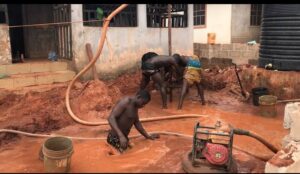
Across Port Harcourt, Owerri, and Umuahia, that reasoning has become common, water access is increasingly shifting from public infrastructure to private drilling beneath residential compounds.
In Owerri, civil engineer Engr. Ifeanyi Okoro told Oma that the expansion reflects a deeper structural problem than demand alone.
“When public systems lose consistency, people stop waiting for reform,” he said. “They build parallel systems underground.” In Umuahia, public health specialist Dr. Kelechi Ude explained that the risks often begin invisibly.
“Groundwater is connected,” he said. “When drilling is unregulated and sanitation is weak, contamination does not stay in one place. It moves slowly, silently, between compounds.”
The impact is becoming visible in rising maintenance costs, deeper drilling requirements, and inconsistent water quality across neighbourhoods. Dr. Ude added that the health effects are rarely immediate.
“It is not a sudden event in most cases,” he said. “It is long-term exposure that builds before it is recognized.” In Port Harcourt, a resident described borehole water as “something you trust until it reminds you that you shouldn’t have.”
The pattern is not limited to Nigeria. In India, widespread groundwater extraction in urban and agricultural zones has led to persistent declines in water tables, forcing communities to drill deeper each year just to maintain supply.
In Kenya, several regions report boreholes drying earlier than expected during prolonged dry seasons, increasing dependence on shared community water points.
In California, USA, prolonged over-extraction combined with drought conditions led to land subsidence, sections of ground gradually sinking, prompting the introduction of strict groundwater management laws under the Sustainable Groundwater Management Act, which required communities to significantly reduce unregulated pumping and coordinate extraction.
The issue has also drawn global reflection from resource governance thinkers. Former UN Secretary-General Ban Ki-moon once noted that “water scarcity threatens not just health, but stability and dignity.”
Similarly, environmentalist Wangari Maathai warned that “you cannot protect the environment unless you empower people to understand it,” a reminder that resource misuse often begins with weak awareness as much as weak enforcement.
Water resources analyst Mrs. Ngozi Eze, speaking in Owerri, said the core misunderstanding lies in treating groundwater as private property rather than a shared system.
“Underground water does not respect boundaries,” she said. “It is slow-moving and interconnected. When extraction becomes widespread without coordination, depletion and contamination begin to outpace visibility.”
Experts say the solution requires three layers working together: restoring reliable public water supply, regulating borehole drilling density and depth, and implementing groundwater monitoring systems in urban centres.
Engr. Okoro stressed that infrastructure alone is insufficient. “You can build pipes,” he said. “But if people do not trust what flows through them, they will always look underground for certainty.”
As Oma concluded her reporting in Port Harcourt, the drilling continued deeper into the soil, fading into the rhythm of the street.
What remains unresolved is not only how water is accessed, but how long cities can sustain a system where private survival is expanding faster than public trust.