


By: Chioma Madonna Ndukwu
The Way We Live: Every Wall Hides a Borehole Story
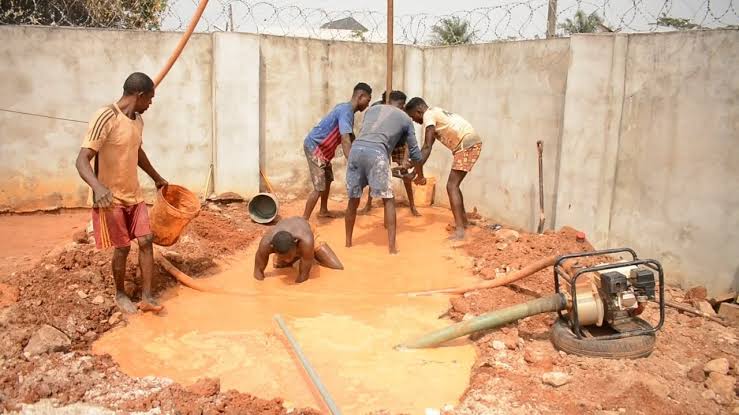
By morning, the drilling had already started again. The sound travelled through thin walls in Lagos like it owned the air, shaking plates slightly in kitchen cabinets as another borehole was forced into the earth just a few metres away.
Amara stood by the window again, but this time her expression was different.
“It’s not stopping,” she said softly.
Tunde finally looked up from his phone.
“It won’t,” he replied. “Not until something forces it to stop.”
Outside, the drilling supervisor adjusted his cap and spoke casually to a neighbour watching.
“If government water worked, nobody would do this,” he said, almost like it was an accepted truth. That line stayed in the air longer than the drilling noise.
Later that day, a community health worker visiting the street paused when she saw a cluster of borehole pipes lined along the compound fence.
“You people are very close together here,” she said, pointing at the ground. “Do you know how shallow contamination spreads?”
The landlord frowned.
“We boil the water sometimes,” he replied.
She shook her head.
“That is not always enough.”
She explained it slowly, the way people speak when they know they are not being fully heard.
“In dense areas like this, waste from septic tanks, leaking soakaways, even surface runoff after rain can move into groundwater. If boreholes are shallow or poorly sealed, you are not just drawing water. You are drawing whatever has entered the soil above it.”
Amara listened from the doorway without interrupting.
Tunde asked quietly, “So people are drinking… what exactly?”
The health worker paused.
“Sometimes clean water. Sometimes not. That is the problem. It is unpredictable.”
In a radio studio later that evening, a hydrologist tried to explain it in simpler terms.
“Water underground is not isolated,” he said. “It moves slowly, but it moves. And when too many people extract without regulation, the system becomes unstable.”
He added something that made the presenter go quiet.
“When balance is lost, quality is the first thing to go before quantity disappears.”
A caller cut in angrily.
“So what is the solution? We cannot wait for government forever.”
The expert replied carefully.
“People drill because they don’t trust public supply. That is the root issue.”
Then he added a line that shifted the tone of the studio.
“The moment a system becomes reliable, people stop building parallel survival systems.”
Outside Nigeria, similar truths were already visible.
In parts of India, entire neighbourhoods that once depended on boreholes have returned to municipal water after improved supply reduced private drilling. But in drought-prone regions, contamination and depletion still force people back into uncertainty.
In California, USA, strict groundwater management laws were introduced after land began sinking due to over-extraction. Some communities were forced to reduce private pumping significantly.
In Kenya, rural towns that invested in community-managed water systems saw fewer private boreholes and more stable water quality, though dry seasons still tested the limits.
Different responses. Same lesson. Trust changes behaviour more than fear ever can.
That night, Amara finally said what she had been thinking.
“If the government suddenly gave us clean, reliable water from the tap every day,” she said, “would people still drill all these boreholes?”
Tunde didn’t answer immediately. He remembered something he once read and said it slowly.
“Benjamin Franklin said, ‘When the well is dry, we know the worth of water.’”
Amara nodded. “But what if the well is no longer dry?” she asked. “What if it finally works?”
The next morning, the health worker returned briefly and added one more warning before leaving the street.
“This is not just about access,” she said. “It is about safety. Without regulation, borehole water can carry invisible risks people only notice when sickness starts repeating itself in households.”
Tunde asked her one last question.
“So what should Nigeria do?”
She didn’t hesitate.
“Fix public water first. Then regulate private extraction. Both together. Otherwise, people will always dig their own certainty.”
As she walked away, Amara watched another drilling rig being set up two streets away.
The ground opened again. No one stopped it. Because survival does not wait for policy. And certainty, even fragile certainty, is still enough to keep people digging.
Moral:
When public trust in essential systems breaks, people build private alternatives, even when those alternatives carry hidden risks. Restoring trust is as important as providing infrastructure.
Comment Hook:
If clean, reliable tap water was guaranteed every day in Nigeria, would boreholes disappear, or have people already stopped trusting public systems too deeply to return?



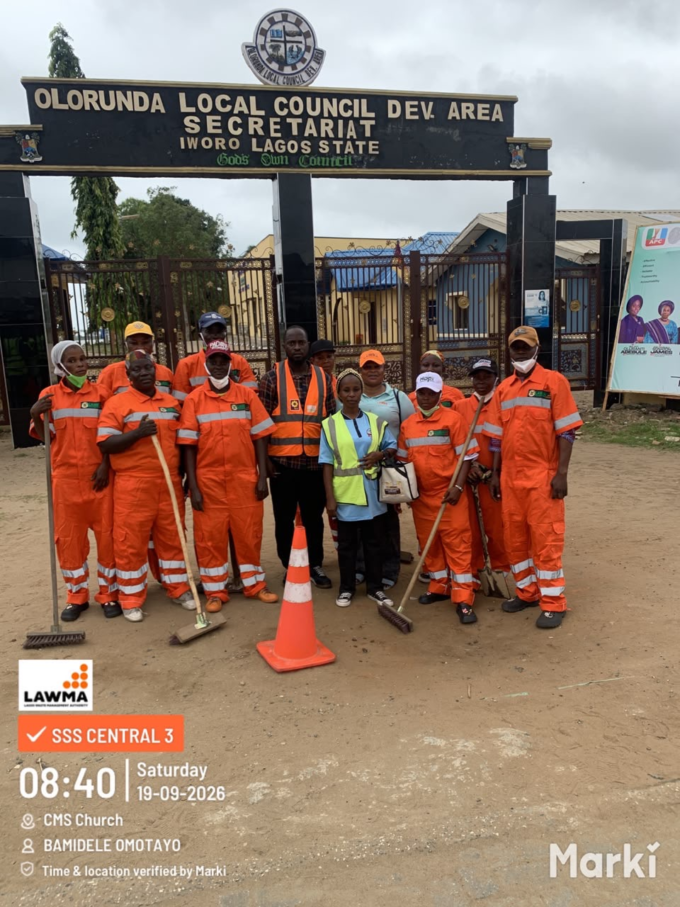









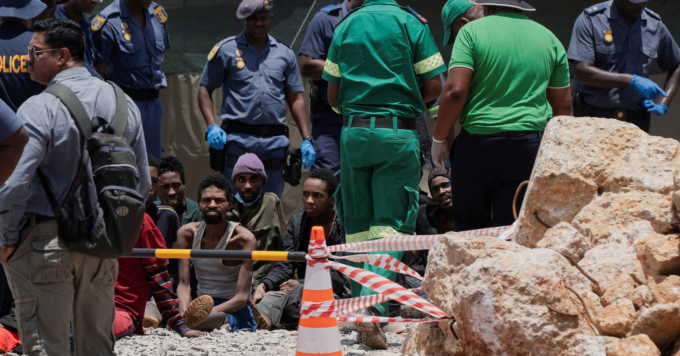











Nigerian government needs to work on getting the trust of the people. As the lesson says “Trust changes behavior more than fear can ever do”
Trust in government is what the nation is lacking