

By: Chioma Madonna Ndukwu
UNIZIK and the Dangerous Rush to Judgment Over Alleged Sexual Misconduct
The viral video captured more than a lecturer being beaten; it captured a disturbing moment when the robe of scholarship was dragged into the dust of mob justice.
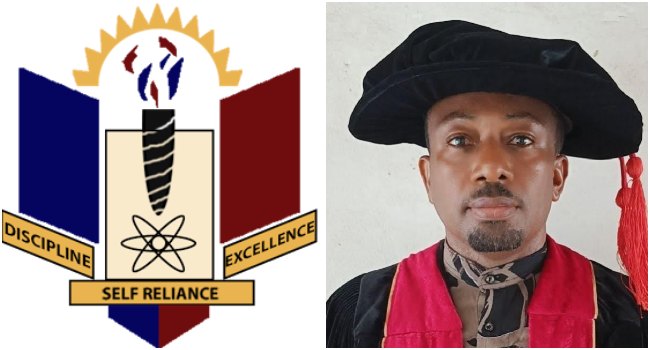
At Nnamdi Azikiwe University (UNIZIK), Awka, Professor Ifeanyi Odinye of the Department of Chinese Studies was assaulted and stripped of his clothes by students following an allegation of attempted sexual misconduct involving a female student.
The incident, which occurred on Saturday, August 15, 2026, was recorded and subsequently circulated widely on social media.
I am not holding brief for Professor Odinye. I do not know what happened inside that room, and I am not saying the allegation against him is true or false.
That is precisely why an investigation is necessary. An accusation should knock at the door of justice before punishment is allowed through.
What happened to him in that video, however, deserves unequivocal condemnation.
If a lecturer is accused of sexual misconduct, there are university authorities, security personnel, law-enforcement agencies and established procedures for dealing with such allegations.
He can be reported, investigated, arrested and prosecuted if found culpable. Stripping him naked and beating him is not justice. It is jungle justice.
And jungle justice is disturbing anywhere. But when it happens within a university, it raises a much deeper question:
What kind of graduates are our institutions producing when people who are expected to understand reason, evidence and due process can become judge, jury and executioner in the space of a few minutes?
A university should be a place where evidence weighs more heavily than emotion. Instead, what should have been an allegation requiring careful examination appeared to become a verdict before the accused had even been given the opportunity to speak.
The university has since ordered an immediate, comprehensive and impartial investigation, while condemning violence and insisting that allegations must be handled through established procedures. That investigation must be allowed to run its course.
There is another reason we should resist the temptation to settle the matter through social-media verdicts.
During an interview with Orbits News, Nigerian-Canadian businessman, Mr Joseph Nwokedi, recalled a similar case involving a university lecturer who was accused of sexually assaulting a female student with whom he had previously maintained a cordial relationship.
According to Joseph, the lecturer was eventually dismissed from the institution but was reinstated about four years later after an investigation found him innocent.
“The lecturer was accused by a female student with whom he had a cordial relationship. He was eventually sacked from the university, but after about four years of investigation, he was found innocent and reinstated.”
Joseph said the experience showed the damage an allegation could cause even when the accused was eventually cleared.
“By the time the truth came out, four years had already passed. A lot could have happened to that man during those years. He could have gone into depression; his career and reputation could have suffered. An eventual reinstatement does not necessarily erase everything that happened to him.”
Joseph’s account, which he presented as a recollection of a case he encountered, could not independently be verified by Orbits News.
But the point it raises remains relevant: an allegation can be investigated without first destroying the person being accused.
Mrs Favour Opara, a graduate of Nnamdi Azikiwe University and now a secondary-school teacher, also expressed concern after watching the viral footage.
Having known Professor Odinye and seen what she described as his high level of discipline, she said she believed the circumstances surrounding the incident looked like a setup.
“Having known Professor Odinye and seen the level of discipline he has always demonstrated, I find the incident very disturbing. From what I saw in the video, I think it looks like a setup.”
Opara said her conclusion was based on her knowledge of Professor Odinye and what she observed in the viral footage, while acknowledging that the investigation should establish what actually happened.
That distinction matters. A video may raise questions. A testimony may raise questions. A social-media post may raise questions. None should be allowed to become a substitute for investigation.
This is where Chimamanda Ngozi Adichie’s warning in The Danger of a Single Story becomes relevant. Once people hear one version of an incident, especially the version carrying the greatest emotional weight, they can become so convinced by it that every other possibility disappears from view.
The danger of a single story is that it can close the courtroom before the other side has entered it.
The allegation may be true. It may be false. Important evidence may still be missing. There may be details that neither the viral video nor the comment section can reveal.
But Professor Odinye must be given the opportunity to answer the allegation.
The students who assaulted him should not become the forgotten characters in this story either. Their actions deserve investigation just as much as the allegation that triggered them.
The role of the university’s security personnel must also be examined. Where were they when the situation escalated? Could the assault have been stopped earlier?
Why was a lecturer allowed to be publicly humiliated within an institution that prides itself on learning and discipline?
The viral footage has therefore opened a second investigation that goes beyond the allegation itself.
Who protects the accused when an allegation becomes a mob?
UNIZIK must find the truth. But finding the truth requires more than listening to the loudest voice in the room. It requires evidence, patience and the courage to follow facts wherever they lead.
A university is expected to teach more than theories, formulas and certificates. It is supposed to teach restraint, reason and respect for human dignity.
When emotion outruns evidence, justice can become a dangerous race.
And when students abandon due process for mob action, the question is no longer only whether a lecturer committed an offence.
We must also ask what happened to the values the university was supposed to have taught those who beat him.
The allegation deserves investigation. The assault deserves condemnation. And the truth deserves the opportunity to speak before anyone is pronounced guilty.
Because before the truth is found, nobody should be beaten into a verdict.