


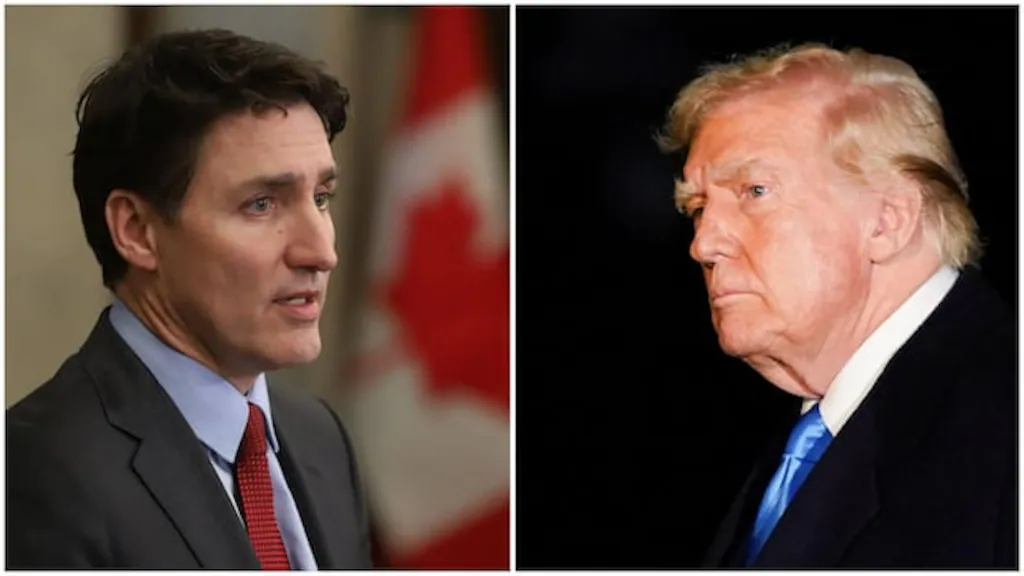
‘They’ll End Up Being the 51st State’ — Trump Renews Controversial Claim About Canada
United States President Donald Trump has renewed his controversial claim that Canada will eventually become America’s 51st state, citing trade disputes and accusing Ottawa of unfair treatment.
Trump made the remarks on Wednesday during a campaign rally in Bullhead City, Arizona, where he criticised Canadian trade policies and discussed automobile manufacturing relocation.
According to CTV News, Trump accused Canada of imposing unfair tariffs on American products, particularly dairy goods, insisting Washington would no longer tolerate unfavourable treatment of American businesses.
“Canada treats us very badly. They always have. Not anymore. It’s a whole different ball game now that Trump is in town,” he said.
Trump specifically criticised Canadian restrictions on American dairy products, claiming the country imposed tariffs on imports exceeding a limited quantity of milk.
He argued that incorporating Canada into the United States would resolve their disagreements, declaring that the neighbouring country would eventually become America’s 51st state.
“They’ll end up being the 51st state, because that’s the only way it works,” Trump said, insisting Canada depended more heavily on America.
The president also questioned why Washington should spend billions of dollars supporting a country that remains independent of the United States.
During the rally, Trump compared his ambitions for Canada with his longstanding interest in Greenland, suggesting developments involving both territories could follow similar patterns.
“They’ll be doing something just like Greenland,” Trump said, referring to his controversial position on the Arctic territory’s future and its strategic importance.
The president described the possibility as another addition to America’s expanding interests, remarking that the country’s “plate’s getting larger all the time.”
Trump also revived his suggestion that Lake Ontario should be renamed “Lake America,” adding another controversial proposal to his longstanding complaints about Canada.
Trump’s latest remarks come amid continuing trade tensions between Washington and Ottawa, with Canadian leaders repeatedly rejecting suggestions that their country could join America.
Canadian officials have maintained that their country is an independent nation, insisting its sovereignty remains non-negotiable despite Trump’s repeated comments about potential American expansion.
In September, British Columbia Premier David Eby said the province would install signs at American border crossings declaring it would “never the 51st state.”
His remarks followed Canada’s announcement of additional retaliatory tariffs on American goods, reflecting growing resistance to Trump’s statements about incorporating the neighbouring country into America.
Last month, US Commerce Secretary Howard Lutnick also made a controversial remark about Ontario, referring to the province as the “last out of our 51st states.”
His comment followed Canadian Prime Minister Mark Carney’s call for the Trump administration to approach trade negotiations more seriously and address continuing disagreements.
Trump revived his proposal in June when Canada faced economic difficulties that some economists said met the definition of a technical recession, intensifying political controversy.
Ontario Premier Doug Ford dismissed Trump’s remarks at the time, accusing the American president of behaving as though he could dictate Canada’s future.
Ford insisted that Canada’s sovereignty was not for sale, firmly rejecting the possibility of the country becoming part of the United States.
His response reflected the position of several Canadian political leaders, who have repeatedly maintained that their country will remain independent despite pressure from Washington.
With disagreements over tariffs, manufacturing and economic relations continuing between both neighbours, Trump’s latest comments are likely to intensify tensions surrounding US-Canada relations.
Although Trump has repeatedly suggested that Canada could become an American state, Canadian leaders continue rejecting the proposal and defending their country’s independence.



















Leave a comment