


Breathing Someone Else’s Smoke Could Put Your Heart at Risk
You may never have bought a cigarette in your life, yet you could still be breathing tobacco smoke regularly.

It could happen at home, in a car, at a roadside gathering, at work or even in a place where you have gone to relax.
Someone lights a cigarette nearby and the smoke spreads. You may move away, open a window or simply endure it until the smoke clears. What many people do not realise is that repeated exposure can carry serious health consequences.
A new global study published in The Lancet Public Health has renewed concern about the danger, linking second-hand smoke exposure to 1.66 million deaths worldwide in 2023.
The study estimated that about 2.71 billion people were exposed to second-hand smoke during the year.
The heart recorded the largest share of the deaths. Researchers estimated that ischaemic heart disease accounted for about 537,000 deaths associated with second-hand smoke in 2023.
Chronic obstructive pulmonary disease followed with about 354,000 deaths, while stroke was linked to about 278,000 deaths.
Lower respiratory diseases accounted for about 185,000 deaths, while tracheal, bronchus and lung cancer was associated with about 161,000 deaths.
These figures show that second-hand smoke is more than an issue of discomfort or bad indoor air.
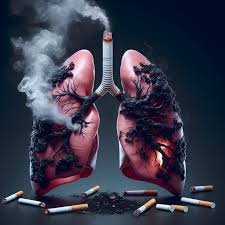
The smoke contains harmful substances that can affect the cardiovascular system and contribute to conditions that damage the heart and blood vessels.
The study estimated that ischaemic heart disease alone accounted for about 12 million disability-adjusted life years linked to second-hand smoke in 2023.
That means millions of years of healthy life were lost because of exposure that many people did not choose for themselves.
Children are especially vulnerable as the situation becomes more worrying when they are considered.
About 767 million children aged between zero and 14 were estimated to have been exposed to second-hand smoke worldwide in 2023.
Children accounted for more than 12 per cent of the total health burden associated with the exposure, with lower respiratory infections responsible for the greatest share.
A child cannot always decide where to sit, whether to leave a room or ask an adult to stop smoking.
That makes exposure in homes and vehicles particularly concerning.
The researchers found that young children are commonly exposed in private settings, where smoke-free laws are often limited. Parental and peer smoking also contribute to children’s exposure.
For parents, the message is straightforward: keeping cigarettes away from children is not enough. The surrounding air also matters.
Luisa Sorio Flor, a researcher at the Institute for Health Metrics and Evaluation at the University of Washington and lead author of the study, explained the contradiction.
“The proportion of the population exposed is falling, but more slowly than the population is growing in those regions,” Flor said.
Africa faces a growing problem, as Sub-Saharan Africa has another reason to take the findings seriously.
The number of people exposed to second-hand smoke in the region has nearly doubled since 1990.
Globally, the proportion of people exposed has fallen. The age-standardised exposure rate declined from 43.6 per cent in 1990 to 33.9 per cent in 2023.
But population growth has offset much of that progress.
In simple terms, a lower percentage does not necessarily mean fewer people are exposed when the population itself is increasing rapidly.
That creates a difficult challenge for countries across the region, where stronger tobacco-control measures will be needed to protect people who do not smoke.
Women also carry a heavy burden, as they made up more than half of those exposed globally in 2023.
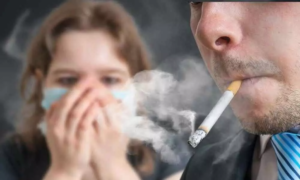
Of the estimated 2.71 billion people exposed, about 1.49 billion were women.
Researchers linked this partly to household smoking, particularly in places where smoking is more common among men.
A woman who does not smoke can therefore spend years exposed to tobacco smoke from a partner or other members of her household.
This is why second-hand smoke cannot be treated solely as an individual smoker’s issue. It affects families.
Why opening a window may not be enough. One common response to indoor smoking is to open a window or smoke near a doorway.
While ventilation may reduce some smoke in the air, it does not make indoor smoking safe for other people.
The simplest protection is to keep homes and vehicles smoke-free and prevent smoking around other people.
The researchers recommended stronger enforcement of comprehensive smoke-free laws, alongside tobacco taxation, restrictions on tobacco marketing, plain packaging and programmes that help smokers quit.
These measures are important because reducing exposure requires more than telling people to be careful.
The numbers do not tell the whole story
The researchers also acknowledged limitations in the available data.
Information about second-hand smoke exposure is less complete in many low- and middle-income countries, and much of the available information is self-reported.
The study also did not include exposure from electronic nicotine-delivery systems, heated tobacco products or third-hand smoke.
This means the reported figures should not necessarily be seen as the full extent of the problem.
Still, the scale of the findings is difficult to ignore.
Take This With You
If you smoke, quitting protects more than your own health.
It also protects the people who live with you, work around you and spend time with you.
If quitting immediately seems difficult, seek help from a healthcare professional and begin taking steps towards stopping.
If you live with someone who smokes, talk about keeping the home and vehicle smoke-free. Do not allow smoking around children.
Second-hand smoke is avoidable exposure.
And sometimes, protecting another person’s health begins with something as simple as deciding where a cigarette should never be lit.
Did You Know?
A 2023 global assessment estimated that 2.71 billion people were exposed to second-hand smoke, with exposure associated with 1.66 million deaths and 44.8 million disability-adjusted life years.
Ischaemic heart disease recorded the largest number of deaths linked to the exposure, at about 537,000 deaths.
The study also found that the number of people exposed to second-hand smoke in sub-Saharan Africa has nearly doubled since 1990.