


Brazil, Germany, India, Japan Back Africa’s Permanent UN Seat Bid
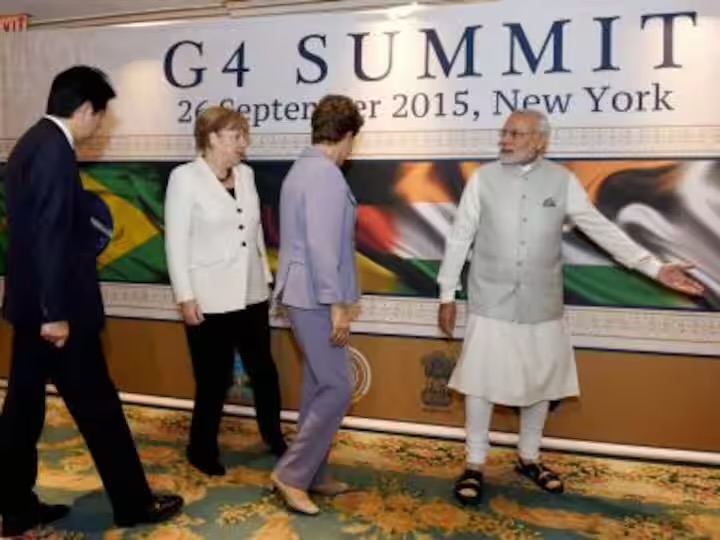
Brazil, Germany, India and Japan have thrown their support behind Africa’s demand for a permanent seat on the United Nations Security Council, calling for urgent reforms to make the body more representative of today’s geopolitical realities.
The four countries, which make up the Group of Four (G4), stated their position in a joint statement issued after their foreign ministers met in New York on Tuesday on the sidelines of the 81st session of the UN General Assembly.
The ministers said reform of the Security Council had become increasingly urgent as the international community faces a more complex geopolitical environment.
They argued that the council’s existing structure was no longer suited to present-day global realities and had raised questions about its representativeness, legitimacy, credibility and effectiveness.
The G4 said meaningful reform should involve expansion of the council in both the permanent and non-permanent categories.
They called for stronger representation for regions and groups that remain under-represented or unrepresented, particularly Africa, the Asia-Pacific, Latin America and the Caribbean.
The four nations also welcomed the reform model presented by the African Group during the Intergovernmental Negotiations on Security Council reform.
They reaffirmed their support for Africa to gain enhanced representation on the council, including a permanent seat.
However, the ministers expressed concern about the slow pace of negotiations, noting that discussions on Security Council reform had continued for 18 years without producing a concrete result.
They also criticised the presentation of what they described as a “bridging proposal” before the start of text-based negotiations.
According to the G4, the proposal did not sufficiently reflect the position of the majority of UN member states supporting expansion in both permanent and non-permanent categories.
The ministers also argued that consensus should not be the benchmark for decision-making on Security Council reform, citing the UN Charter and the mandate of the Intergovernmental Negotiations.
Brazil, Germany, India and Japan said they would work with other countries and reform-oriented groups to develop a consolidated model that reflects the views of the majority of UN member states.
They called for the immediate commencement of text-based negotiations, describing it as an important step towards substantive reform of the council.
The G4 said such reforms would strengthen the council’s representativeness, legitimacy, credibility and effectiveness while reinforcing the wider multilateral system centred on the United Nations.
The ministers further maintained that reform discussions should not be confined to the Intergovernmental Negotiations, saying the wider UN membership should also be engaged through platforms including the General Assembly.
They pledged to maintain close coordination throughout the 81st session of the General Assembly and directed their officials to follow up on the discussions.
Progress on the reform process is expected to be reviewed at the next Director General-level meeting in New Delhi.























Leave a comment