


By: Chioma Madonna Ndukwu
Akwa Okuko’s Unfinished Story and the New Path Soludo Has Placed Before Him
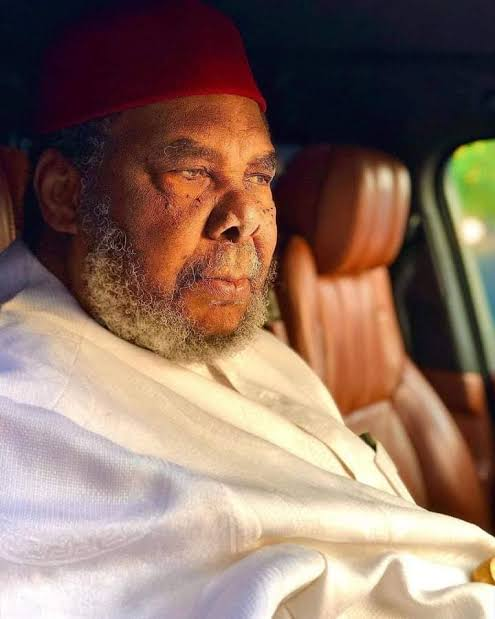
For Chidozie Nwangwu, the man popularly known as Akwa Okuko Tiwara Aki, the road back to public life has taken a turn few people would have imagined when the gates of the Amawbia Correctional Centre closed behind him.

The native doctor, once surrounded by fame, wealth and an image that commanded attention, spent part of 2026 behind bars after a criminal case that brought his activities under intense government scrutiny.
Now, he has walked out of prison into a new role, carrying a responsibility that places his past at the centre of his future.
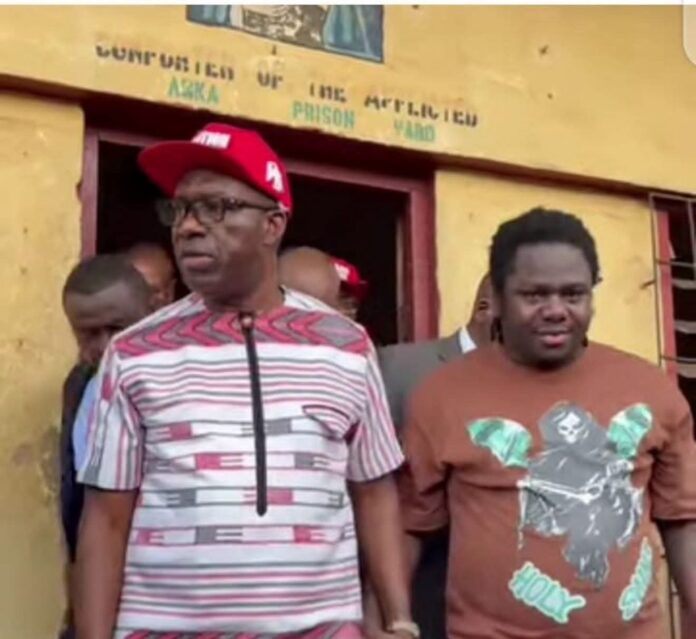
On September 18, Anambra State Governor Chukwuma Soludo granted Nwangwu a pardon and ordered his release from the Amawbia Correctional Centre.
The governor also appointed him Ambassador for Youth Reformation in Anambra State, a position connected to the state’s campaign against practices associated with quick wealth, money rituals and criminality.
The appointment has given Nwangwu’s story an unexpected second chapter.
The man whose name once drew young people to the world of native medicine and spectacular claims about wealth is now expected to use his experience to discourage young people from chasing success through dangerous or unlawful shortcuts.
It is a difficult message to deliver because the messenger himself has become part of the story.
Before the arrest, Chidozie Nwangwu had built a recognisable public identity as Akwa Okuko Tiwara Aki.
His name travelled far beyond his immediate community, helped by social media and the public fascination with native doctors who presented themselves as powerful, wealthy and influential. His image became inseparable from the world he occupied.
In February 2025, Nwangwu was arrested alongside other native doctors during an operation linked to the Anambra State Government’s campaign against activities it associated with money rituals, fraudulent wealth schemes and criminality.
For someone who had become accustomed to public attention, the transition from being watched by followers to being watched by the state was a dramatic reversal.
His case eventually moved through the courts, and he entered a plea bargain with the government. He was convicted and sentenced to imprisonment, with time already spent in custody taken into consideration.
The court also ordered the demolition of his shrine in Oba, Idemili South Local Government Area. The demolition became one of the defining images of Nwangwu’s fall.
In February 2026, state security operatives moved into the premises and began dismantling the shrine. Native pots, photographs, moulded figures, clothing and other objects were removed as the structure was pulled apart. The shrine was eventually set ablaze.
For the public, the destruction was a physical demonstration of the state’s campaign against practices it considered harmful.
For Nwangwu, it represented the collapse of a world that had been closely tied to his public identity.
The court proceedings also required him to renounce Oke-ite and related practices and participate in efforts to redirect young people away from them.
That requirement would later acquire a new meaning when his prison sentence was cut short.
Soludo’s unexpected intervention came on September 18, when he visited the correctional centre at Amawbia and announced Nwangwu’s release under the governor’s prerogative of mercy.
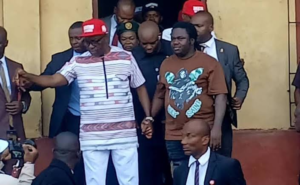
The Anambra State Government subsequently explained that the pardon affected the unserved portion of his sentence and followed the terms of the plea bargain and Nwangwu’s stated remorse.
The decision did not erase the court proceedings or the events that led to his conviction. Instead, it opened the door to a different form of consequence: rehabilitation through public responsibility.
Nwangwu was appointed Ambassador for Youth Reformation, placing him in a position where his own experience could become part of the message.
That is where the story becomes more complicated than a simple account of a prison release. The man who now has to explain the road he travelled
Young Nigerians do not need another speech telling them that overnight wealth can be dangerous. They hear such warnings regularly.
What makes Nwangwu different is that he is expected to speak from the centre of a story that has already carried him through fame, controversy, court proceedings and prison.
His history gives him something a government campaign cannot easily manufacture; personal experience. But it also means his credibility will be closely examined.
The young people he addresses will know his past. They will know the name Akwa Okuko. They will know the image that once surrounded it. They will know that the shrine associated with him was demolished and that he spent time in prison.
His new role therefore cannot depend on a title alone. It will depend on whether his conduct matches the message he has been asked to deliver.
Chinua Achebe captured the importance of understanding one’s past in a line from Things Fall Apart: “A man who does not know where the rain began to beat him cannot know where he dried his body.”
For Nwangwu, the rain began long before the prison gates opened. His new responsibility will require him to understand that journey and speak honestly about where some of those choices led.
Soludo’s decision has also raised an interesting question about rehabilitation. What happens when someone whose past has become controversial is given an opportunity to use that same past for public reorientation?
In Nwangwu’s case, the answer will unfold in public. He is not returning to the same life he left behind.
The shrine that once formed part of his identity has been demolished, and his new public role carries expectations that point in the opposite direction from the practices associated with his conviction.
That makes his assignment both unusual and demanding. He must persuade young people that there is more to success than the display of wealth, and that the shortest road to riches can sometimes lead somewhere nobody planned to go.
His message will have to compete with the culture of social media, where luxury cars, expensive clothes and displays of sudden prosperity can make patience look like failure. That is the audience he is now being asked to reach.
The pardon has changed Nwangwu’s immediate circumstances, but it has not rewritten his history.
His name still carries everything that came before the prison gate opened. His challenge is to determine what that name will mean from this point forward.
For Soludo, the appointment represents an attempt to turn a controversial chapter into a lesson for the state’s younger generation.
For Nwangwu, it is an opportunity that comes with a heavy condition: he must demonstrate through his own life that change is more than a public announcement.
The real story of Akwa Okuko, therefore, is not simply that a governor pardoned a prisoner or appointed him a youth ambassador.
It is about what happens after a man loses the identity that once defined him and is given the chance to build another one.
The shrine is part of his past. The prison sentence is part of his past. The name Akwa Okuko is part of his past.
What he does with the life that remains is the part of the story that has not yet been written.
The Bigger Question:
What Will Akwa Okuko Do With the New Path?
Soludo has opened the door, but Akwa Okuko must now decide where he walks from here. A pardon can close a prison gate; it cannot rewrite a past.
His real test begins now: whether he can turn the story that once defined him into a warning for others and make this second chance mean something.
















Leave a comment