


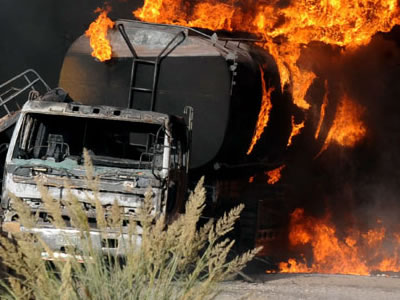
Edo Tanker Explosion Leaves Many Feared Dead, Others Injured
Many people were feared dead, while 10 others sustained varying degrees of injuries after a petrol tanker exploded at Oluku, along the Benin-Lagos Road in Edo State, on Thursday.
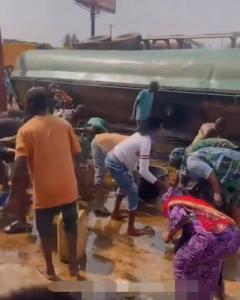
The explosion occurred near Oluku Market after a petrol tanker reportedly fell while attempting to make a U-turn, spilling fuel onto the road and surrounding drainage channels.
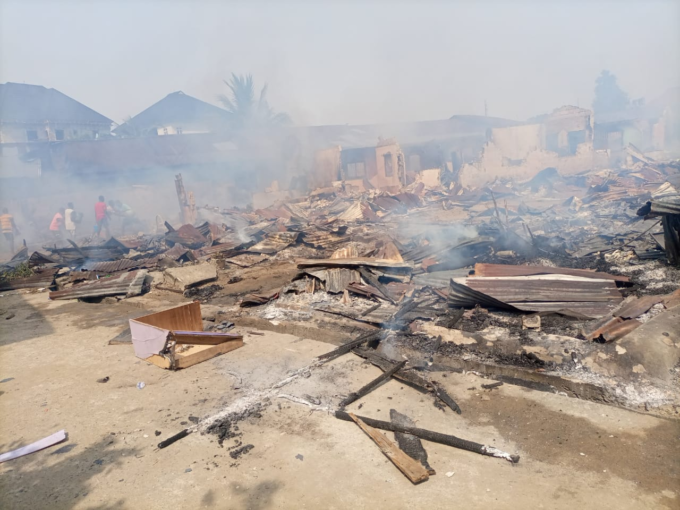
Although the exact number of fatalities had not been established, some security officials reportedly put the death toll at five. The explosion destroyed several shops, houses and vehicles in the area.
Oluku is a busy area where drivers of heavy-duty trucks frequently park to rest before continuing their journeys.
Witnesses said residents and passers-by rushed to collect fuel from the fallen tanker shortly after the accident, despite warnings about the dangers of approaching the spilled petrol.
One witness, identified as John, disclosed that he was among those scooping fuel before a soldier warned him about the possibility of a fire.
According to him, the soldier drew his attention to the hot weather and the large crowd gathering around the tanker, warning that the situation could trigger an explosion.
John said he looked back shortly after the warning and saw the tanker burst into flames, forcing people around the scene to flee for safety.
He credited the soldier’s intervention with saving his life, adding that he could have been among the victims if he had remained close to the vehicle.
The witness said two men directly beneath the tanker were burnt, while several shops built along the drainage channels were destroyed by the fire.
He added that injured victims were taken to the University of Benin Teaching Hospital (UBTH) for medical attention, while some bodies were deposited at the hospital’s mortuary.
Another witness, Juliet Philip, blamed the incident on the refusal of some residents to heed warnings against scooping fuel from the fallen tanker.
Philip said some people ignored attempts to stop them because they hoped to sell the collected petrol, which she said was reportedly selling for N1,500 per litre.
She explained that the fire affected Oluku Market after the spilled fuel entered drainage channels, adding that some residents had collected petrol and stored it inside their shops.
Several vehicles parked around the market were also destroyed in the inferno.
Philip further alleged that some residents refused to leave the scene despite efforts by security personnel to disperse the crowd, while others reportedly confronted military personnel and road safety officers.
UBTH Mobilises Emergency Response Team
The management of the University of Benin Teaching Hospital mobilised emergency personnel to treat victims brought to the facility following the explosion.
The hospital’s Chief Medical Director, Professor Idia Ize-Iyamu, was seen coordinating the emergency response across the accident and emergency department and burns units.
A hospital source said officials of the Federal Road Safety Corps (FRSC) and the police brought several victims suffering from burns to the facility.
The source reported seeing approximately 10 injured people in the emergency unit, while some bodies were taken to the mortuary.
However, authorities had yet to establish the final number of fatalities as emergency operations continued at the scene.
The Executive Secretary of the Edo State Emergency Management Agency, Jerry Idahosa, said the agency could not immediately confirm the casualty figure because firefighters and other responders were still working to contain the blaze.
Idahosa confirmed that three people, including a soldier, had sustained injuries and were receiving treatment.
Meanwhile, the Edo State FRSC Sector Commander, Preye Ezekiel Bedford, confirmed that 10 people were injured in the incident.
Bedford said FRSC officials, police officers, firefighters, military personnel and officials of the Edo State Traffic Management Agency were at the scene to manage traffic and assist with emergency operations.
Recent Tanker Explosions Across Nigeria
The Edo tanker explosion adds to a series of similar incidents that have claimed lives, injured residents and destroyed property across Nigeria.
On February 8, 2026, at least two people died and another sustained injuries when a petrol tanker exploded along the Ihiala axis of the Onitsha-Owerri Road, opposite an FRSC office.
The explosion reportedly followed a collision between the tanker and a car, after which the tanker struck a barricade, spilled its contents and caught fire.
On March 21, 2026, two people also died when a gas tanker collided with a tipper truck in the Ajah area of Lagos State.
The incident destroyed several properties, including warehouses and roadside shops.
The Controller General of the Lagos State Fire and Rescue Service, Margaret Adeseye, said the accident occurred when a speeding tipper truck struck a stationary 30-tonne gas tanker from behind.
In October 2025, at least 45 people were killed and 62 others injured in a petrol tanker explosion at Essa community along the Bida-Badegi-Agaie Road in Niger State.
Hussaini Isah, Head of Operations at the National Emergency Management Agency’s Minna office, said the victims were affected while scooping fuel from the crashed tanker.
Fourteen critically injured victims were referred to Gwagwalada Specialist Hospital for further treatment after receiving initial medical attention at other facilities.
Earlier that month, at least two people reportedly died in another petrol tanker explosion in Agbor, Delta State.
In January 2025, a petrol tanker explosion in Gurara Local Government Area of Niger State killed 98 people and injured 69 others. About 20 shops were also destroyed.
The explosion reportedly occurred after a petrol tanker crashed and another tanker was brought to transfer its contents.
Nigeria also recorded one of its deadliest tanker explosions on October 14, 2024, when 209 people died in Majia, Jigawa State.
An investigation committee chaired by retired Deputy Inspector-General of Police Hafizu Muhammad Inuwa identified several contributing factors, including damaged speed bumps, potholes, night driving and excessive speed.
The committee also noted that friction between metallic containers and hard surfaces might have ignited the fire as people attempted to scoop the spilled fuel.
Why Do People Scoop Fuel From Fallen Tankers?
Despite repeated fatalities, fuel scooping remains a concern following tanker accidents in Nigeria, prompting questions about poverty, desperation, public safety awareness and personal responsibility.
The Head of NEMA’s Operations Office in Benin, Kenoma Ojuedeire, attributed the practice largely to greed, arguing that the financial value of spilled petrol could not justify the risk of losing one’s life.
Ojuedeire expressed concern that people continued to engage in the dangerous activity despite previous reports of deadly explosions.
He called for sustained public education to discourage residents from approaching fallen tankers and collecting spilled fuel.
Civil rights activist Kola Edokpayi also blamed greed, arguing that economic hardship alone could not explain why people ignored the dangers.
Edokpayi, president of the Talawaka Parliament, noted that some financially disadvantaged people deliberately avoided scooping fuel because they understood its potentially fatal consequences.
He called on government authorities and individuals to intensify public sensitisation to prevent further deaths.
However, sociologist Collins Gambo linked the practice to economic hardship, declining social values and growing desperation among Nigerians.
Gambo argued that people struggling to meet their basic needs sometimes view spilled fuel as an opportunity to earn money, even when collecting it places their lives in immediate danger.
He described the behaviour using the sociological concept of anomic suicide, which relates to harmful outcomes associated with weakened social regulation and disrupted norms.
According to him, some residents approach accident scenes hoping to collect enough fuel to sell and temporarily ease their financial difficulties.
Gambo also identified declining empathy and the erosion of communal values as contributing factors, arguing that some people now view another person’s misfortune as an opportunity for personal gain.
He said tanker accidents should ordinarily attract sympathy for those affected, including owners who may suffer substantial financial losses.
The sociologist further observed that perceptions of economic inequality could encourage some people to justify taking fuel from accident scenes, particularly when they believe wealth is concentrated among privileged members of society.
However, he stressed that such explanations should not excuse the dangerous practice.
Gambo called for a combination of personal responsibility, sustained public education and practical government policies aimed at improving living conditions.
He maintained that addressing economic desperation and rebuilding social values could help discourage people from risking their lives to collect fuel from fallen tankers.
The latest explosion in Edo State highlights the continuing danger posed by crowds gathering around fallen fuel tankers before emergency responders can secure accident scenes.
Petrol is highly flammable, and spilled fuel can ignite when exposed to an ignition source, causing fires that spread rapidly and leave people with little time to escape.
Authorities routinely warn residents against approaching crashed tankers, collecting spilled petroleum products or remaining near accident scenes while emergency operations are underway.
The repeated loss of lives also underscores the need for effective traffic enforcement, prompt emergency response and sustained public awareness campaigns.
While economic hardship may help explain why some people take such risks, the consequences can be devastating for victims, their families and entire communities.
The Oluku explosion is another reminder of the dangers associated with scooping fuel from fallen tankers, particularly when people disregard warnings and gather around accident scenes.



















Leave a comment