


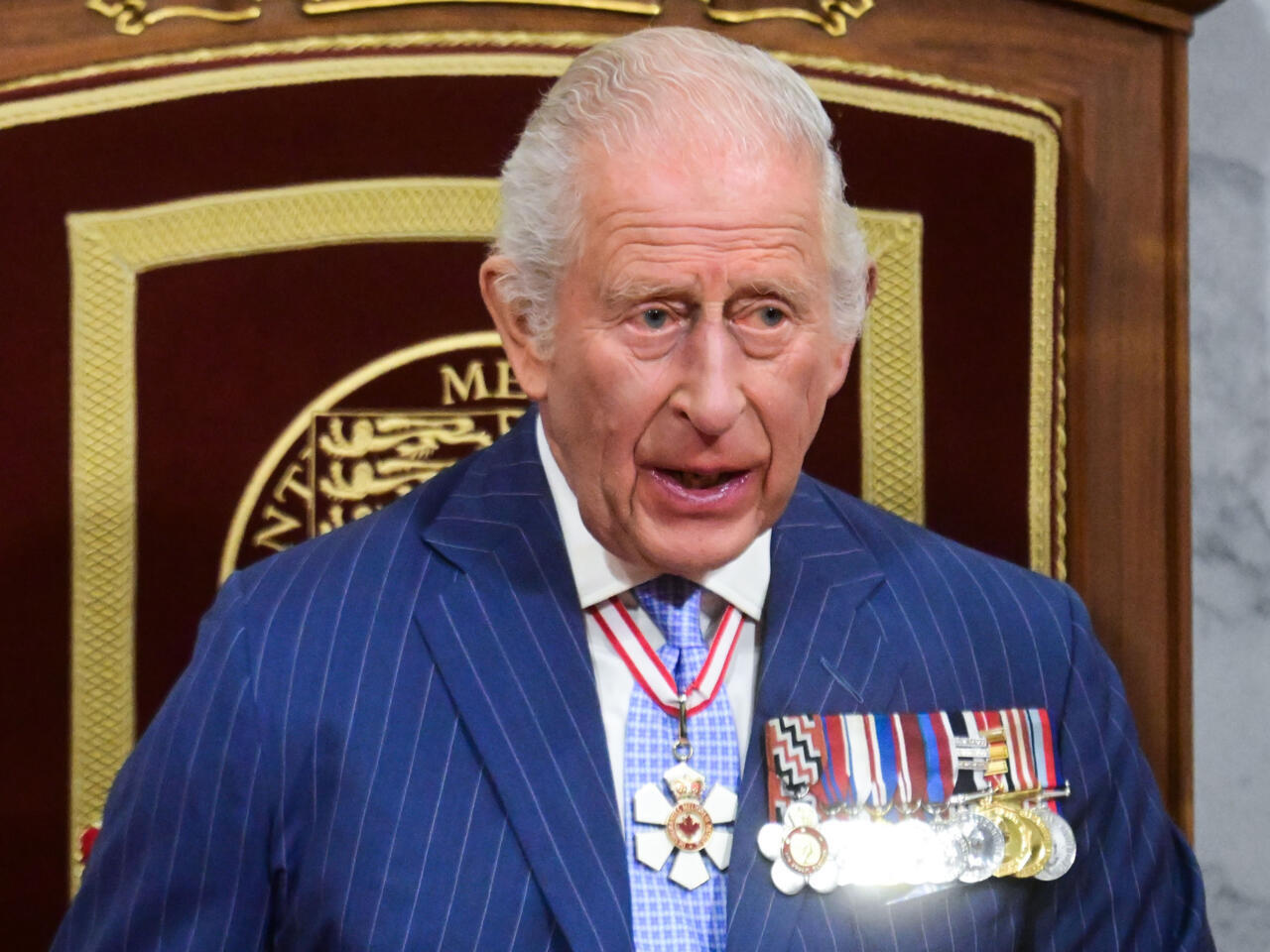
King Charles Legal Battle Takes an International Turn: What Happens Next?
A legal battle that began in Australia and placed King Charles III at the centre of allegations involving Indigenous Australians is now attracting attention beyond the country’s courts.
For Robbie Thorpe, a 68-year-old Indigenous Australian activist and elder, his latest courtroom defeat has not ended the campaign he began in 2023 against the monarch.
Thorpe has been attempting to bring a private prosecution against King Charles in Melbourne, alleging that the monarch and Australian government institutions have participated in systems he considers genocidal.
Three judges at Victoria’s Court of Appeal recently rejected his latest attempt to pursue the case, marking the third legal setback since he began seeking judicial action.
However, the ruling does not completely exhaust Thorpe’s options within Australia, as he can still apply to the country’s High Court for permission to appeal.
Such applications face a high threshold, with Australian media reporting that the High Court accepts only a small proportion of applications seeking permission to appeal.
The international dimension emerged after the latest ruling, when Thorpe indicated that he intended to take his allegations beyond Australia and seek attention from the International Criminal Court.
Thorpe said the ICC would expose what he described as Australia’s treatment of Indigenous people, signalling his intention to continue pursuing the matter outside the domestic legal system.
However, his stated plan should not be confused with an ICC prosecution already underway, because individuals cannot independently commence criminal proceedings before the international court.
International law expert Don Rothwell of the Australian National University explained that Thorpe could submit evidence to the ICC prosecutor, who would then independently consider whether action was appropriate.
“An individual cannot commence a prosecution,” Rothwell said, explaining that any decision to investigate or prosecute would ultimately rest with the International Criminal Court itself.
Another legal question surrounds the position of King Charles, who is Australia’s head of state as well as the reigning monarch of the United Kingdom.
Legal experts cited by Australian media have said the British monarch enjoys extensive immunity from criminal and civil liability, although the precise Australian application remains legally untested.
Constitutional lawyer Anne Twomey of the University of Sydney said the protection was likely inherited by Australia, while acknowledging that she had not seen the issue previously tested there.
Behind Thorpe’s legal campaign lies a much broader dispute concerning the treatment of Indigenous Australians, who continue to experience significant disadvantages across several areas of national life.
Indigenous Australians account for about four per cent of the country’s population and, according to official statistics, experience poorer outcomes involving health, life expectancy, employment and imprisonment.
Thorpe’s allegations therefore sit within a wider debate over Australia’s treatment of its Indigenous population, although the courts must separately determine whether his claims meet legal requirements.
The immediate question is whether Thorpe will pursue another challenge within Australia, with the High Court representing the remaining domestic avenue available to him.
Beyond that possibility, his stated intention to approach the ICC introduces another layer to a case that has already moved through several stages of Australia’s legal system.
Whether the international body will examine any material submitted by Thorpe remains uncertain, because such a decision would depend on the prosecutor’s assessment and the court’s jurisdiction.
For now, the case remains at a crucial crossroads, with Thorpe seeking another legal route while the Australian courts have repeatedly rejected his attempts to proceed.
What began as a private prosecution attempt against a monarch in an Australian courtroom could therefore become an international appeal for scrutiny, although no ICC proceedings have begun.


















Leave a comment