


If Nigeria Wants Investment, It Must Fix the Investment Climate
Investment does not respond to invitation alone. It follows the road where capital can operate, workers can produce, rules remain predictable, and returns can survive unexpected shocks.

That is why Nigeria’s recent appeal to Nigerians abroad deserves a harder question: what kind of business environment will greet the money once it comes home?
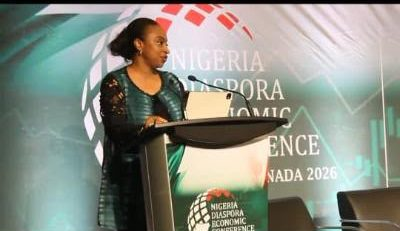
At the Nigeria Diaspora Economic Conference in Toronto, President Bola Ahmed Tinubu urged Nigerians abroad to move beyond remittances and build productive investments in Nigeria.
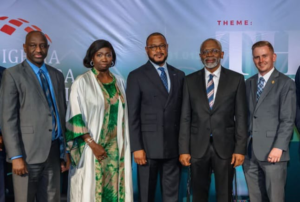
Chief of Staff Femi Gbajabiamila represented the President at the August conference, whose theme was “Thrive Abroad, Invest in Nigeria,” placing diaspora capital firmly inside Nigeria’s development conversation.
NiDCOM says Nigerians in the diaspora contribute more than $20 billion annually, while the conference acknowledged concerns around project credibility, regulatory complexity, information gaps and perceived investment risks.
Those concerns matter because investors calculate costs before they calculate patriotism. A Nigerian living abroad may love home deeply while still asking whether the numbers, rules and security conditions make sense.
Electricity remains one of those numbers. The Central Bank’s November 2025 Business Expectations Survey listed insufficient power among businesses’ leading constraints, alongside insecurity, multiple taxes and high interest rates.
Aliko Dangote put the industrial argument bluntly in February 2026: “Power means growth. No power, no growth.” His warning focused on the electricity burden facing Nigerian industries.
Fuel prices add another layer to the calculation. Reuters reported in September that petrol had reached about ₦1,400 per litre in Lagos and Abuja, while diesel prices had moved above ₦2,000.
Those costs travel through the economy, affecting transportation, logistics, manufacturing, food distribution and backup electricity. A company can survive one expensive input; repeated increases steadily change the investment equation.
Security presents another concern. CBN business surveys have repeatedly placed insecurity among major constraints, meaning violence and uncertainty can become commercial problems long before they become balance-sheet figures.
Taxes also deserve attention, especially where businesses encounter multiple levies or unclear obligations. The CBN’s November survey placed high or multiple taxes among the five leading constraints reported by businesses.
Then comes the question of confidence in institutions. Transparency International’s latest country data gives Nigeria a corruption score of 26 out of 100, ranking it 142nd among 182 countries.
Corporate exits should therefore be examined carefully rather than turned into one sweeping story. Uber ended its Nigerian operations in September 2026 after 12 years, following a review of its business operations.
Other multinational companies have also changed their Nigerian strategies in recent years, but their decisions have not all had identical causes; exchange rates, market conditions, global strategy and operating costs can differ.
That distinction matters because Nigeria still attracts capital. New investment announcements, expanding domestic enterprises and government-backed financing show that investors continue to see opportunities within the country’s large market.
The answer, therefore, is not to discourage Nigerians abroad from investing. It is to make the invitation credible by reducing the obstacles that investors already identify.
Nigeria needs reliable electricity, clearer taxation, stronger security, predictable regulation and institutions capable of resolving commercial disputes without unnecessary delays.
These are not luxurious demands; they are basic investment infrastructure.
Dr Ngozi Okonjo-Iweala has argued that entrepreneurs need supportive regulation, access to credit, electricity and water, while governments must maintain policy consistency to reduce uncertainty for private investors.
That is the bridge between an investment conference and an investment destination. Speeches can open the door, but dependable institutions determine whether investors walk through it with confidence.
Government’s task is not simply to ask Nigerians abroad to bring their money home. It is to ensure that the environment awaiting that money rewards productivity, protects legitimate enterprise and encourages reinvestment.
Until then, every invitation to invest will carry an unavoidable second question: what exactly is Nigeria doing to make the investment climate worthy of the investment it seeks?























Leave a comment