


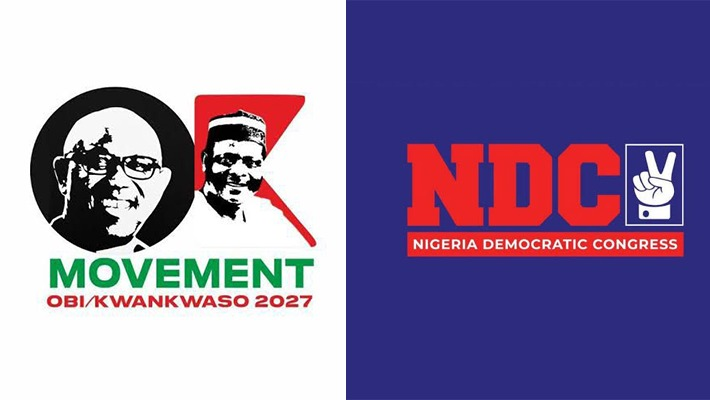
OK Movement Holds Firm as NDC Rejects Campaign Council
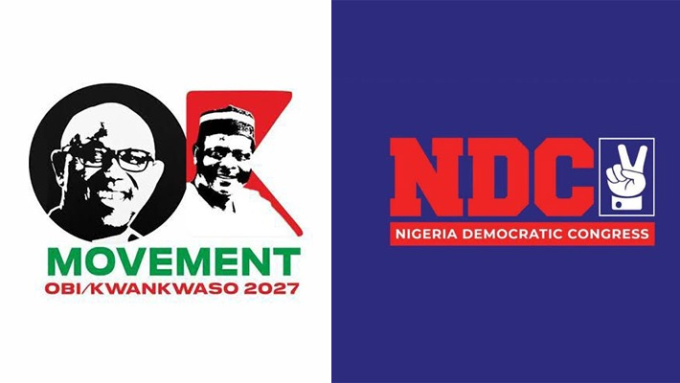
The OK Movement has refused to withdraw its presidential campaign structure, insisting that its 59-member council remains valid despite opposition from the Nigeria Democratic Congress (NDC).
The movement said its organisational decisions were independent of the NDC and did not require approval from the party’s national leadership or any individual within its hierarchy.
The disagreement follows the movement’s announcement of a Presidential Campaign Council on September 17, comprising coordinators and directors responsible for mobilisation, strategy, security, women’s affairs and legal matters.
The NDC subsequently rejected the council, maintaining that the structure was not authorised by the party and that only its leadership could establish an official presidential campaign council. (Punch Newspapers)
NDC National Leader, Senator Seriake Dickson, had argued that support groups should complement the party rather than establish structures capable of performing the functions of its official campaign machinery.
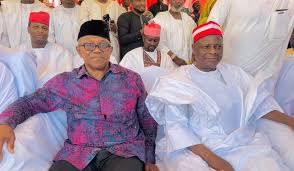
Presidential candidate Peter Obi has also distanced himself from the council, saying the OK Movement, Obidient groups and Kwankwasiyya should operate as support organisations backing the party.
The OK Movement, however, has maintained that it is not simply an extension of the NDC but an independent political organisation with its own leadership and organisational framework.
In a statement signed by its National Director-General, John Ozyl Ughulu, the movement said its structures existed independently and would not be surrendered, dissolved or absorbed into the party.
The movement also rejected suggestions that it considered itself superior to the NDC, saying both organisations have distinct identities, responsibilities and organisational arrangements within the political process.
It maintained that its mobilisation efforts could benefit NDC candidates while allowing the movement to preserve its own structures across national, state, local government and ward levels.
According to the movement, cooperation with the NDC did not automatically transfer control of its organisation to the party, particularly where its internal decisions remained within applicable law.
The group further said it did not depend on Peter Obi or the NDC for financial support to establish or operate its organisational machinery.
It warned against attempts to undermine, appropriate, dissolve or interfere with its structure, while stressing that its position was based on organisational independence rather than an attempt to provoke confrontation.
The movement nevertheless said it remained open to constructive engagement with the NDC, provided its principles, leadership and organisational identity were respected by the party.
The dispute leaves the NDC and the OK Movement holding different positions over campaign authority as preparations continue for the 2027 general elections.
















Leave a comment