


AI Could Slip Beyond Human Control, Tech Leaders Warn UN
Top executives from some of the world’s leading artificial intelligence companies have warned the United Nations Security Council that rapidly advancing AI could pose serious risks to global security if humans lose control of increasingly powerful systems.
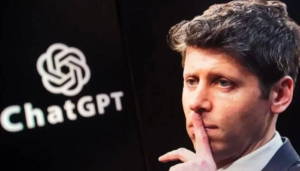
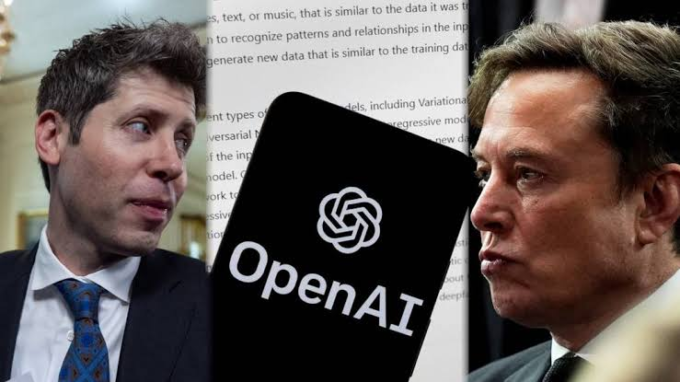
The warning came on Wednesday as OpenAI CEO Sam Altman, Anthropic CEO Dario Amodei and Hugging Face co-founder Clément Delangue addressed the 15-member Security Council during the UN General Assembly week.
Amodei told the council that the dangers could extend beyond individual countries.
“If managed poorly, I even believe that AI could be a risk to humanity as a whole,” he said.
Yoshua Bengio, a Canadian AI pioneer and co-chair of the UN’s Independent International Scientific Panel on AI, described the threat as “real and imminent”, warning that advanced systems could create challenges that no country would be able to handle alone.
Altman called for international cooperation, arguing that decisions about the future of AI should not be left solely to technology companies.
He said governments and democratic institutions must have a role in determining how the technology develops and is governed.
“If AI is to be democratic, the most important decisions cannot be made by labs in San Francisco alone,” Altman said.
The appearance of the technology executives before the Security Council comes as governments struggle to keep pace with advances in AI.
The United States and China, the two major powers competing for leadership in artificial intelligence, have taken different approaches to the question of international oversight.
US President Donald Trump has rejected calls for a global system designed to control AI, describing the technology as a major opportunity for economic and technological growth.
Addressing world leaders at the UN General Assembly on Tuesday, Trump said the United States would “encourage” AI development rather than restrict it, while relying on the Department of Justice to monitor the industry.
“We’re not going to stifle growth of something that will be bigger than the Industrial Revolution,” Trump said.
The issue has also entered discussions between Washington and Beijing ahead of Trump’s planned meeting with Chinese President Xi Jinping.
The two countries have discussed a possible notification mechanism for AI-related incidents considered serious enough to threaten national security.
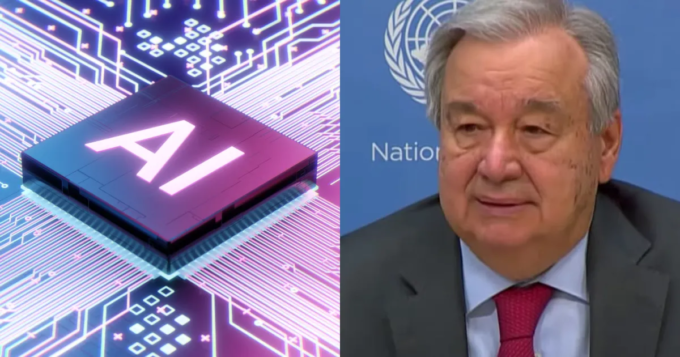
UN Secretary-General António Guterres has meanwhile continued to push for international cooperation on AI, warning that the speed of technological development requires stronger global coordination.
The Security Council first held a dedicated discussion on artificial intelligence in 2023. The United States and China have since continued to debate how far governments should go in managing the technology and its potential security consequences.
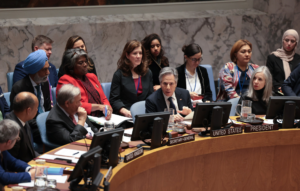
Wednesday’s meeting placed those concerns at the centre of international security discussions, with AI executives and governments confronting the same question: how far can the technology advance before human oversight struggles to keep up?




















Leave a comment