


By: Chioma Madonna Ndukwu
CKC Aba and the Cry of Ehi Road’s Poor Traders
“Mama, how much is the okro?”
The elderly woman looked up, mentioned the price and gently pushed the basket closer. I paid without bargaining.
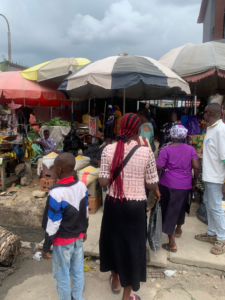
As she counted the money with hands roughened by years of trading, she carefully rearranged the vegetables before her, hoping they would catch the attention of the next customer.
Then she looked at me and asked a question that has refused to leave my mind.
“My daughter, if they ask us to leave here, where do you want us to go?”
I had no answer. Instead, I opened my notebook.
Orbits News did not visit Ehi Road Market in search of controversy. We went in search of people. What followed were separate conversations with four traders who agreed to speak on condition of anonymity.
They spoke without bitterness. They did not condemn anyone. Their appeal was simple: as development reshapes the area beside Christ the King Cathedral (CKC), Aba, they should not be left without a place to earn an honest living.
To understand why their plea carries such emotion, one must understand the place beside which they trade.
Long before Aba grew into one of Nigeria’s busiest commercial cities, Catholic missionaries established what would become Christ the King Cathedral.
From its humble beginnings in the early twentieth century, the mission expanded through evangelisation, education and charitable outreach, becoming a spiritual anchor for thousands of families.
In 1990, when the Diocese of Aba was created, CKC became its cathedral, the seat of the bishop and one of the city’s most recognisable landmarks.
For many of the traders outside its walls, CKC is not just a building they pass every day. It is the church where they worship, where they receive Holy Communion, where they celebrate baptisms and weddings, and where they quietly drop their offerings into the collection basket according to their means.
That is why the uncertainty surrounding Ehi Road Market has become more than a question of commerce.
For those whose lives have long revolved around this roadside market, it has become a question of belonging.
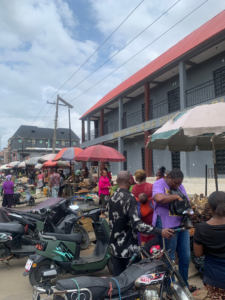
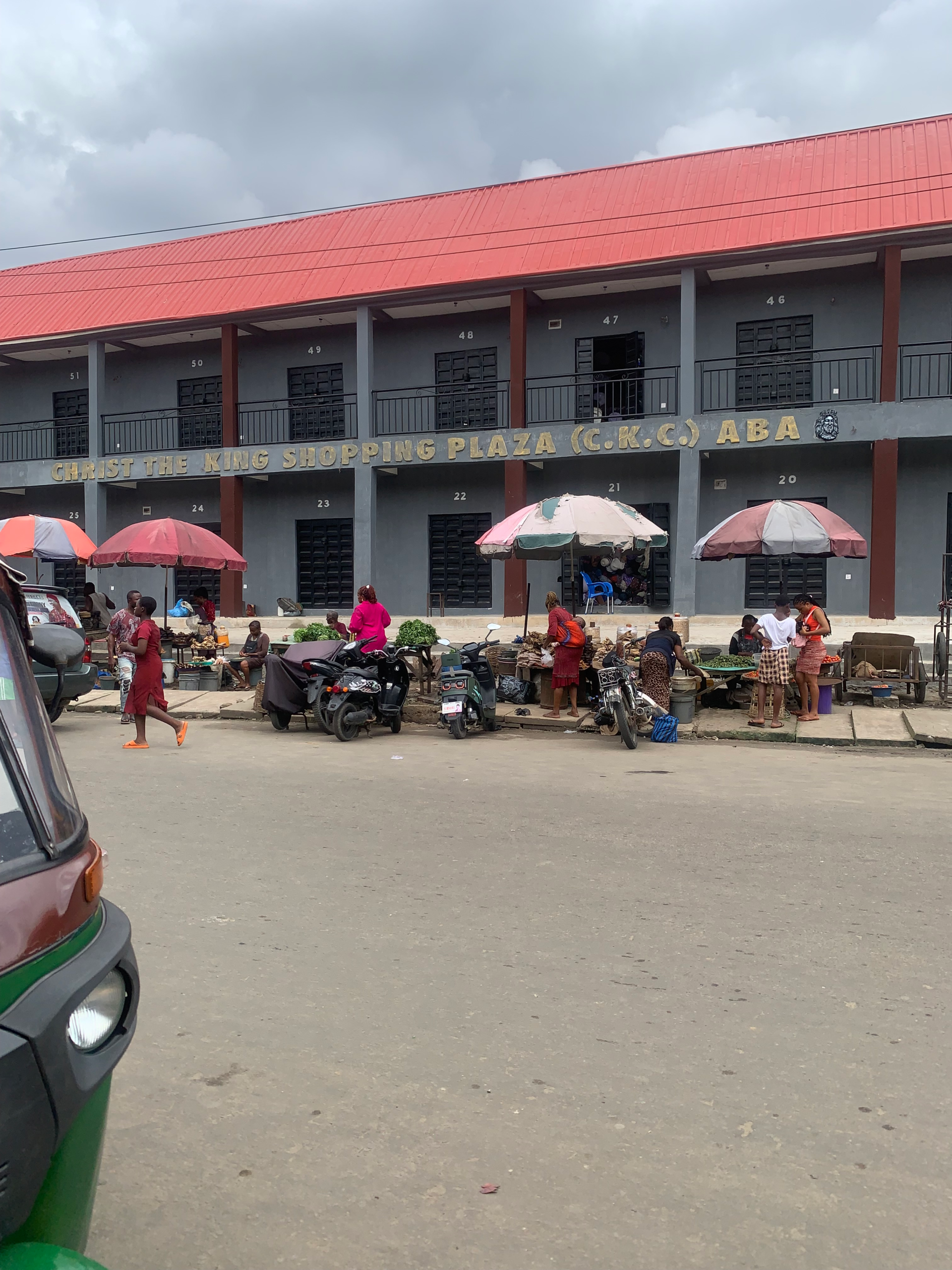
The uncertainty stems from the construction of the new CKC Shopping Mall, a modern commercial complex built by the Catholic Diocese of Aba close to Ekeoha Shopping Centre, an area long known for textile trading.
The project represents growth, and none of the traders interviewed by Orbits News questioned the Diocese’s right to develop its property. Their concern lies elsewhere.
They fear that, in the excitement of a new development, the people who have quietly traded beside the cathedral for years may be left with nowhere to go.
One of the traders pointed towards the new complex before lowering her voice.
“We are not saying they should not build it,” she said. “We are only asking them to remember us.”
Another trader, who has spent years selling foodstuffs along Ehi Road, said she could never afford a shop in the new complex.
“Look at what I sell,” she said, spreading her hands over baskets of pepper, vegetables and ogbono. “How can someone like me pay for a shop there? This is all I have.”
The four traders interviewed by Orbits News spoke separately, yet their stories sounded remarkably alike.
None demanded ownership of the land. None asked that construction should stop. Their greatest fear was that they would be displaced without a practical alternative.
For them, Ehi Road is more than a roadside market. It is where school fees have been paid one customer at a time.
It is where hospital bills have been settled from the sale of vegetables and crayfish. It is where widows, elderly traders and struggling families have found dignity in honest labour rather than dependence on charity.
Residents familiar with the history of the area still remember another chapter.
Years ago, when the traders faced the threat of being removed from the roadside during a government exercise, many recall the intervention of the late Bishop Vincent Valentine Ezeonyia.
Traders and long-time residents who spoke to Orbits News remembered him as a bishop who appealed that they should be allowed to remain.
Some also recalled that efforts were made to improve sections of the road to make trading less difficult for them.
Whether told as history or remembered as an act of compassion, those stories have endured.
Today, they shape the expectations of a new generation of traders who hope that development will not erase the kindness they believe once defined their relationship with the cathedral.
As one elderly trader quietly put it before our conversation ended:
“We are not asking for anybody’s money. We are only asking for somewhere to stay and trade.”
There is a saying that a society is often remembered not by the monuments it builds, but by the people it chooses not to forget.
The story of Ehi Road Market is not a campaign against development. Development is the lifeblood of every growing community. Roads are expanded, schools are built, hospitals are modernised and institutions improve their facilities.
The Catholic Diocese of Aba, like every institution, has every right to develop its property in pursuit of its pastoral and economic vision. Yet every meaningful development must also leave room for humanity.
The traders who spoke to OrbitsNews are not asking that the CKC Shopping Mall should be dismantled. They are not demanding ownership of the land they occupy.
Their appeal is far more modest. They hope that, as a new chapter begins for the Diocese, a place can also be found for those whose modest businesses have helped put food on family tables for decades.
For many of them, Christ the King Cathedral is more than the imposing structure overlooking their market.
It is their parish. It is where they kneel in prayer, receive Holy Communion, celebrate family milestones and contribute to the Church according to their means.
They believe that the same Church that nourishes their faith will not overlook their struggle to survive.
Their quiet plea brings to mind Christ’s words in Matthew 25:40:
“Whatever you did for one of the least of these brothers and sisters of mine, you did for me.”
For these traders, those words are not merely read from the Scriptures. They represent a hope that compassion will continue to walk hand in hand with progress.
Mother Teresa once said, “If we have no peace, it is because we have forgotten that we belong to each other.”
Her words serve as a gentle reminder that true development is measured not just by the structures that rise from the ground, but also by the lives that rise with them.
Orbits News therefore respectfully appeals to the Catholic Diocese of Aba, under the leadership of His Lordship, Bishop Augustine Ndubueze Echema, to listen to the voices of these poor traders and consider a compassionate pathway that allows development and livelihoods to coexist.
This appeal is not made in condemnation but in hope, hope that the Church’s enduring commitment to charity and human dignity will once again find expression in the lives of those who stand just outside its gates.
As I walked away from Ehi Road, the traders returned to what they knew best. One rearranged her vegetables. Another called out gently to a passing customer.
An elderly woman, her face lined by years of labour, lifted a small basin onto her head and began the slow journey home.
Tomorrow, before the cathedral bell calls the faithful to worship, they will be back. They will spread out their goods. They will wait for customers. And possibly, they will also wait for an answer.
VIDEO BELOW
Editor’s Note:
OrbitNews remains committed to fair, balanced and responsible journalism. Should the Catholic Diocese of Aba wish to clarify its position or share its plans regarding the concerns raised by the traders interviewed for this report, we will gladly publish its response in full.





















The clergy should also try and accommodate the poor also